
A winter wedding in Sydney gets talked about as an evening problem: the sun sets early, so the golden light arrives mid-afternoon. That is true, and the golden hour table covers it. This article is about the other number, the one that shapes the whole day: how many hours of daylight you have from morning to dusk.
A June wedding in Sydney works from under ten hours of daylight. A January wedding has more than fourteen. If you plan a winter day as a summer day with earlier clock times, something quietly gets squeezed, and it is usually the couple’s own portraits.
Quick answer: Mid-June in Sydney has 9.91 hours of daylight, against 14.16 hours in mid-January. That is more than four hours less across the whole day, and the sun sets at 4:53pm, so the day has to be built around the light rather than nudged earlier. Start the whole timeline earlier, protect your portrait time, and treat everything after about 5:20pm as indoor light.
On this page
- The full-day number
- Why the winter sun behaves differently
- Where the missing hours bite
- A worked example: a 2pm ceremony in mid-June
- Reshaping the whole day, not just the evening
- How many hours of coverage, and where they fall
- Where in Sydney changes the minutes
- What winter does well
- Questions to settle before you lock the timeline
- What to do next
The full-day number
The table below shows Sydney CBD light on the 15th of selected months in 2027. The figures are computed from the standard solar formulas, not copied from a weather site. Civil dusk is the point where the sun is 6 degrees below the horizon and the usable outdoor light is finished.
| Date (2027) | Sunrise | Sunset | Civil dusk | Daylight |
|---|---|---|---|---|
| 15 January | 5:59am | 8:09pm | 8:38pm | 14.16 hours |
| 15 April | 6:17am | 5:33pm | 5:58pm | 11.27 hours |
| 15 June | 6:58am | 4:53pm | 5:21pm | 9.91 hours |
| 15 July | 6:58am | 5:04pm | 5:31pm | 10.09 hours |
| 15 September | 5:56am | 5:46pm | 6:11pm | 11.84 hours |
| 15 December | 5:38am | 8:02pm | 8:31pm | 14.39 hours |
The gap between the longest and shortest of those days is 4.48 hours (14.39 in mid-December against 9.91 in mid-June), which is nearly a third less daylight. That is not only a golden hour issue. It changes how much your schedule can hold between breakfast and the last outdoor photograph.
Sunset in mid-June (4:53pm) is earlier than many people picture when they imagine a late-afternoon ceremony. Part of the autumn drop is daylight saving: clocks go back in early April, so sunset falls from 6:51pm on 1 April to 5:33pm on 15 April, more than an hour in a fortnight. If your date sits near that change, check the sunset for your exact date before you fix a ceremony time.
Why the winter sun behaves differently
In winter the sun never climbs as high as it does in summer. Even at midday it sits much lower in the sky, so the light arrives at a shallower angle all day. That has two practical effects.
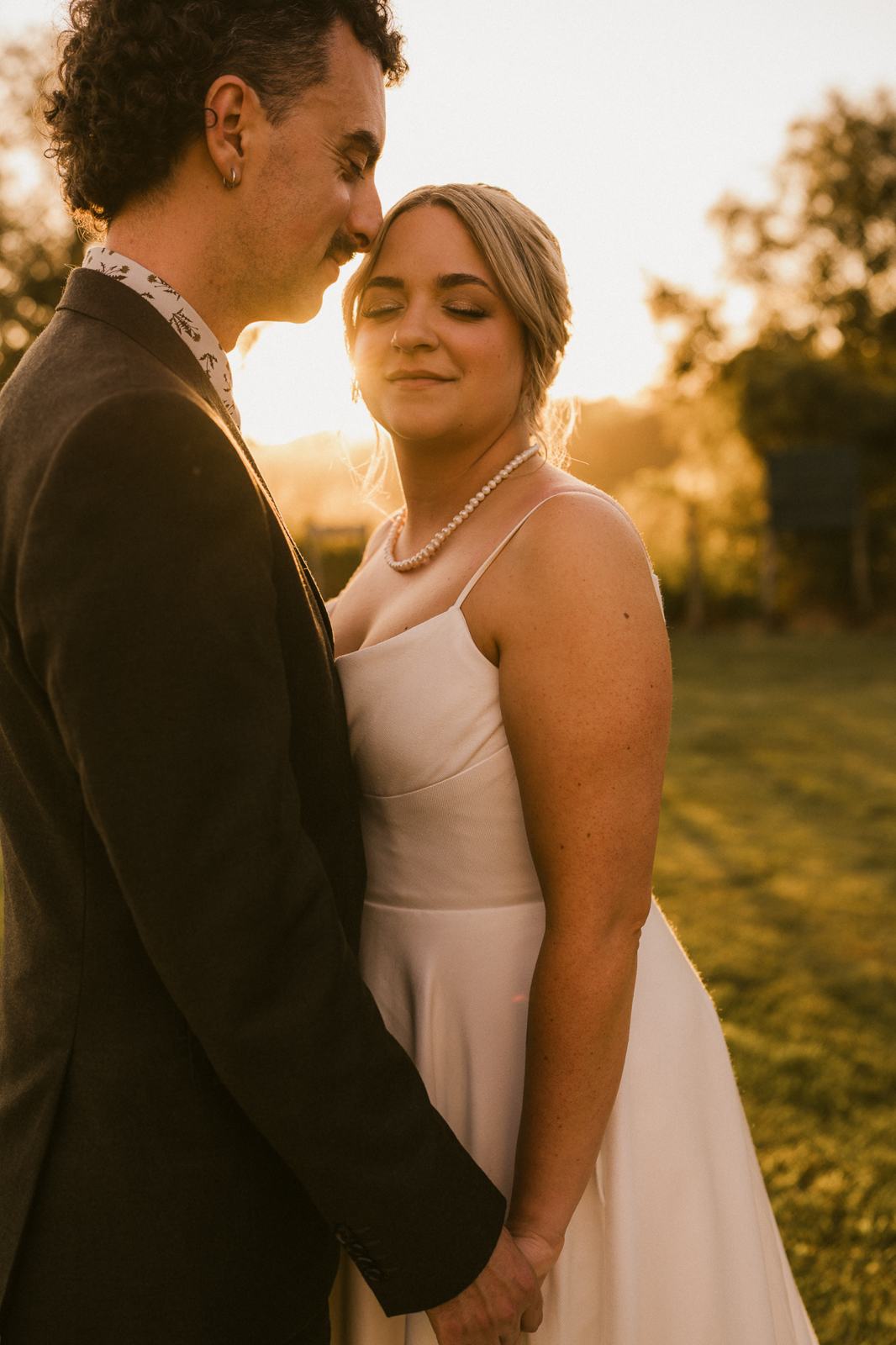
The good one is softness. A low sun means the harsh overhead light of a summer noon mostly does not happen, shadows under eyes and noses are gentler, and the stretch of pleasant outdoor light is wider than the golden hour label suggests. Golden hour itself (the sun within 6 degrees of the horizon, less than a fist held at arm’s length) lasts 38 minutes in mid-June. In mid-January it lasts 36. The window is about the same length. It just sits at 4:15pm instead of 7:33pm.
The awkward one is direction. In Sydney the winter sun travels across the northern half of the sky, rising north of east and setting north of west. A room with windows facing south may get no direct sun at all in June, however bright the day looks from outside. For getting-ready photographs that matters, because the nice window light you imagined may be sitting on the wrong side of the building. Ask the venue or the family hosting which way the main windows face.
A low sun also casts long shadows from buildings, trees, fences and hills. Where you stand in Sydney decides how soon those shadows cover your portrait spot. More on that below.
Where the missing hours bite
A summer wedding can afford a slow morning, a long gap before the ceremony and a generous run of afternoon light after it. A winter wedding has slack in none of those places, and each stage of the day loses something different.
The morning. Sunrise in mid-June is just before 7am, so a late-morning getting-ready is fine for light. The thing to watch is the angle: winter sun is low and may not reach the room you have chosen, so ask which way the windows face and plan the getting-ready photographs for when light is actually coming in, rather than saving them until the family is running late.
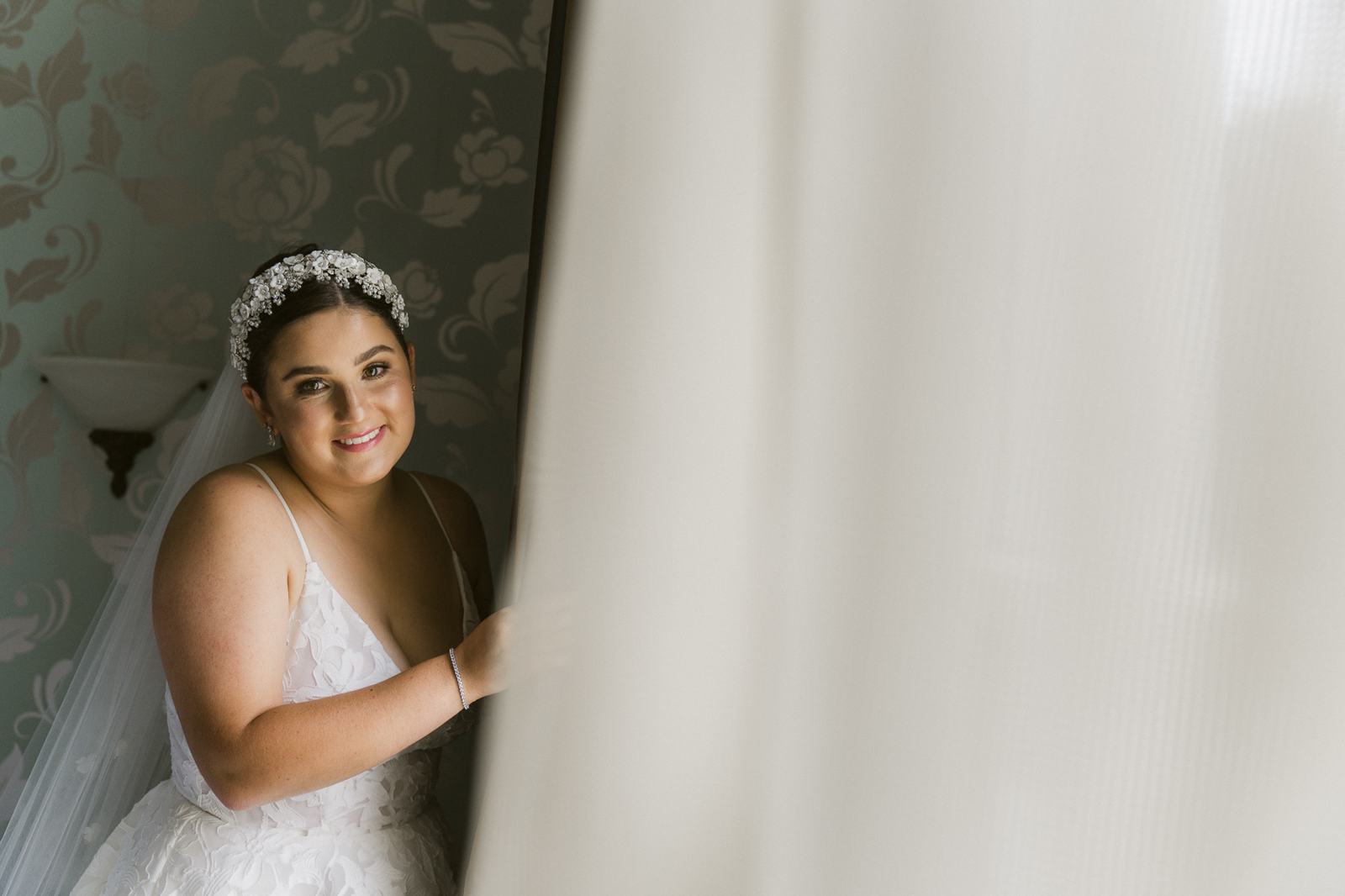
The middle. The gap between ceremony and sunset is where winter loses the most. Formals, travel, a drink with guests and portraits all have to fit into the hours before about 5pm. In summer that same run of tasks has hours of margin. In winter an extra twenty minutes anywhere comes straight out of the light at the end.
The evening. Once civil dusk passes, around 5:20pm in mid-June, outdoor photography has ended. Anything planned for after that, including a grand entrance outside, a sparkler exit or a dinner on a terrace, needs artificial light and a plan for it. The photographs can still be good. They are a different kind of photograph, and it helps to know that before the day rather than at 5:30pm.
A worked example: a 2pm ceremony in mid-June
This is one example with assumed sizes, not a rule about how long anything takes. Say your ceremony starts at 2pm on 15 June and the ceremony itself finishes at 2:30pm. Say family formals take 30 minutes and moving everyone to the portrait location takes 20 minutes. Those three figures are assumptions, there to show the arithmetic.
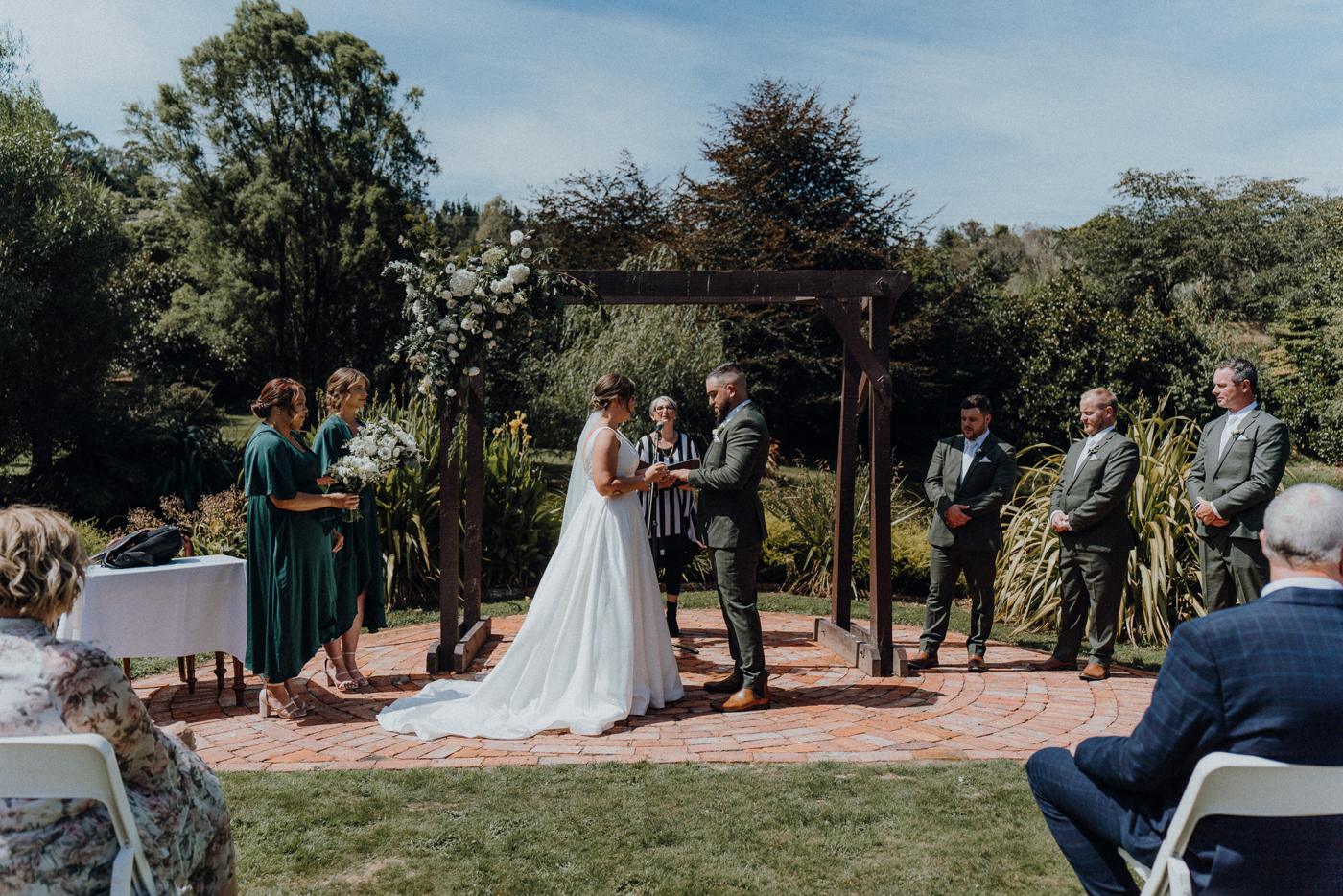
From the light table, sunset on 15 June is 4:53pm, golden hour starts at 4:15pm and civil dusk is at 5:21pm. Now follow the afternoon:
- Ceremony finishes at 2:30pm.
- Formals finish at 3:00pm.
- Travel finishes at 3:20pm, so couple portraits can begin at 3:20pm.
- Golden hour begins at 4:15pm, which is 55 minutes later.
- Sunset is at 4:53pm, 1 hour 33 minutes after portraits begin.
That is workable. It also leaves no room for anything else. Add a one-hour drinks reception with guests before portraits and the couple’s portraits begin at 4:20pm instead. Golden hour has already started, sunset is 33 minutes away, and the light is gone shortly after. The drinks hour did not take the portraits away, it moved them into the last 33 minutes of the day.
Now the same schedule on 15 January. Portraits start at 3:20pm, as before, and sunset is 8:09pm, which is 4 hours 49 minutes later. Add the drinks hour, so portraits start at 4:20pm, and sunset is still 3 hours 49 minutes away. The same plan that is comfortable in summer has no slack in winter.
If you shift the whole day one hour earlier (a 1pm ceremony in this example), portraits can begin at 2:20pm without a drinks hour, or at 3:20pm with one. Either way you have 1 hour 33 minutes or more before sunset. That single change, moving the whole day, gives back more than any trimming of the list.
Reshaping the whole day, not just the evening
The aim is to build a day shaped for the season, not a summer day with the times nudged. These are the levers, roughly in the order worth pulling them.
Start earlier across the board. Moving the ceremony earlier only helps if getting ready moves with it. If hair and makeup still finish at the old time, the ceremony starts late anyway and the light you gained is gone. Shift the whole morning, not just the headline time. See the getting-ready buffer for how that block quietly overruns.
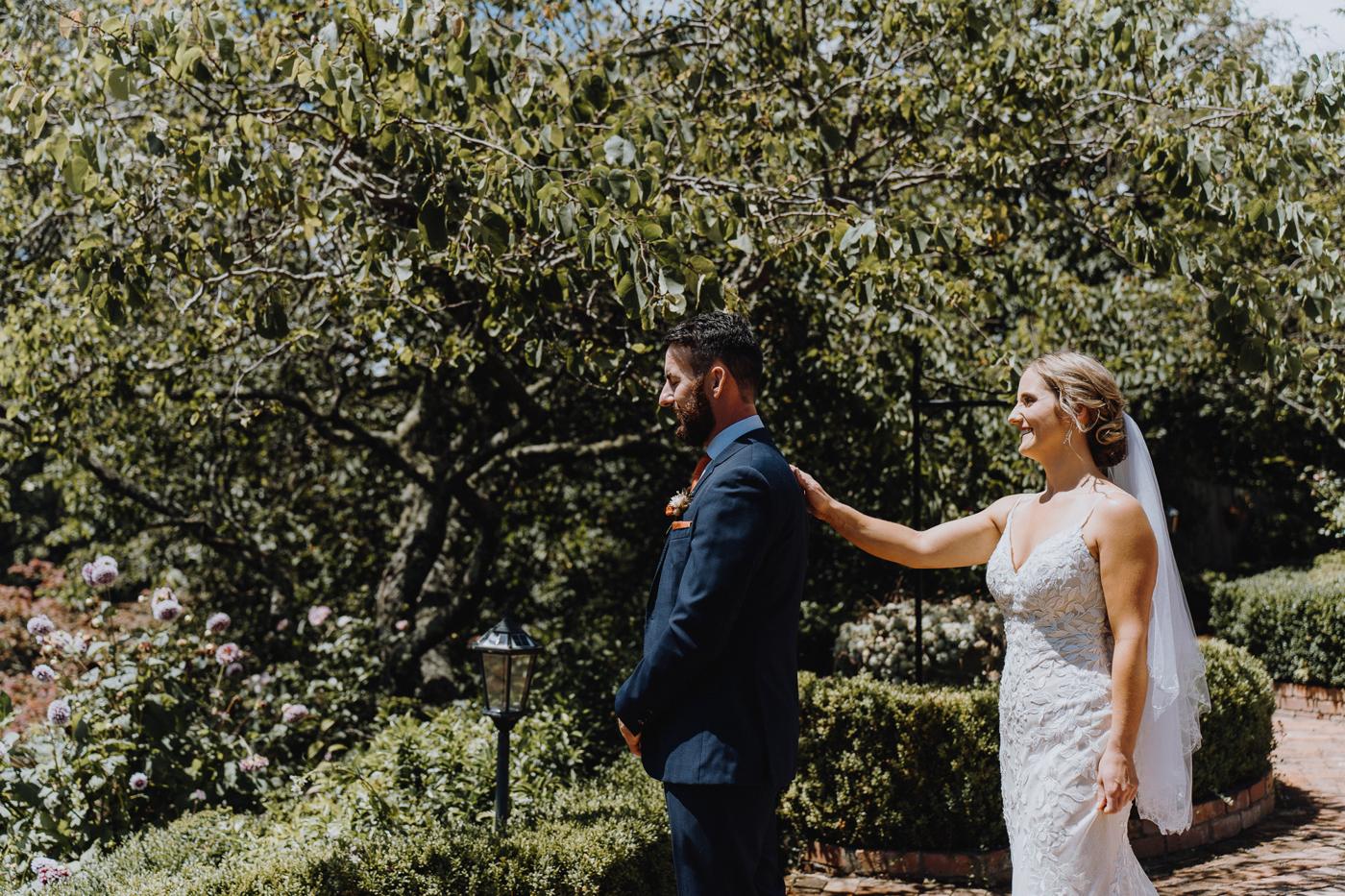
Consider a first look more seriously. A first look moves the couple’s portraits to before the ceremony, when daylight is plentiful and nobody is hungry or waiting. For a winter wedding it takes the portraits out of the shrinking window after the ceremony. Whether it suits you is a personal call about how you want to experience the moment, and the first look article sets out what each choice does to the day.
Be realistic about formals. An oversized list costs more in winter than in summer, because every minute spent lining up relatives comes out of the same short afternoon. Agree the list before the day, name one person on each side to gather people, and read how much time family formals really need to size it honestly. Trimming formals is the lever to pull last, since those photographs cannot be retaken later, but a trimmed list planned in advance beats a rushed one.
Design the reception for indoor light from the start. A winter reception planned around warm lamps, candles and string lights from the first hour feels like a choice. One that is simply what is left after the sun went down feels like an afterthought. Ask the venue what its lighting does at 5pm, and whether the dimmers work.
Protect the portraits. Whatever else gets squeezed, put the couple’s portrait window on the timeline as a fixed block with a start time, before the drinks and before the speeches. Portraits are the part that sits last and defends itself worst, which is why they are the part that disappears when a winter timeline slips.
How many hours of coverage, and where they fall
Six hours of coverage usually ends before the speeches, eight hours is what most couples choose, and ten is what nobody regrets. Winter adds a twist: the same number of hours buys fewer daylight photographs.
Say you book eight hours starting at 11am on 15 June. Daylight lasts until 4:53pm, so just under six of your eight hours happen in daylight, and the last two, from about 5pm to 7pm, fall in indoor light. In January an eight-hour day starting at 11am would finish at 7pm, with sunset not until 8:09pm.
That does not mean the indoor hours are worse. Reception moments, the speeches, the dancing and the candid reactions of guests are mostly indoor stories in any season. It means that when you decide where the hours go, the daylight ones are the ones to spend on portraits, the ceremony and the family, and the indoor ones suit the reception.
If you are weighing six hours against eight in winter, decide what you want photographed in daylight, then count backwards from sunset. Every time in this section uses the mid-June figures, so check the row for your own month in the table above.
Where in Sydney changes the minutes
The sunset times above are for the CBD. Your venue’s usable light depends on what sits between the sun and the people. A venue with a clear western horizon (open water, flat parkland) gets close to the table’s times. A venue with a hill, a ridge or a row of tall buildings to its west loses the direct sun earlier, sometimes well before the listed sunset, and its golden hour is shorter. Winter makes this worse than summer, because the sun’s path is lower and shadows are longer from the same obstacle.
Direction of view matters as well. A couple facing the sea at an east-facing beach in late afternoon has the sun behind them, over the land, so they are backlit rather than lit on the face. That can give a lovely glow around hair and veil, but it needs a photographer who exposes for it, and the beach itself falls into shade earlier than the sky does.
Because there is no honest single correction for every venue, ask your photographer to check the specific site against the sunset time on your date, including what is to the west. The harbour, beach and west comparison goes through how the three settings differ, and the Sydney wedding day timeline shows how to build the whole day around the result.
What winter does well
None of this is an argument against a winter wedding. The low sun gives longer stretches of soft light, and there is no midday glare to hide from. Warm indoor spaces suit the season: lamps, candles, a fire if the venue has one, an evening that feels like evening rather than a stretched afternoon.
Ask venues and suppliers whether a winter date changes what is available or what it costs, since that varies. Photography starts from $4,000, and hours, film and where you marry move the price from there.
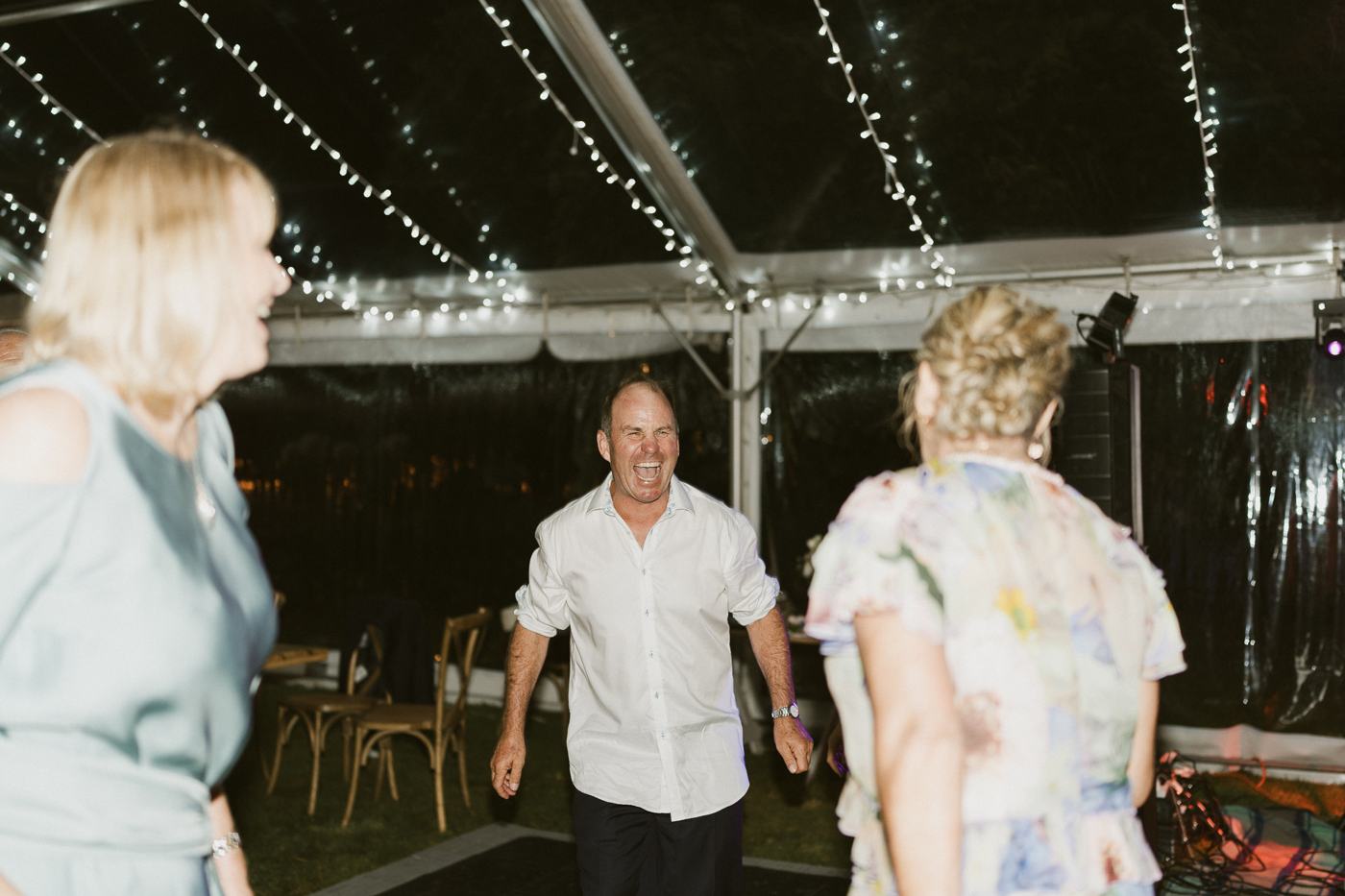
A compressed day also has an upside. There is less time to drift, and planned properly it feels purposeful rather than rushed.
Questions to settle before you lock the timeline
These are the questions worth putting to your photographer, your celebrant and your venue once the date is chosen.
Ask your photographer:
- What are sunrise, golden hour, sunset and civil dusk on my date, and what is to the west of this venue?
- Where do you put the couple’s portraits on a winter timeline, and what would you move first if the day runs late?
- Which getting-ready room has the best light at the hour we will be there?
- How would you light the reception photographs once outdoor light has gone?
Ask your venue:
- Which way do the main windows and the ceremony space face?
- What does the lighting look like from 4:30pm, and can it be changed?
- Is there a sheltered or heated spot for portraits if the weather turns?
Ask your celebrant:
- Can the ceremony start at the earlier time you have in mind, and how long do they usually allow for it?
A photographer who answers the first question with a number from a real light calculation, rather than “winter is usually fine”, is working from the same facts you are.
What to do next
- Look up your own date. Find sunrise, sunset and civil dusk for your exact date and venue, then work backwards from sunset. The your day page has a light planner, and the golden hour table covers every month.
- Fix the portrait block first. Put the couple’s portraits on the timeline as a fixed block with a start time, then fit everything else around it.
- Move the whole morning. If the ceremony moves earlier, move hair, makeup and getting ready with it, and check the timeline against the getting-ready buffer.
- Decide on a first look. Talk it through together, then read the first look article if you are still unsure.
- Choose hours to match the light. Count how many of your booked hours fall before sunset, and what you want photographed in each part.
In the week before, confirm the sunset time again, confirm which room the family will use to get ready, and send your photographer and celebrant the same timeline so nobody is working from an older version. On the day, ask someone to be the timekeeper, and let that person be the one who says “time to go”.
Weddings in the cooler months are well worth planning for. If you are thinking about a winter date, get in touch with the date and the venue, and you will hear honestly whether I am free and what the day could look like.