
A sunset time printed in a table is one number for one place. Your venue is a different place, with its own hills, buildings, trees and water, and that is what decides how much good light you actually get. This article is about Sydney wedding venue light orientation: which way your site faces, what sits on its western horizon, and how to turn a generic table into a timeline that fits your venue.
The light data on this site is for the Sydney CBD only, so harbour, beach and western venues all shift from it. This guide gives the direction and the reason, not made-up minutes, and shows you how to find your own.
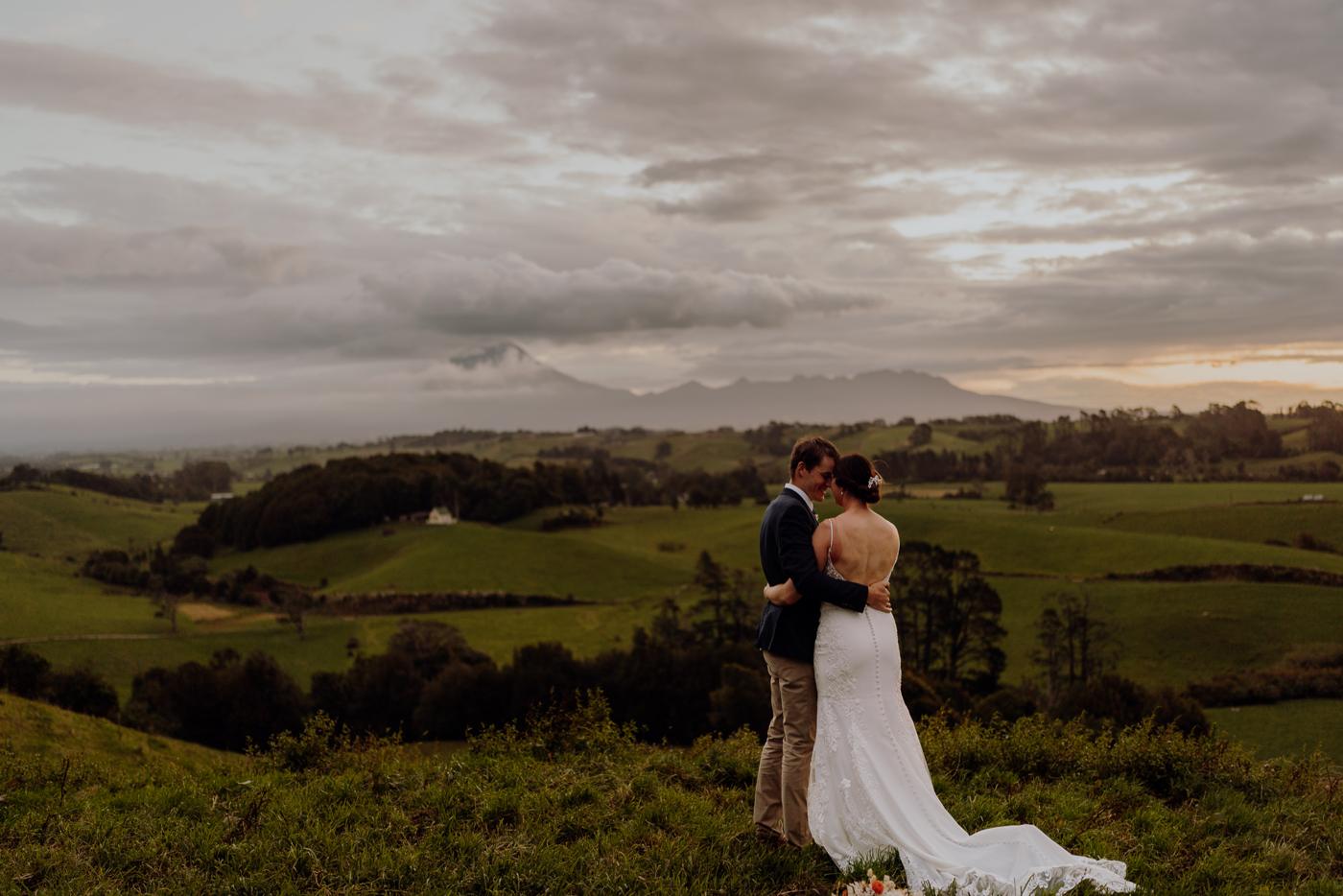
Quick answer: The CBD table is a starting point, not your timeline. A venue with open sky or open water to the west keeps close to it. A venue with a headland, ridge, building line or tree line to the west loses its warm light earlier, because the sun slips behind that edge before it reaches the true horizon. Stand where your portraits will happen, look west, and judge the skyline you can actually see.
On this page
- Why “sunset” is not one number
- The Sydney CBD table, and what it assumes
- How harbour, beach and western venues shift from the table
- Facing direction: what to do with the sun once you have it
- How to check your own venue
- A worked example: turning the table into a venue timeline
- If your venue loses its light early
- Questions to ask the venue and your photographer
- What to do next
Why “sunset” is not one number
Sunset on a table is the moment the sun meets a flat, clear horizon at sea level. A wedding venue almost never has one.
The golden hour figures on this site use a simple rule: golden hour starts when the sun is 6 degrees above the horizon, and civil dusk is when it is 6 degrees below. In Sydney the sun takes about 33 to 38 minutes to cover those six degrees down to sunset, depending on the time of year. So near the end of the day the sun drops roughly one degree every six minutes.
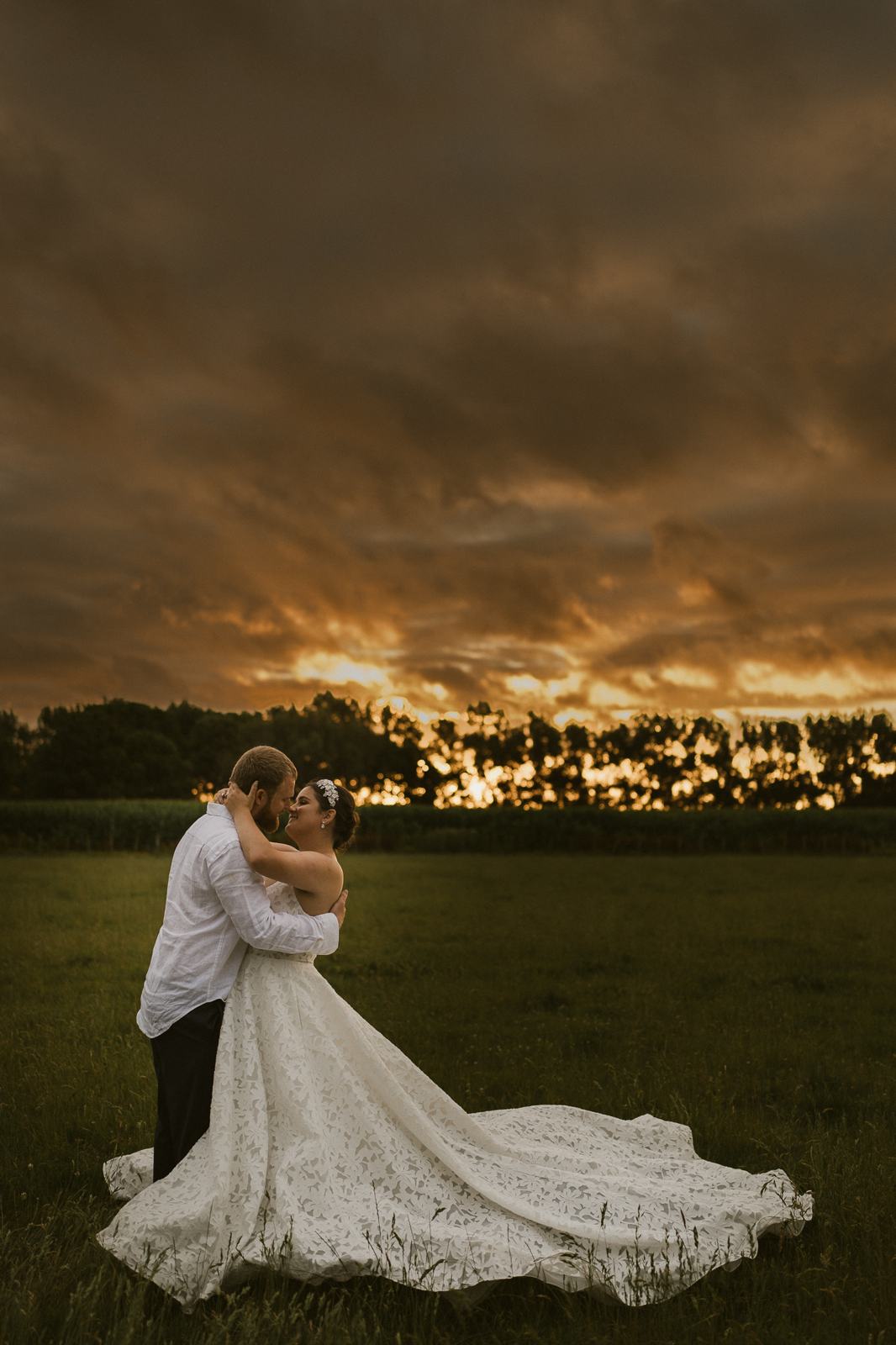
Now put an obstacle to the west. Say a ridge, a row of tall trees or an apartment block rises 3 degrees above flat ground from where you stand. That costs you the bottom half of the golden window. The sun vanishes behind the edge while it is still well above the printed sunset, and the light turns flat and cool even though the sky is bright. The loss is quick: behind a roofline or a tree line the light fades over a minute or two, and then the warmth is gone.
So the question for every venue is not “what time is sunset?” but “what is the sun’s last clear moment from the exact patch of ground where we will stand?” A view is not a western horizon. A venue can look over lovely water to the east and still have a hill directly behind it to the west.
The Sydney CBD table, and what it assumes
Here is a selection of dates from the computed 2027 table for the Sydney CBD. Times are local (AEDT or AEST as the date requires).
| Date (2027) | Golden hour starts | Sunset | Civil dusk | Golden minutes |
|---|---|---|---|---|
| 1 January | 7:33pm | 8:09pm | 8:38pm | 37 |
| 1 April | 6:18pm | 6:51pm | 7:16pm | 33 |
| 15 April | 4:59pm | 5:33pm | 5:58pm | 34 |
| 15 June | 4:15pm | 4:53pm | 5:21pm | 38 |
| 1 September | 5:03pm | 5:37pm | 6:02pm | 34 |
| 1 October | 5:24pm | 5:57pm | 6:22pm | 33 |
| 15 October | 6:35pm | 7:08pm | 7:34pm | 33 |
Sunset jumps by more than an hour between 1 and 15 April, and again between 1 and 15 October, because daylight saving ends and starts in those gaps. If you are booking a long way ahead, read Daylight Saving and Your Ceremony Time before you fix a start time.
The table assumes a clean horizon in the middle of the city. It says nothing about which direction the sun is travelling or how high the land rises in front of it. The full month-by-month version is in Sydney Golden Hour by Month.
How harbour, beach and western venues shift from the table
The data here is for the CBD only, so harbour, beach and western venues all move away from it. There are no minute figures below, deliberately. We have no honest number for “the harbour” or “the west” as a whole, because the shift depends on one particular site. What you get is the direction of the shift and the reason.
Harbour venues
The harbour is a long, branching shape with bays, points and headlands, and the shoreline bends in almost every direction. A spot looking west along an open reach behaves like an open western horizon. A spot tucked into a bay that opens north or east has a far shore or headland to its west, and that edge takes the low sun first.
Harbour venues also tend to sit on slopes, with houses and trees stacked up the hillside behind them, so the western edge is often not the water at all. Water does give you something, though is reflected light: a bright, open stretch can bounce warm light back onto faces even after the direct sun has left.
Beach venues
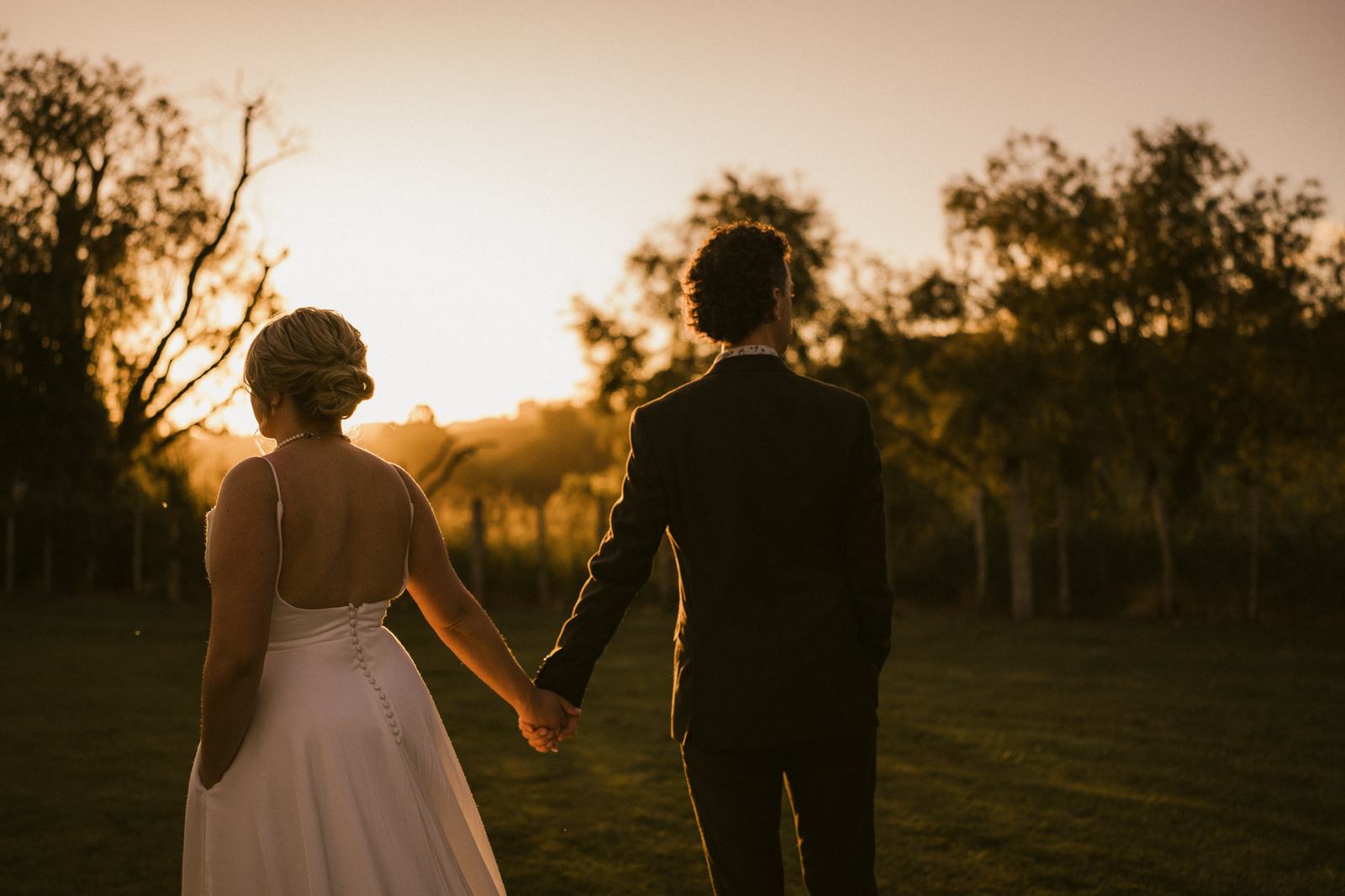
Sydney’s ocean beaches look east. Stand on the sand and you face the sea, so the sun sets behind you, over the land. That has consequences:
- Late-afternoon sun comes from over the land, so a couple facing the sea is backlit: a glow around hair and veil, faces in soft shade. Turn them to face the land and their faces get the warm light, but the sun is in their eyes.
- The land behind the beach (headland, cliff, dune line, buildings) is your western horizon. It takes the sun earlier than the table suggests, and shade can reach the sand before the sky has turned.
- You will not see the sun touch the water. If a couple pictures that image, an ocean beach is the wrong stage for it.
A sheltered bay or river mouth that faces another way plays by the harbour rule: look at where the sun goes, not where the sand is. Afternoon sea breezes are common in Sydney, and wind affects veils, hair and how long anyone wants to stand still.
Western venues
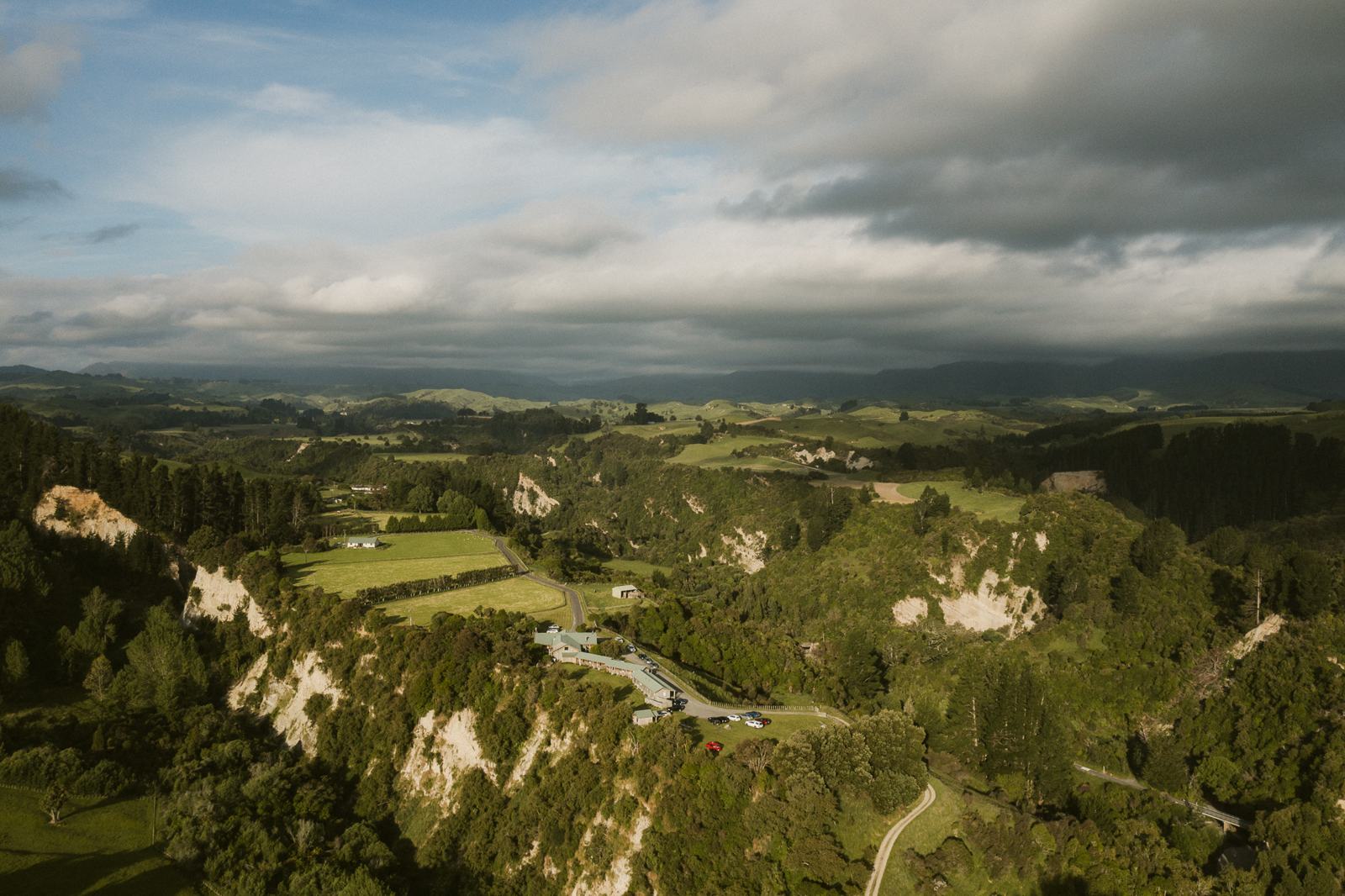
Western Sydney is further from the coast and generally flatter, so on paper it has a lower, more open western horizon. In practice what blocks the sun out there is usually trees, tall plantings, the edge of a golf course or the next row of houses.
- Open paddocks, lakes, large lawns and parkland give long clear views, and venues built on them can hold their light well.
- Suburban streets and dense tree cover do the opposite. Sun that looks high can still be hidden by the house across the road.
- Haze often sits near the horizon after a hot day, which warms the low sun but can also dull it.
- Towards the ranges the ground rises, so the “west” there is a real ridge. Treat those sites as hemmed in, however open the paddock feels.
The short version
Open west: close to the CBD table, but plan for sun in guests’ eyes. Variable (a bend, bay or far shore): can leave early or hold, so check the exact spot. Hemmed in (ridge, headland, tall trees, buildings): warm light ends earlier and suddenly, so plan earlier portraits and one clear spot. If your venue fits two, plan for the stricter. A harbour address with a headland to its west is a hemmed-in venue that happens to have a view.
Facing direction: what to do with the sun once you have it
The sunset point also moves across the year. In Sydney the sun sets well south of west in summer and well north of west in winter, so a lawn that points straight into the winter sunset may not do so in January.
Facing direction decides three practical things. First, where guests look during the ceremony: an aisle running west puts the low sun in the eyes of the couple or the guests, depending on the seating, and turning the layout or choosing an earlier start solves it. Second, which way the couple face for portraits: the sun behind or beside them gives a glow around hair and veil, but only if the sun is still reachable. Third, where shade falls early: the east side of a building or tree line can be in shade long before the sun leaves the sky. Open shade is useful, so choose it on purpose.
If the plan includes portraits before the ceremony, the light you need arrives at a different time of day, so check the sun against that earlier slot too.
How to check your own venue
This needs a visit to the site, ideally in the season of the wedding, because the sun’s path moves through the year.
- Stand where the ceremony or portraits will happen and look west. Use your phone’s compass if the direction is not obvious. What you see along that line is your real horizon.
- Measure the skyline with your hand. A common rule of thumb: at arm’s length, a fist covers about 10 degrees of sky. If the skyline in the sunset direction is a third of a fist high, that costs you about 3 degrees, roughly half the golden window, before you start.
- Use a sun-path tool. Free apps and websites show the sun’s route across your exact spot on your exact date, including where it drops behind what is in the way. Confirm it by eye.
- Photograph the western view from where the couple will stand and send it to your photographer. It tells them more than an address does.
- Ask the venue. Coordinators who run outdoor events often know which lawn goes into shade first, even if nobody has framed it as a photography question.
If you can only do one thing, do step 1. Everything else on this list builds on it.
A worked example: turning the table into a venue timeline
This is an example, not a prediction for any real venue, and the numbers are approximate.
Say your wedding is on 15 June 2027. The CBD table gives golden hour from 4:15pm, sunset at 4:53pm and civil dusk at 5:21pm. Now suppose your venue has a tree line to the west standing about 3 degrees above the flat horizon. The sun has to fall 6 degrees across a 38 minute golden window, so 3 degrees is roughly half of it. Your direct warm light ends somewhere around 4:35pm, not 4:53pm. After that you are in open shade, which is fine for photographs, but the gold is over.
What changes in the plan:
- Couple portraits go at the start of the golden window, so they are finished by the time the tree line takes the sun.
- The ceremony is set earlier, so the formal part of the day does not run into the lost light with no time left for portraits.
- If the property has a clear gap, such as a rise or a corner over a paddock, the couple use it first for the last of the gold.
- The soft light between sunset and civil dusk stays on the schedule, because it does not depend on a clear horizon.
An open west site on the same date would run close to the table figures, and you would plan around the sun in guests’ eyes instead. The Sydney Wedding Day Timeline shows how these windows fit into the rest of the day, and Winter Weddings in Sydney matters if your date falls in the short days.
If your venue loses its light early
This is a planning problem, not a reason to cross a venue off the list.
Move the portrait window earlier. Use your venue’s adjusted time, not the table time. It is the only fix that changes the arithmetic rather than working around it, and it costs a line on the run sheet. Pushing portraits later towards the printed sunset on a hemmed-in site is the wrong direction: the last usable light there is flat and cool, and you give up the better light that came before it.
Use soft light before golden hour. Open shade before golden hour is even and flattering, and it needs no clear run to the horizon.
Find the one clear western view on the property. A balcony, a rise, a gap between buildings. Most sites have one, and it holds the sun longer than the rest of the grounds.
Plan the soft light after sunset. Civil dusk happens wherever you are. A venue that loses its sun early still has the soft light between sunset and civil dusk, especially with string lights or a warmly lit building to sit against.
Look at the ceremony time. A late ceremony squeezes portraits into whatever light is left. An earlier one gives the couple the better light and protects the evening.
Common mistakes are mostly about assumption: trusting the postcode (suburbs contain every kind of horizon), using the CBD table as a finish rather than a start, and scouting at noon in January for a June wedding. Keep it in proportion: getting ready, speeches and the dance floor do not depend on golden light.
Questions to ask the venue and your photographer
To the venue:
- Which way does the ceremony space face, and where does the sun go at that time of year?
- Which part of the grounds loses direct sun first, and which keeps it longest?
- Can we visit at the time of day the ceremony would be?
To your photographer:
- Have you been to this venue, and what did the light do at our time of day?
- If not, will you look at a site photo and a sun-path tool before we fix the run sheet?
- Where would you shoot portraits, and what is the backup if the western view is gone?
- What would you change if we moved the ceremony by half an hour?
For a longer list, see The Questions Worth Asking a Wedding Photographer. Your Day has the order of the day and a light planner you can try with your own date.
What to do next
- Find your date in the table. Open the month-by-month golden hour guide and note golden hour, sunset and civil dusk for your month.
- Look west from the exact spot where the ceremony and portraits will happen, in the season of your wedding if you can.
- Photograph the western view and keep it for your photographer.
- Draft your timeline with the adjusted light, using The Sydney Wedding Day Timeline as the frame.
- Check what booking involves. The investment page explains how hours and film shape the price, and the tips library covers the rest of the planning.
If you have a date and a venue in mind, send an enquiry with both. Binh will tell you straight away whether the date is free, and if it is, what the day could look like.