
Choosing a first look for your wedding photography in Sydney looks like a photography decision. It is really a scheduling decision, because it changes when your couple portraits happen, when your family sees you, and how much daylight you have left for the pictures you care about most.
There is no correct answer, only a trade. One side gives you time and a quiet moment together. The other gives you the aisle, with everyone watching, as the first time you see each other. Below is what each choice does to the day, with the light worked out, so you can pick the one you would rather live with.
Quick answer: A first look moves your couple portraits, and sometimes your family formals, to before the ceremony. That frees your afternoon and takes pressure off golden hour, which in Sydney lasts only 33 to 38 minutes. Skipping it keeps the aisle as your first sight of each other, but everything else gets squeezed into the window after the ceremony. Season and venue decide how tight that window is.
On this page
- What a first look changes
- The light arithmetic
- What you gain
- What you give up
- How to decide
- Middle options
- Planning the first look itself
- Questions to ask your photographer and venue
- What to do next
What a first look changes
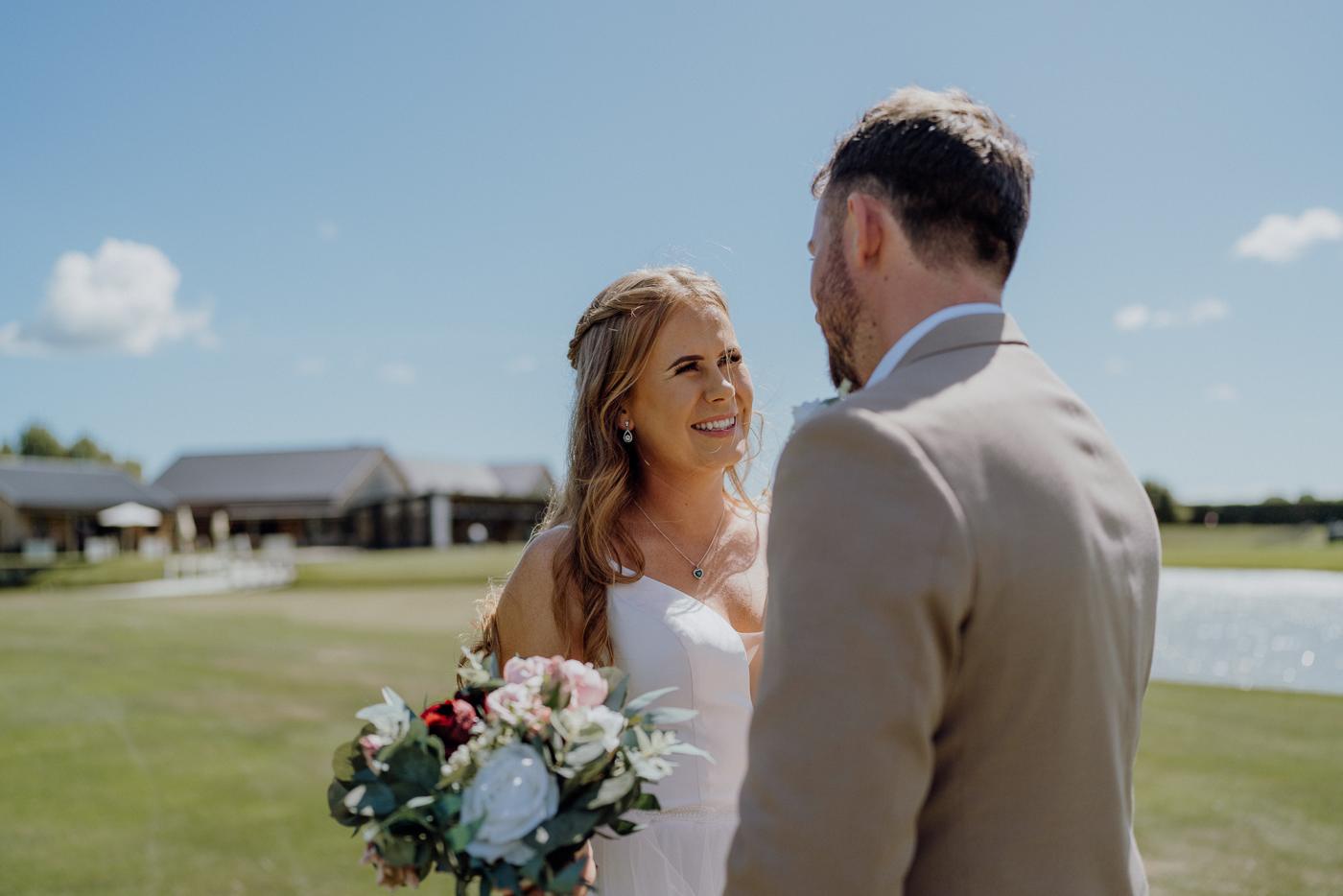
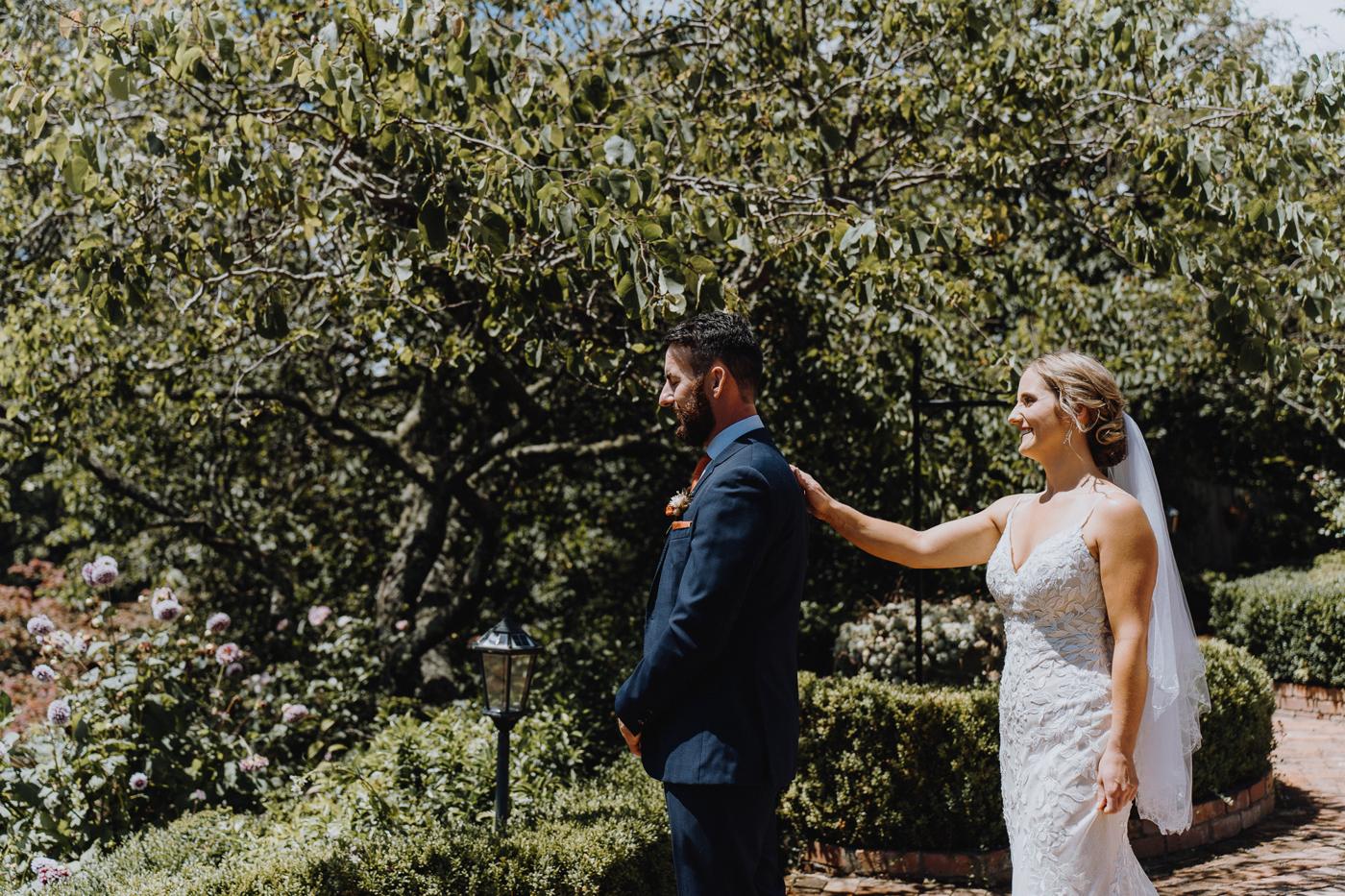
A first look is a planned, private moment before the ceremony where you see each other for the first time, with the photographer nearby. The effect is bigger than that sounds, because it pulls forward every photograph that needs the two of you together.
Without one, the ceremony is the first time you see each other. Everything that needs the couple, and often the family groups and the bridal party, has to wait until the ceremony ends. Those photographs then share one window: after the ceremony, before the reception starts, and before the light goes. Guests are often having drinks while they wait, and you are being photographed rather than being with them.
With one, that work can happen before the ceremony. The ceremony is then followed by a much shorter list of jobs.
Here is the order of the day in each case, in plain terms.
| With a first look | Without a first look | |
|---|---|---|
| Before the ceremony | Getting ready, first look, couple portraits, perhaps family formals and bridal party | Getting ready, then guests arrive |
| First sight of each other | Private, before the ceremony | At the end of the aisle, in front of everyone |
| After the ceremony | A short list of what is left, then you join your guests | Couple portraits, family formals, bridal party, all in one window |
| Daylight pressure | Lower, because less depends on the post-ceremony window | Higher, because everything depends on it |
| Start of the day | Getting ready finishes earlier | Getting ready finishes closer to the ceremony |
Which of these suits you depends on how you weigh those rows. The next section puts numbers on the daylight row, since that is the one that varies most.
The light arithmetic
Golden hour in Sydney is the stretch when the sun sits about 6 degrees above the horizon until it sets. It lasts between 33 and 38 minutes depending on the month. Civil dusk, about 6 degrees below the horizon, is where usable light ends. Neither number changes with your plans, but your plans change how much of it you can use.
These times are for the Sydney CBD in 2027, local time. A venue with hills or tall trees to the west loses usable light earlier than these show. An open beach or headland with a clear western horizon holds it closer to the table.
| Date (2027) | Golden hour starts | Sunset | Civil dusk | Golden hour length |
|---|---|---|---|---|
| 15 January | 7:33pm | 8:09pm | 8:38pm | 36 minutes |
| 15 April | 4:59pm | 5:33pm | 5:58pm | 34 minutes |
| 15 June | 4:15pm | 4:53pm | 5:21pm | 38 minutes |
| 15 September | 5:13pm | 5:46pm | 6:11pm | 33 minutes |
Look at the gap between a 3pm ceremony start and sunset. In mid January it is 5 hours 9 minutes. In mid April it is 2 hours 33 minutes. In mid September, 2 hours 46 minutes. In mid June it is 1 hour 53 minutes, and the ceremony itself sits inside that.
A worked example for a winter wedding
Say your ceremony is at 3pm in mid June, and it runs until 3:30pm. These sizes are assumptions for the example, not rules.
Without a first look. Sunset is at 4:53pm, so you have 1 hour 23 minutes after the ceremony. Suppose family formals take 30 minutes. Couple portraits then start around 4:00pm, which gives you about 15 minutes of ordinary daylight before golden hour begins at 4:15pm, then 38 minutes of golden hour, and 28 minutes of fading light after sunset, until civil dusk at 5:21pm. Every extra group photo, every late guest and every slow walk to a location comes out of that 15 minutes or the golden hour itself. The light you wanted is still there, but your window to use it has no slack.
With a first look. Say the first look is at 1:30pm and portraits run until the early afternoon, with the group photos you want also done before the ceremony. After the ceremony you can step out for golden hour if you choose to, because the portraits are already in hand. That final visit becomes a bonus rather than the only chance.
Now take the same ceremony time in mid January. Golden hour does not begin until 7:33pm. The afternoon after a 3:30pm finish has plenty of room, and the sun is still high enough that you would be photographed in the middle of the day, in hard light, unless you find shade. The pressure is the reverse of winter. Light is not short, but it is not at its best for a long stretch. The problem in summer is quality of light and heat, not quantity.
For the full month by month picture, see Sydney golden hour by month, and for the winter case in detail, winter weddings and the shorter day.
What you gain
Time, and therefore calm. Portraits done before the ceremony are not racing a sunset. You can start late, repeat something that did not work, and stop when you are done. Without a deadline, you are not watching the clock.
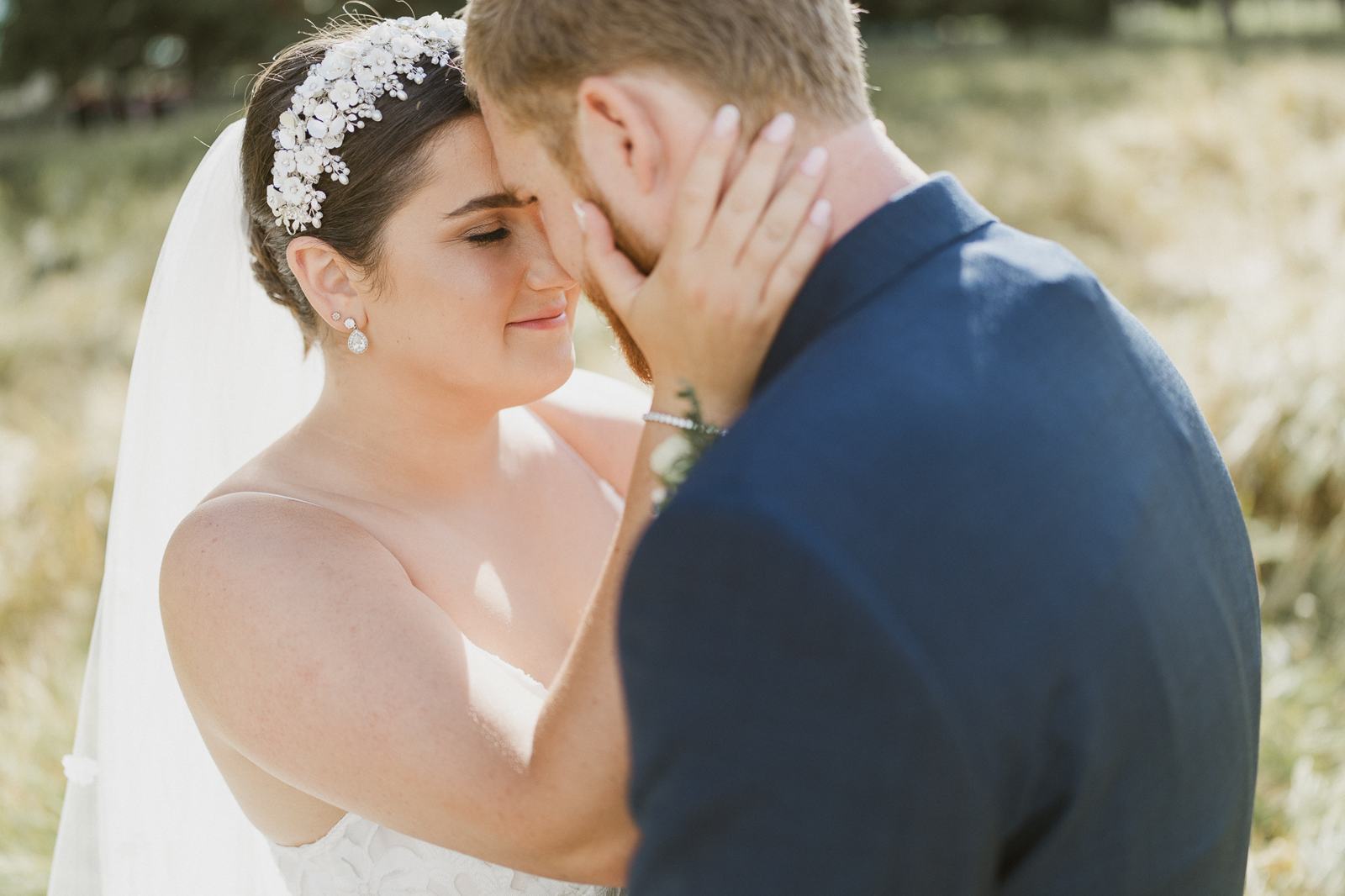
A private moment. The aisle is lovely, but it is public. You are watched, you are walking, and the moment ends when you arrive. A first look is two people and a photographer standing back. Some people find they can say something to each other that they would not say with a crowd.
A fallback for the weather. If you do portraits early and the afternoon turns, you already hold a set of couple pictures. Rain still matters for the rest of the day, and what happens on a rainy wedding day is worth reading, but one outstanding job is already done.
More time with your guests. If portraits and formals are finished before the ceremony, you can walk into the drinks rather than disappear for the length of a photo session while people wait. For some couples that is the main reason to do it.
What you give up
The aisle as your first sight of each other. This is the real cost, and it is a reason to skip a first look with no apology. Standing at the front while the person you are marrying walks towards you is one of the moments people think about for months beforehand. After a first look, the walk is still moving, but it is recognition rather than first sight. You cannot do both for the first time.
Some of the involuntary reaction. A first look is planned, even when it is relaxed. A reaction at the end of the aisle is not planned, and nobody can ask for it again. If you want the unrehearsed version, that points away from a first look.
An earlier start. To have portraits before a 3pm ceremony, getting ready has to finish earlier. That means earlier hair and makeup, earlier breakfast and an earlier alarm. How much earlier depends on how long you want for portraits, and the getting-ready buffer explains why that morning usually runs longer than a timeline says.
A little of the build-up. Some couples like the hours of waiting, the fact that nobody has seen the dress, and the quiet before everything starts. A first look breaks that quiet in the middle of the afternoon.
How to decide
Ask yourselves one question and answer it separately before you compare: which would you rather be surprised by, the sight of each other, or walking towards each other with everyone watching? If you disagree, the one who feels more strongly gets the vote. The rest of the decision is practical.
Use these rules as a starting point.
- Ceremony in the cooler months, or a venue that loses light early. A first look is doing measurable work. Mid June gives you under two hours between a 3pm start and sunset, and a west-facing venue gives you less usable light than the table shows.
- Long summer evening with a late sunset. You can skip a first look and still keep your afternoon, because the light carries on well past the ceremony.
- You want the aisle above everything. Skip it, and then protect your post-ceremony window instead. Choose a ceremony time that leaves room, and keep the family group list short and agreed in advance.
- You are anxious about being the centre of attention. A first look gives you a private moment before the crowd. Some couples find that more valuable than the aisle.
- You are unsure. Lean towards a first look when daylight is short, and feel free to skip it when daylight is long.
None of this removes the personal part. A couple can have a winter wedding, skip the first look, and be glad they did, because the aisle mattered more than the margin. What you want to avoid is skipping it without knowing what that does to your afternoon.
Two things can go wrong. One is doing a first look because it is popular, and missing the aisle. The other is skipping it without checking the light, and finding that the window after the ceremony is shorter than you pictured. Both are avoidable by doing the arithmetic above for your own date and venue.
Middle options
It is not a straight choice between a full first look and nothing. A few versions sit between.
- A first touch. You stand back to back, or either side of a door or a wall, and hold hands or exchange a few words without seeing each other. You keep the aisle as first sight and still get a private moment.
- A first look with only the two of you, and portraits after the ceremony. You get the quiet moment and the calmer nerves, but the post-ceremony window stays as tight as without one.
- A first look that includes a parent or the bridal party. Some people see a parent first, then each other. This works better when formals are on your list.
- Letters or vows read privately. If privacy is what you want rather than the portraits, a private exchange of letters can do that without touching the order of the day.
These suit different reasons for wanting a first look. Match the version to the reason, not the other way round.
Planning the first look itself
If you decide to do one, a few details decide whether it feels calm or rushed.
Choose the spot with light and privacy in mind. You want somewhere you cannot be seen from the guest arrival area. A garden corner can work, but trees and walls change the light. A side room with window light stays the same in the middle of the day, which a garden cannot promise. Ask your photographer or the venue what is available, and have a second option for wet weather.
Finish hair and makeup first. The first look comes after you are fully ready. If the schedule runs late, the first look is the part that gets cut or squeezed, so build in a buffer before it rather than after.
Decide who else is there. Normally it is the two of you and the photographer, at a respectful distance. If you want a witness, a parent or a friend nearby, say so beforehand.
Plan what comes next. After a first look, some photographers continue straight into couple portraits while you are both relaxed. If family formals are going to be done before the ceremony as well, make sure the family knows to arrive early, and how much time family formals really need is worth reading before you set the clock.
Keep the ceremony start fixed. Everything before it has to work back from that time. Add a margin, because a first look that starts late pushes into the ceremony rather than into the evening.
Questions to ask your photographer and venue
Before you decide, ask these. The answers change the plan more than any rule of thumb.
- What time does the light go at my venue on my date, and which direction do we face?
- Where would you suggest a private first look at this venue, and what is the wet weather option?
- How long do you need for couple portraits, and does that change if we do a first look?
- If we skip a first look, how much of the post-ceremony window would you want, and is there enough on this date?
- Can family formals happen before the ceremony, and who has to be there?
- Will you cover the aisle either way, and from where?
- If the schedule slips, which part of the day do you suggest we shorten first?
For the venue, ask whether there is a private space, whether guests arrive through it, and what time the area is available. If you want to see how an hour by hour plan fits together, the Sydney wedding day timeline lays one out. Hours matter here too. Six hours usually ends before the speeches, eight is what most couples choose, and ten is what nobody regrets, so the hours you book shape how generous the schedule can be.
What to do next
- Pick your date and ceremony time, then look up sunset, golden hour and civil dusk for that date. The golden hour table is a good place to start.
- Work out your window. Count from the end of the ceremony to sunset. If you are heading into winter, that number may be below two hours before any photographs are taken.
- Settle the question between you. Which would you rather be the first sight, the private moment or the aisle? Write down your answer separately, then compare.
- Check the venue. Ask about a private spot, wet weather options and which way it faces. Use the planning library and your day planner to sketch the order of events.
- Talk it through with your photographer. Bring the date, the venue and your two answers. They can say how much time they would want either way.
If you are weighing this up for a real date, get in touch and tell Binh your date and venue type. He answers honestly whether he is free, and if he is, you will hear what your day could look like.