
A summer wedding in Sydney comes with the longest days of the year, and that is the good news. The harder news is that a midday ceremony in a Sydney summer sits under the least flattering light of the whole day, in the hottest hours, with hair, makeup and guests all working against the weather before the first photo is taken.
None of this means a midday ceremony is a mistake. Venues, religious services, family travel and plain availability put plenty of ceremonies at lunchtime. It means the heat and the light are worth planning for in advance, so they are not discovered halfway through the formals.
Quick answer: A midday Sydney summer ceremony means high overhead sun, air that can sit in the low-to-mid 30s, and makeup that has to survive both. Plan for shade, water and a touch-up window between the ceremony and the portraits, and move the ceremony earlier in the day if you can choose. The long evening is your friend: save the couple portraits for the last of the light.
On this page
- Why midday summer light is the hard part
- What heat does across the day
- Daylight is not the number that matters
- A 1pm January ceremony, worked through
- Planning around it
- Splitting the day between shade and the evening
- What to wear and what to pack
- When a midday ceremony still makes sense, and when to rethink it
- Questions to ask before you lock the time
- What to do next
Why midday summer light is the hard part
Golden hour and sunset get the attention, and midday is the part nobody romanticises. When the sun is high, it lights the tops of things. Foreheads, noses, shoulders and the crown of every head catch the brightest light, while eye sockets, the underside of the nose and the chin fall into shadow. Eyes narrow because the sky is bright, and narrowed eyes plus dark sockets read as tired or cross, even on a person who is delighted.
Skin looks flatter and more contrasty at the same time. A white dress and a dark suit standing in the same patch of sun are far apart in brightness, and a camera has to choose between keeping detail in the dress or in the suit. A good photographer manages this with position and shade, but it is a constraint that exists at the venue, whatever camera is in use.
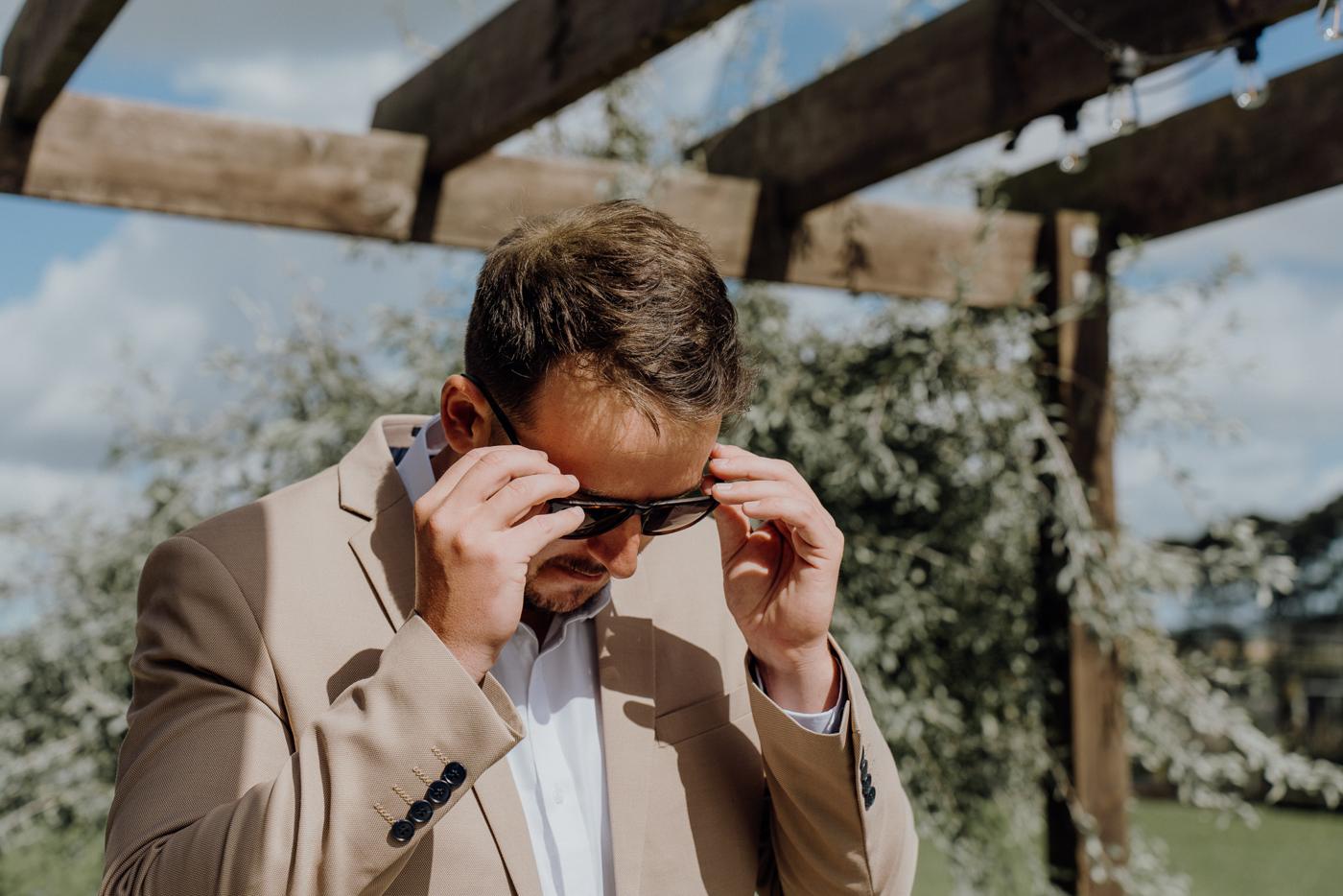
Shade changes this more than any technique. Open shade, such as the edge of a building, a tree line or the underside of a marquee, lets the bright sky act as one big soft light source instead of the sun acting as a single hard one. Faces even out, squinting eases, and the same person looks like themselves again. That is why a shaded spot on the venue site matters more to the photographs than almost anything on a midday checklist.
What heat does across the day
Heat works on a wedding in small, practical ways, and each one shows up in the photographs.
Makeup moves faster than the schedule allows for. Heat and humidity break down foundation and cream-based products well before anything visibly melts. Oils and sweat lift the product, shine arrives, and a long ceremony followed by a long formals list gives it plenty of time to compound.
Guests and the bridal party tire faster in direct sun. Tiredness shows in posture and expressions. A formals list done standing in full sun without any shade looks different from the same list done in the shade of a tree, and not in a good way.
Fresh flowers wilt faster. Florists plan for this, and a bouquet kept in the shade or in water until the last moment lasts longer. Ask your florist how they would keep them cool.
Water gets skipped. If nobody wants to need the bathroom in a wedding dress or a suit, drinking less is tempting, and by mid-afternoon that can show in energy and in faces.
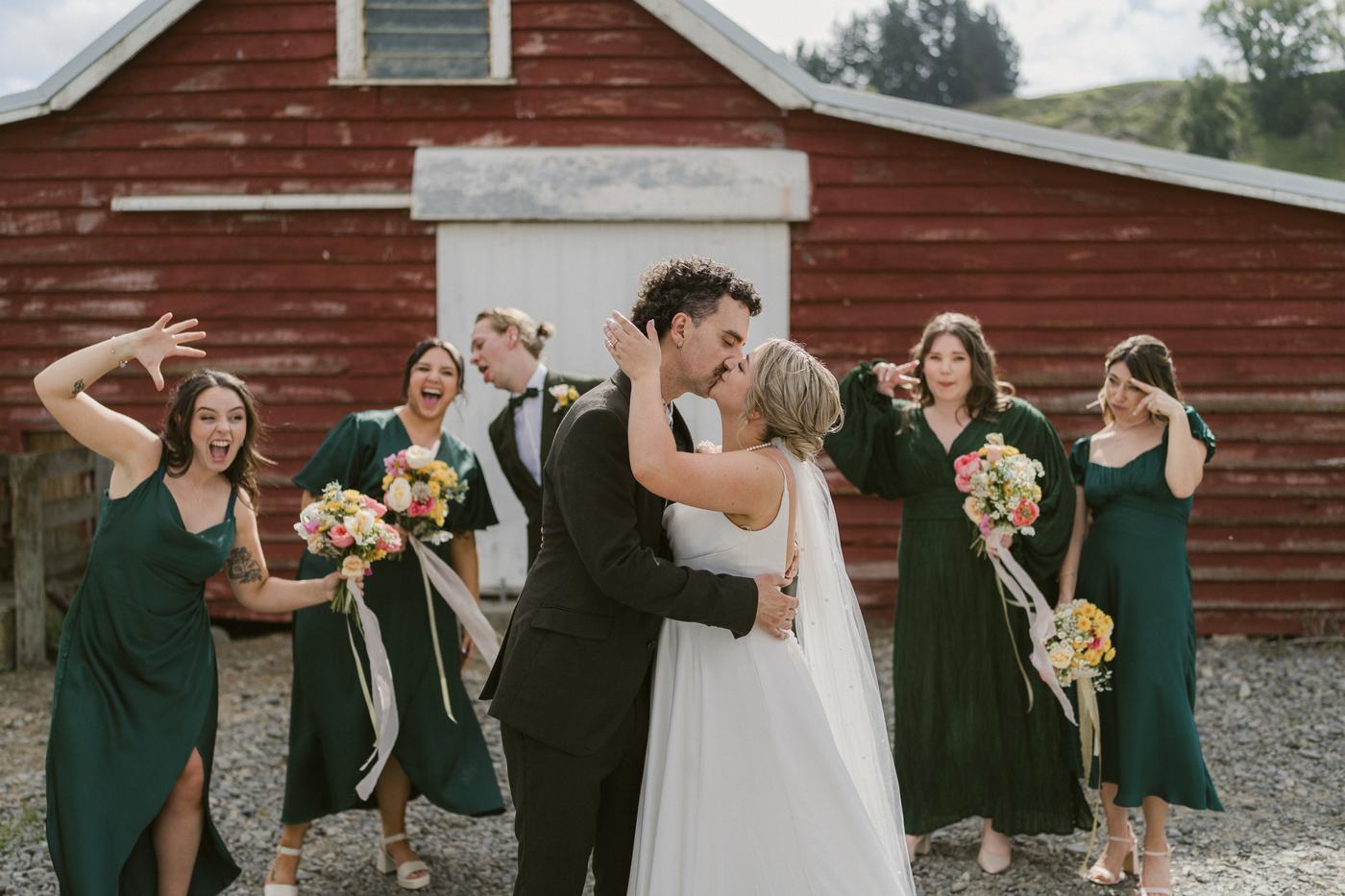
Energy is the quiet currency of a wedding day. The laughter in a bridal party photograph is real when people feel comfortable, and it is hard to fake when they are hot, thirsty and standing in glare. Looking after people’s comfort is, in a very direct way, looking after the photographs.
Daylight is not the number that matters
The tempting answer to a summer question is the daylight total. It is a true number, and it feels reassuring. In Sydney in mid-January it is about 14 hours and 10 minutes, with the sun coming up at 5:59am and going down at 8:09pm. A couple choosing a 1pm ceremony because “there is so much light, it will not matter when we start” is right about the total and wrong about which part of the day they will be standing in.
What decides how your day feels is which hours you spend outside. Here is how the evening light looks through a Sydney summer, using the 2027 light table for the CBD. Golden hour here is the stretch when the sun is within 6 degrees of the horizon, ending at sunset.
| Date (2027) | Sunrise | Golden hour starts | Sunset | Civil dusk | Golden minutes |
|---|---|---|---|---|---|
| 1 December | 5:37am | 7:15pm | 7:51pm | 8:19pm | 36 |
| 15 December | 5:38am | 7:25pm | 8:02pm | 8:31pm | 37 |
| 15 January | 5:59am | 7:33pm | 8:09pm | 8:38pm | 36 |
| 1 February | 6:16am | 7:26pm | 8:01pm | 8:28pm | 35 |
| 15 February | 6:30am | 7:15pm | 7:48pm | 8:15pm | 34 |
| 1 March | 6:42am | 6:59pm | 7:32pm | 7:58pm | 33 |
Two things follow from the table. Golden hour is a short window, between 33 and 38 minutes across the whole year, so a summer evening gives you a late and brief stretch of beautiful light rather than a long one. And the light is still usable until civil dusk, roughly half an hour after sunset, though it fades quickly in that last stretch. A venue facing west loses usable light sooner than the table suggests, because hills, buildings and trees get in the way of a low sun. Sydney golden hour by month has the full year if you want to check your own date.
A 1pm January ceremony, worked through
This is an example with assumptions, so adjust the sizes to your own day. Say your ceremony is at 1pm on a mid-January Saturday, runs for 30 minutes, and family formals start at 1:45pm and run until 2:30pm. Say hair and makeup were finished at 11:30am.
By the time formals begin, the makeup has had more than two hours of a warm day behind it. The ceremony and the congratulations have happened in whatever shade the venue offered, and the formals are standing in the open, in the middle of the afternoon, with the sun high and the heat close to its daily peak. The hour that matters most for family photographs is the hour that is hardest on everyone’s comfort.
Now move the same ceremony to 11am, with the same assumed lengths. The ceremony ends at 11:30am and formals run from 11:45am to 12:30pm. The sun is still high, so shade is still needed, but the air is cooler than at 1:45pm and the makeup is fresh. There is also a natural moment at 12:30pm to move everyone indoors for lunch or a break, well ahead of the hottest part of the afternoon.
Last, try a late-afternoon ceremony at 6pm on the same date, with the same 30-minute ceremony and formals from 6:45pm. Golden hour begins at 7:33pm and the sun sets at 8:09pm, so formals that run 45 minutes finish at 7:30pm, just before golden hour. The couple can step away from the reception for portraits at 7:33pm and have about 36 minutes of golden light before the sun sets, with a little more usable light until 8:38pm.
Nobody in these three versions loses any daylight. January gives each couple the same budget. What changes is which hours of it the wedding party spends outside, and how they feel when the camera comes out.
Planning around it
These are the practical levers, roughly in the order that they pay off.
Move the ceremony time first, if you can. Changing the time changes the conditions. Shade, water and touch-ups are ways of coping with conditions you have already accepted. An 11am ceremony is usually in gentler heat than a 1pm one, even though both count as midday.
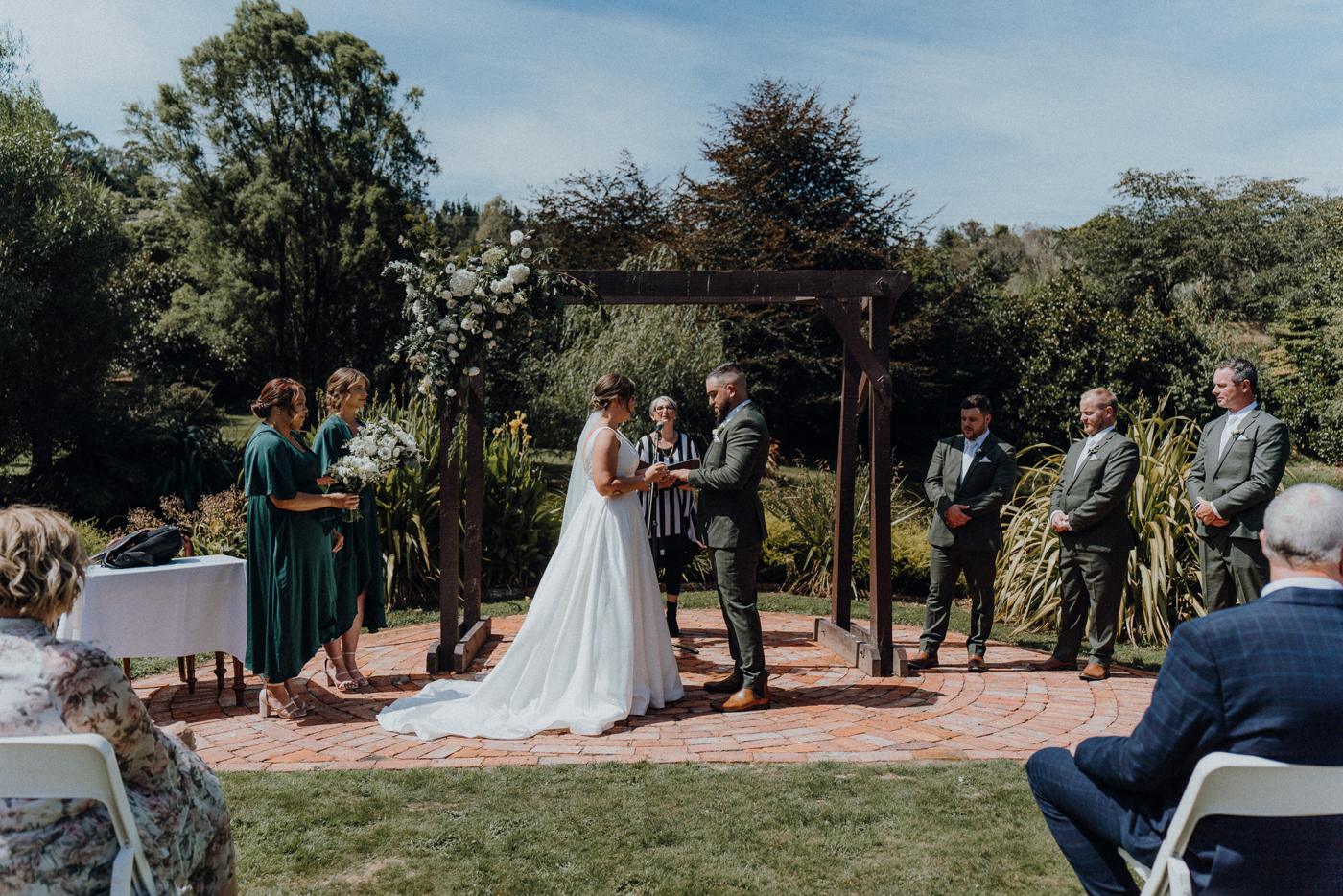
Build a shade option for the ceremony and the formals. A marquee edge, a tree line, a covered veranda or a building’s shaded side all do the job. It does not need to cover the whole ceremony, only somewhere the bridal party and guests can stand between the ceremony and the formals.
Ask your makeup artist about long-wear products. Be upfront that it is a midday summer ceremony and ask what they would use for heat. Ask whether a touch-up kit can stay with the bridal party for the afternoon, and plan five minutes for it between the ceremony and the portraits.
Put a water station near wherever the formals happen. It sounds minor, and it changes how people look in the second half of a long list.
Give the middle of the day a break. On a hot day, a longer gap between the ceremony and the reception lets everyone, the bridal party especially, spend time indoors before the next block begins.
Shorten the list or split it. The longer a family formals list is, the longer a group stands in the open. Ask your photographer for a shot list in advance, and see how much time family formals really need for how to build one.
Splitting the day between shade and the evening
A summer day gives you a trade that a winter day does not. The family groups can happen indoors or in shade soon after the ceremony, and the couple portraits can wait for the evening, when the light is lower, softer and warmer and the air has cooled.
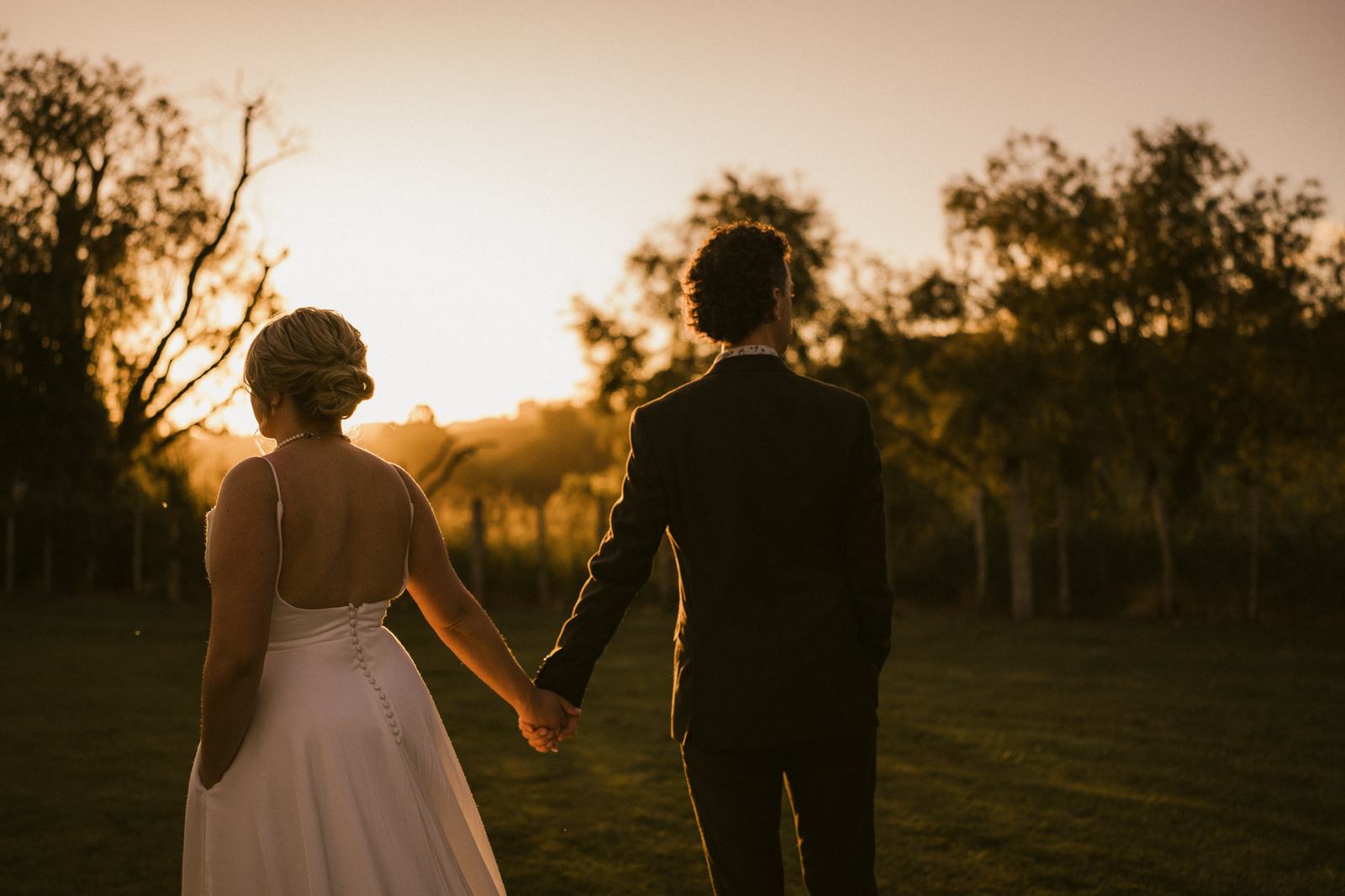
The table above shows what that evening looks like. In January the usable portrait window is short, between about 7:33pm and civil dusk at 8:38pm, with golden hour itself lasting around 36 minutes. To use it, the reception timeline has to leave room for the couple to step out. That means the entrance, the speeches and the first dance sit around the portrait window instead of on top of it, and someone has a rough idea what time the sun will set at the venue.
Two cautions apply. A venue facing west or surrounded by trees and buildings can lose the low sun well before sunset, so ask the venue or your photographer where the sun goes. Harbour, beach and west explains how the location changes the light. And an evening plan only works if the schedule is realistic: if everything before it runs late, the portraits happen after the light has gone and the whole point is lost.
A first look can also help with this trade, because it moves some of the couple’s photographs away from the hottest hours. First look or not covers what it does to the rest of your day.
What to wear and what to pack
Clothing is a heat decision as much as a style one. Darker fabric absorbs more heat than lighter fabric, which matters more to a groomsman in a dark suit standing for the whole of the formals than for a few minutes at the ceremony. It is not worth changing a colour scheme over, but it is worth knowing if you are choosing between options. Lightweight and breathable fabrics help, and jackets that can come off between photographs help more.
A short pack list for a hot day:
- Water for the bridal party, kept somewhere cool.
- A touch-up kit left with someone dependable, including blotting papers and the makeup artist’s recommended products.
- Hats or parasols for the wait between the ceremony and formals, with a plan for when they come off.
- Sunscreen applied early enough to dry before dressing, so that it does not mark fabric.
- Fans or a few cold drinks for older relatives and anyone who feels the heat.
- A bag or box in the shade for jackets, shoes and anything that should not sit in a hot car.
Pack the list into one named person’s job, such as a bridesmaid or a cousin, so that “someone” does not turn into nobody.
When a midday ceremony still makes sense, and when to rethink it
Plenty of good reasons put a ceremony at midday: a religious service with its own timing, a venue available only then, guests flying in who need the rest of the day. None of those are mistakes, and a midday summer wedding can look wonderful. It needs different planning from an evening one, not less planning.
There is one plan worth rethinking, which is a fully exposed, shadeless outdoor space booked for the stretch between 12pm and 2pm in January or February, with a long formals list straight afterwards and no indoor break. The cost there is not only the photographs, which can be managed, but real physical discomfort that shows on faces, and older relatives standing in direct sun for a long stretch. If that is the plan on the table, the better fix is shade, timing or an indoor break rather than a photographer working around a problem that was avoidable.

Weather can change a hot day quickly, so keep a wet-weather fallback in mind as well. Rain: what actually happens covers that side of it.
Questions to ask before you lock the time
Questions are the cheapest way to find the weak points in a midday plan. Ask them before the date is final, not the week of the wedding.
To the venue:
- Where is the shade at the time of day we are planning, and does it move?
- Is there an indoor space for the bridal party between the ceremony and the next block?
- Can water, a fan or a shaded waiting area be set up near the ceremony?
To the makeup artist:
- What would you use for a hot, humid day, and how long do those products last?
- Can a touch-up kit stay with the bridal party?
- How much time should we leave for a touch-up between the ceremony and photographs?
To your photographer:
- Where would you place the ceremony and the family groups to keep people out of glare?
- When does the light turn golden at our venue on our date, and does the venue lose the sun early?
- Can we split the portraits between the afternoon and the evening, and what would that mean for the timeline?
What to do next
- Write down the hours your ceremony and formals would fall in, then compare them with the table above. If they sit between 11am and 3pm, treat shade and water as part of the plan.
- Check your own date on Sydney golden hour by month and note the sunset time, so the evening portraits have a number to build around.
- Look at the order of the whole day in the Sydney wedding day timeline, then use the light planner on your day to test different ceremony times.
- Leave room for a rest and a touch-up between the ceremony and the portraits.
- Photography starts from $4,000, with hours and film changing the price from there. Investment explains how booking works.
If you have a date and a venue in mind, send them through the contact page. Binh will tell you straight away whether he is free, and what the day could look like if he is.