Many photographer websites describe their wedding photography style in one line: a blend of documentary and fine art, with some editorial touches. It sounds specific. It describes an intention, though, not a method, and a mood board cannot tell you what the photographer will be physically doing at 2pm on your wedding day.
So here are the three words defined by what the photographer does while they work, not by how the pictures look on a screen. That is the only definition that helps you choose, because the same three modes run the same way in a garden, a ballroom or a backyard. What changes from venue to venue is how long the formal part takes, not what the words mean.
Quick answer: Documentary means the photographer watches and reacts, and nothing is arranged. Editorial means the photographer directs one frame at a time, usually the couple portraits. Traditional means a fixed list of formal group shots, shot the same way whoever the couple is. Most weddings end up as documentary at the base, with editorial portraits and a short traditional block for the families inside it.
On this page
- What each style means, by what the photographer is doing
- A side-by-side comparison
- Why almost every wedding is a mix
- What “no posed shots” really asks for
- Matching the style to the size and shape of your day
- Reading a photographer’s portfolio for the real ratio
- Building the mix into your timeline
- Common mistakes, and what causes them
- Questions to ask a photographer about style
- What to do next
What each style means, by what the photographer is doing
Documentary
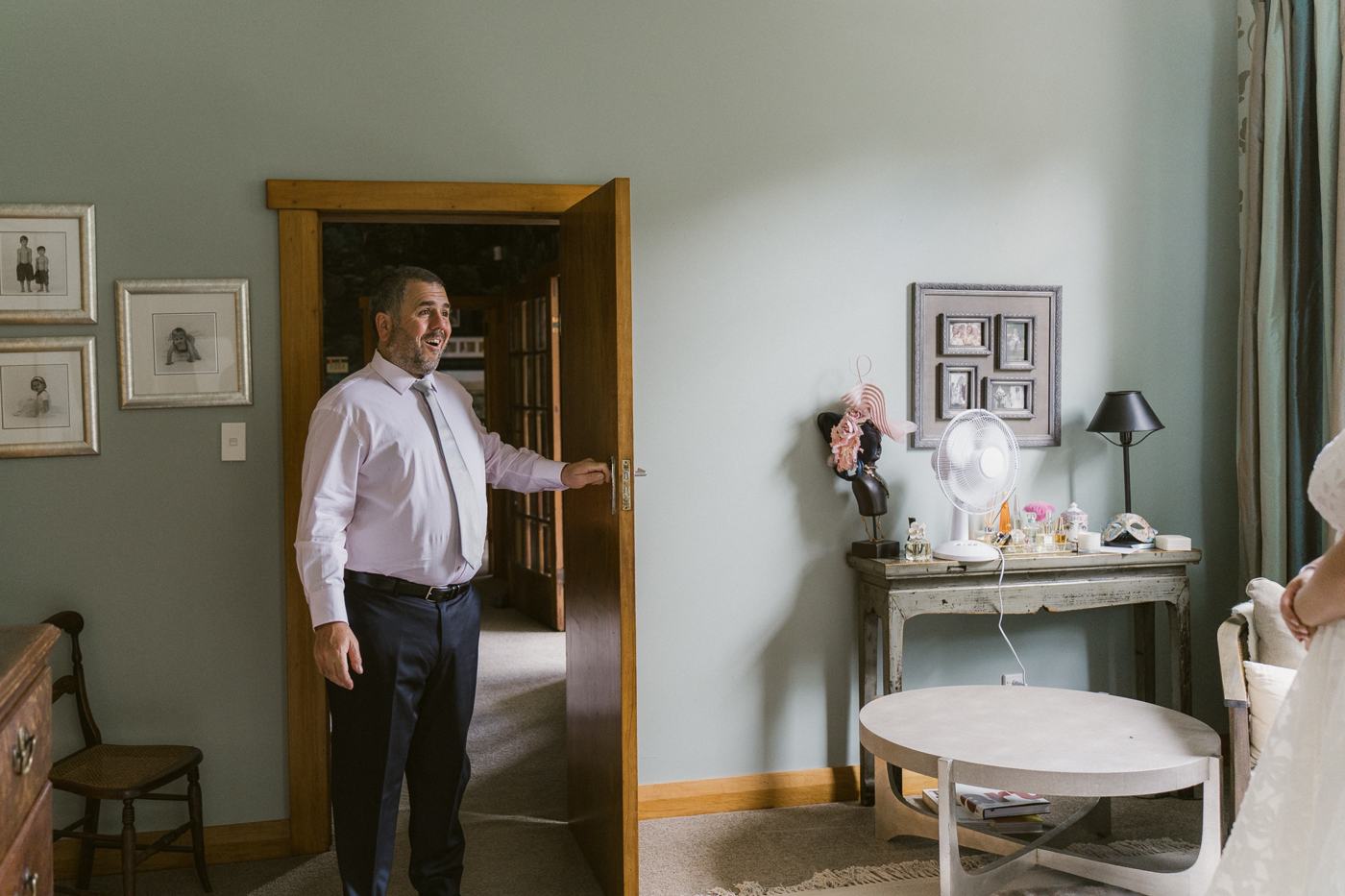
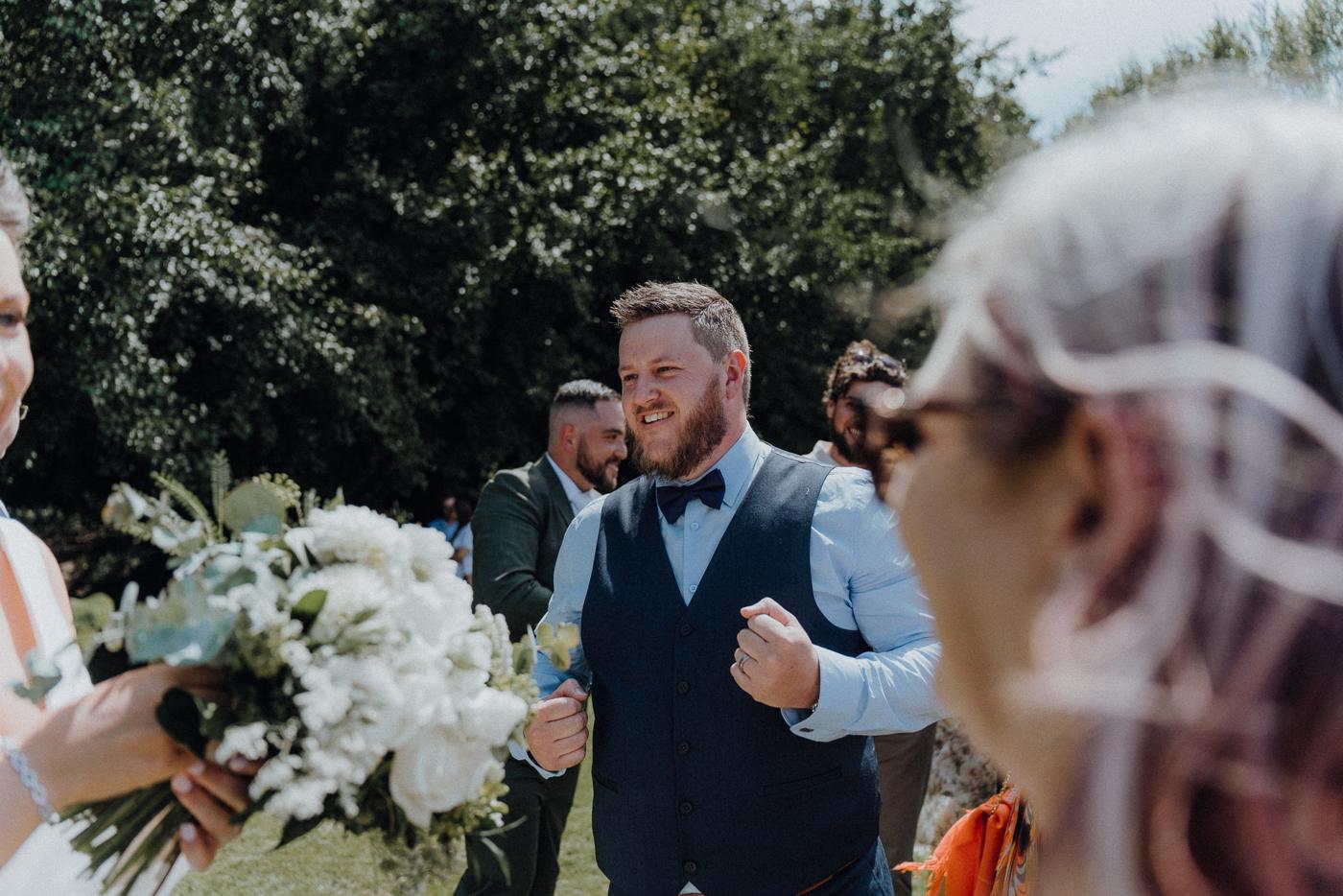
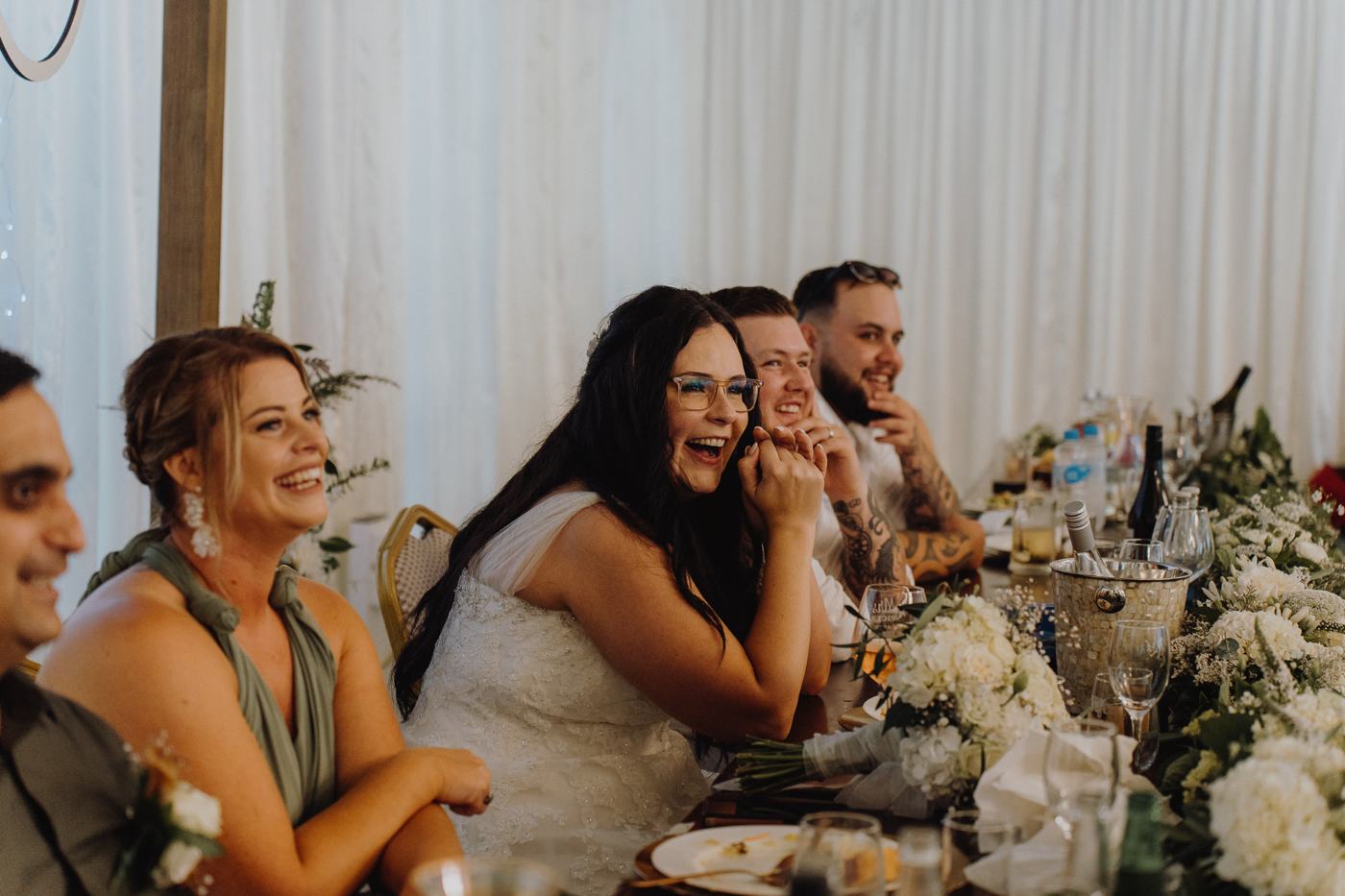
Documentary is the photographer standing at the edge of the room with a fast lens, watching for the moment where something real happens. A father seeing his daughter in her dress. A best man losing his composure halfway through a toast. A child asleep under a table during the speeches. The photographer says almost nothing. If they ask someone to move, it is usually because they are about to walk into that person’s eyeline, not because they want a different expression.
Real moments last a second or two, so the work is anticipation: knowing which door the groom will come through, where the light will fall when the veil lifts. Years later you are not looking for a perfect face, you are looking for the way your grandmother held your hand.
Editorial
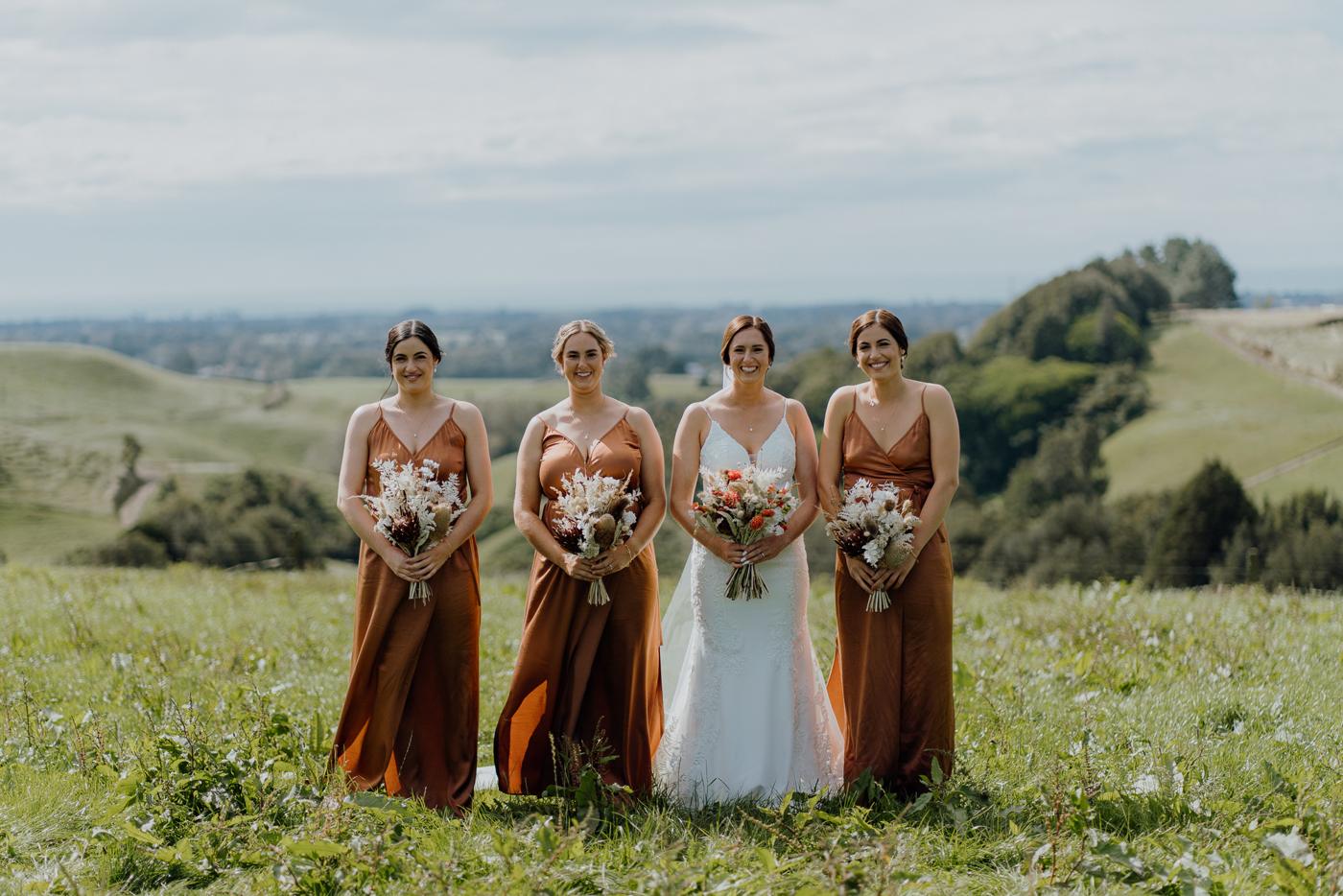
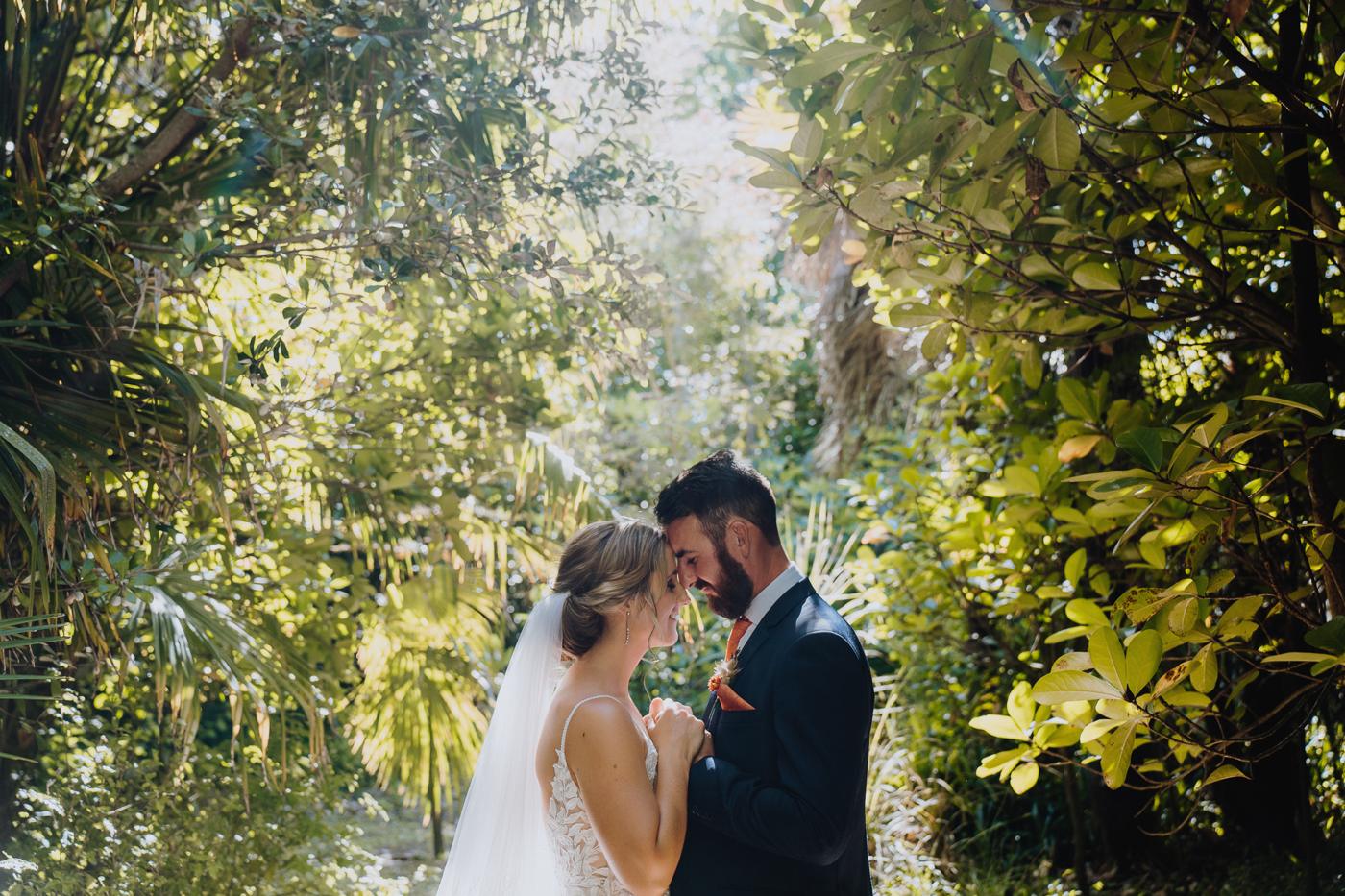
Editorial is direction with intent. The photographer chooses the light and the angle, and gives you something to do with your hands or your attention so the pose does not look like a pose. In practice this is almost always the couple portraits. It is the one stretch of the day where the photographer is actively running the frame.
Editorial is not the same as artsy, and it is not the opposite of traditional. The difference is that editorial portraits respond to the two of you. If you are quiet together, the photographer builds a quiet frame. If you are a pair who cannot stop laughing, they build for that. Good direction here sounds like simple prompts: walk slowly, say something only the other person would find funny, stop and lean in. It should never sound like a drill sergeant.
Traditional
Traditional is a list. Bride’s side, groom’s side, immediate family, extended family, the bridal party. It is shot in a fixed order, usually against a simple background, usually with everyone looking at the camera. It is the least creative part of the day, and it is also, very often, the set of photographs that grandparents put in a frame on the wall.
The key word is fixed. A traditional block runs the same way for any couple, which is exactly why it is quick when it is planned and painful when it is not. If you have a large family, read how much time family formals really need before you finalise your timeline.
A side-by-side comparison
| Documentary | Editorial | Traditional | |
|---|---|---|---|
| What the photographer does | Watches, reacts, rarely speaks | Directs the light, the pose and the moment | Runs a fixed list |
| When it happens | Getting ready, ceremony, reception | Couple portraits | Formals, usually soon after the ceremony |
| How much time | Most of the day, unplanned | A scheduled block, as long as you choose | A scheduled block, sized to the family list |
| Who looks at the camera | Almost nobody | Sometimes, by design | Everyone, every frame |
| What it gives you later | The feeling of the day | The images you print big | The faces everyone recognises |
| Can you skip it | Not really, it is most of what you are paying for | Can be kept short | Rarely, because families ask for it directly |
The lengths in that table depend on you. A tight family list needs less time. A large family needs more, so ask your photographer how long they would plan for yours.
Why almost every wedding is a mix
A couple might say, “we only want documentary, nothing posed at all.” That is a fair wish. Then, late in the afternoon, a parent asks when the family photo is happening, and the couple realise they would also like some time alone together where someone is actually shaping the light.
Honest documentary is not zero direction. It is documentary as the dominant mode, with editorial and traditional used at the two moments of the day that need them, the portraits and the formals, and nowhere else. A photographer who promises pure documentary with no portraits and no family list is either overselling or has not planned for what families usually ask for.
Each mode has its own job, and none of them covers for the others. Documentary keeps what happened, editorial keeps how the two of you look together, and traditional keeps the record of who came. If one is missing, you notice it in the album a few years later, usually as a gap where a relative should be or a portrait you wish existed.
What “no posed shots” really asks for
Taken literally, “no posed shots” means nobody plans a formals block. Then one gets improvised late in the afternoon, with the light going and half the guests already at the bar, which is the worst possible way to shoot the photographs your family is most likely to frame.
The sensible answer is to put the formals block in the timeline whatever you say about posing, give it a fixed end time and tell the photographer plainly that you can cancel it on the day. A cancelled block costs you nothing. A missing block cannot be conjured back once everyone has left.
There is a second thing hiding inside “candid only”. Usually it describes a feeling, not a technical preference. What people mean is that they do not want to feel awkward being photographed. That is real and solvable, but it is a different problem from style. If it sounds like you, read how to look like yourself in photos when you hate being photographed before you pick a style, because the answer is usually better direction, not less of it. Simple prompts and a photographer who keeps things moving help many camera-shy couples relax.
Matching the style to the size and shape of your day
A Pinterest board is built from other people’s weddings, and other people’s weddings had other people in them. A heavily editorial gallery from a two-person elopement does not transfer to a wedding with four separate family groups and a long reception. The style has to fit the day you are actually having. Some decision rules:
- If you have more than about 50 guests, treat the traditional block as essential. Somebody else is relying on those photographs, and a bigger group takes longer to assemble.
- If you are having a very small day, you can lean almost entirely on documentary and editorial, because the formals list is short.
- If you are camera-shy, keep editorial short and well spaced, and put it where the light is good. A short, calm session beats a long, tense one.
- If you love portraits, say so early. The best light usually sits late in the day, and the Sydney golden hour table shows when it falls.
- If you are choosing between a first look and not, the first look is a chance to do editorial portraits before the ceremony, which frees up time afterwards. First look or not covers what each does to your timeline.
Coverage hours matter here too. A six-hour day usually ends before the speeches, which squeezes the documentary part first, because the formals and portraits still need their fixed time. Eight hours is what most couples choose, and it gives all three modes room. Ten hours is what nobody regrets, and the extra time mostly goes back into documentary, which is where the unplanned moments live.
Reading a photographer’s portfolio for the real ratio
Portfolios show the best individual frames, which makes every style look similar. A single beautiful portrait tells you nothing about whether the rest of the day was caught or directed. Two checks tell you the ratio.
Count the eye contact. A gallery where people mostly look at the lens leans editorial or traditional, whatever the caption says. A gallery where people mostly look at each other, or at nothing in particular, leans documentary.
Ask to see a full gallery, not a highlight reel. A short highlight reel can be pulled from any mix of styles. A full gallery from a single wedding shows the real proportion: how many formals, how many directed portraits, how much of the reception was caught rather than staged. If a photographer will only show you a highlight reel, that is an answer in itself.
Counting eye contact is a quick sanity check on a portfolio you are already looking at. A full gallery answers the question outright and cannot be trimmed to flatter. You can see whole weddings in the gallery.
Building the mix into your timeline
A style is only real if there is room for it in the schedule. Documentary needs no slot because it runs all day. Editorial and traditional each need a named block, with a start time, an end time and a person responsible for getting people there.
Here is a worked example. The times and block sizes are assumptions, made up to show the logic, not to copy.
Say your ceremony finishes at 3:30pm and you have an eight-hour booking. A workable order might look like this:
- Ceremony ends, 3:30pm. Guests move to drinks. This is documentary: hugs, tears, the first reactions.
- Formals block, from about 3:45pm. Fixed list, fixed end time. One person (a sibling or a friend) is in charge of fetching relatives.
- Couple portraits, from about 4:15pm. This is the editorial block, ideally in the best light you can get.
- Join the guests, then into the reception. Documentary again, for the rest of the evening.
Formals go first because everyone is present and nobody has drifted off. Portraits go second, so guests have a drink while you are away. Documentary carries the rest, so the reception is never interrupted by arranged shots. If your day starts earlier or later, the same order holds. Only the light changes. For a fuller schedule, see the Sydney wedding day timeline and the light planner on your day.
Common mistakes, and what causes them
Choosing a style from a single image. One lovely frame says nothing about the whole day. Portfolios are edited to show peaks, so ask for a full gallery.
Skipping the formals list because it feels unromantic. Formals are less a style choice than a service for other people, so timebox them rather than cutting them.
Running formals with no list. Without names written down, the block expands to fill whatever time is available, and the light goes. Nobody is in charge of the list. Write the order down and give one helper who knows the relatives the job of fetching them.
Expecting soft-light portraits at midday. If the schedule only leaves harsh sun, the frames will differ from the evening images on your board. That happens when the timeline is built around catering instead of light, so check the light before you fix the ceremony time.
Assuming style changes the price directly. Hours, film and where you marry move the price; the word on the style label does not. A long family list does need more scheduled time, which can push you towards a longer booking.
Questions to ask a photographer about style
Use these in a consultation. They work for any photographer.
- “How much of a typical wedding do you direct, and where?” A clear answer names the portraits and the formals. A vague answer about “capturing everything naturally” usually means the photographer has not thought about the ratio.
- “Can I see a whole wedding, start to finish?” This is the single best test. See the longer list in questions worth asking a wedding photographer.
- “How do you handle a long family list?” Look for a plan: written names, a fixed time, a helper. Large families need a method.
- “What do you do when someone is uncomfortable being photographed?” You want an answer about simple prompts and pace, not about getting the shot regardless.
As for how I work: most of the day is real moments as they happen, with gentle guidance for the portraits. I use simple prompts and never over-pose, and camera-shy couples are normal.
What to do next
- Decide your mix in one sentence. For example: “documentary all day, a short portrait session, a short family list.” If you cannot write the sentence, you are not ready to compare photographers yet.
- Write the family list. Names or relationships, in order, with one person assigned to gather them. Then read family formals timing to set the block length.
- Look at whole galleries. Start with the whole weddings in the gallery, then ask any photographer you are considering for a full one.
- Check the light against your timeline. Use the planner on your day to see where editorial portraits will land.
- Ask about hours and price. The investment page explains what is included and how booking works, and the questions worth asking a wedding photographer make a good checklist for the call.
If you want to talk through your timeline, your families and what you want to remember, get in touch with your date, and you will hear plainly whether I am free and what the day could look like.