
Couples planning an elopement often have a clear picture of the legal bit and almost no picture of the day itself. What time to start, how long each part takes, what happens in between and what happens after. That gap is fair. A big wedding comes with a run sheet and a venue coordinator. An elopement comes with a celebrant, a location and a lot of open space.
This guide walks through what happens on an elopement day, in order, and explains why each part works the way it does. The shape of the day is easy to describe. The decisions inside it (when to start, where to stand, what to do at the end) are the ones worth making early.
Quick answer: An elopement day has four parts: getting ready, a short ceremony with a celebrant and two witnesses, portraits, and a quiet finish. With no reception to protect, the whole day can be built around the best light, which is the biggest practical difference from a big wedding.
On this page
- The shape of the day
- What is different from a big wedding day
- Getting ready
- The ceremony
- Who is actually there
- Portraits
- Choosing a place and planning for weather
- The quiet, and the ending
- Hours, film and what it costs
- What to do next
The shape of the day
Every elopement is shaped by its location and its light, so there is no fixed schedule. There is, though, a rhythm a small day tends to follow: a calm lead-in, the ceremony, a pause to let it sink in, a long stretch of portraits, and a finish that you plan on purpose.
The most useful decision is the ceremony time, because everything else hangs off it. If you can choose your hour, put the ceremony about 90 minutes before sunset. That puts the ceremony in good light and drops the portraits straight into golden hour without anybody hurrying. In Sydney, using 2027 sunset times, that works out at about 6:40pm in mid-January and about 3:25pm in mid-June. Sunset moves through the year, so check your own date before you book the celebrant. The Sydney golden hour table has every month.
Here is one worked example. The numbers are assumptions chosen for illustration, not a standard.
Say your ceremony is at 4pm in mid-April 2027. Sunset that day is about 5:33pm, golden hour starts about 4:59pm and civil dusk (where usable light ends) is about 5:58pm. Say the ceremony takes twenty minutes and you want to be at the location half an hour early.
| Clock time | What is happening |
|---|---|
| 2:30pm | Getting ready, together or in the same building |
| 3:30pm | Arrive at the location, settle nerves, walk the spot |
| 4:00pm | Ceremony: legal wording, vows, rings, signing |
| 4:20pm | Congratulations, a few quiet minutes, water |
| 4:30pm | Portraits begin in open shade or soft afternoon light |
| 4:59pm | Golden hour starts (it lasts about 34 minutes that day) |
| 5:33pm | Sunset, the last portraits |
| 5:58pm | Civil dusk, usable light has ended |
| 6:30pm | Dinner, just the two of you |
The table has no gap for family formals, a cocktail hour, a bridal-party shuffle or a reception entrance, which is why the day is short. If you want it longer, add things you want, such as a picnic, a second location or a slow walk.
What is different from a big wedding day
A reception day is a negotiation. The ceremony time is set by the venue, the family formals are fitted around the photographer’s patience, and the portraits get whatever is left. On an elopement the negotiation mostly disappears, and four differences follow from that.
Portraits become the main event. At a big wedding, couple portraits are squeezed between the ceremony and the reception. At an elopement there is nowhere else anyone needs to be, so portraits can run longer than the ceremony. There is time to be walked around, talked to and left alone, which is how photos end up looking like you rather than like a pose.
There is no rehearsal, and that is fine. The logistics of an elopement are small enough that a rehearsal adds little. Your celebrant can tell you where to stand when you arrive. Ask them ahead of time how they run the ceremony, which keeps the day calm.
The end of the day is yours to design. A reception has a built-in finish: the last dance, the farewells. An elopement finishes when you decide it does. More on that near the end.
Nobody is managing anything. On a big day somebody is always chasing a late cousin or a missing boutonniere. On an elopement the only job is getting you from one part of the day to the next. That makes it easy to forget to eat, so build in food and water (a small bag in the car works), because tired and hungry shows up in photographs.
Getting ready
Getting ready on an elopement looks different from the traditional version. At a big wedding it is often split: one partner in one room with the bridesmaids, the other somewhere else with the groomsmen. On an elopement it is frequently the same room, and sometimes you help each other with buttons, cufflinks and zips.
That produces a more intimate set of photographs than the standard row of friends doing up a dress. It also means the details matter more than usual. With a small day, the dress on its hanger, the rings, the shoes and the flowers are some of the few things that are in the frame, so lay them out together somewhere with window light.
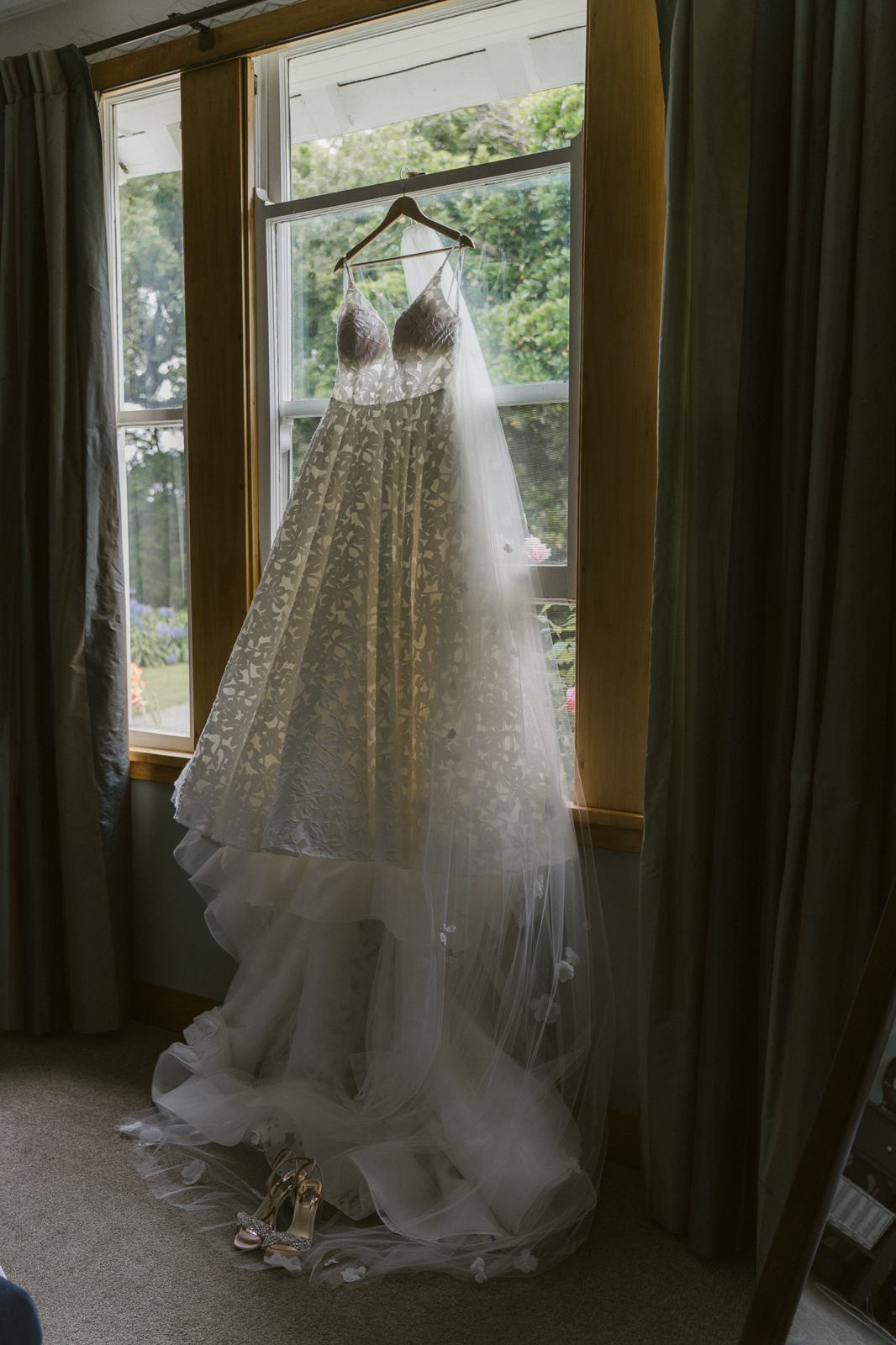
Plan for getting ready to be shorter than you expect and still start early. The mistake on small days is to treat the morning as slack, then discover that hair, makeup, travel to the location and parking take longer than they looked on paper. Work backwards from the ceremony time, as in the table above, and add a buffer you can give away.
If you are using a hair and makeup artist, ask them how long they need and where they want to set up.
The ceremony
The ceremony is the shortest part of the day and the part everything else is built around. In Australia an elopement is legally the same as any other wedding: you lodge a Notice of Intended Marriage with an authorised celebrant, and you need two witnesses on the day. The celebrant guides you through the wording, the vows, the rings and the signing. Legal rules, timing requirements and paperwork change, so confirm the current requirements with an authorised celebrant or the official government source before you plan around any date. The legal steps for eloping in NSW set out the process in plain language.
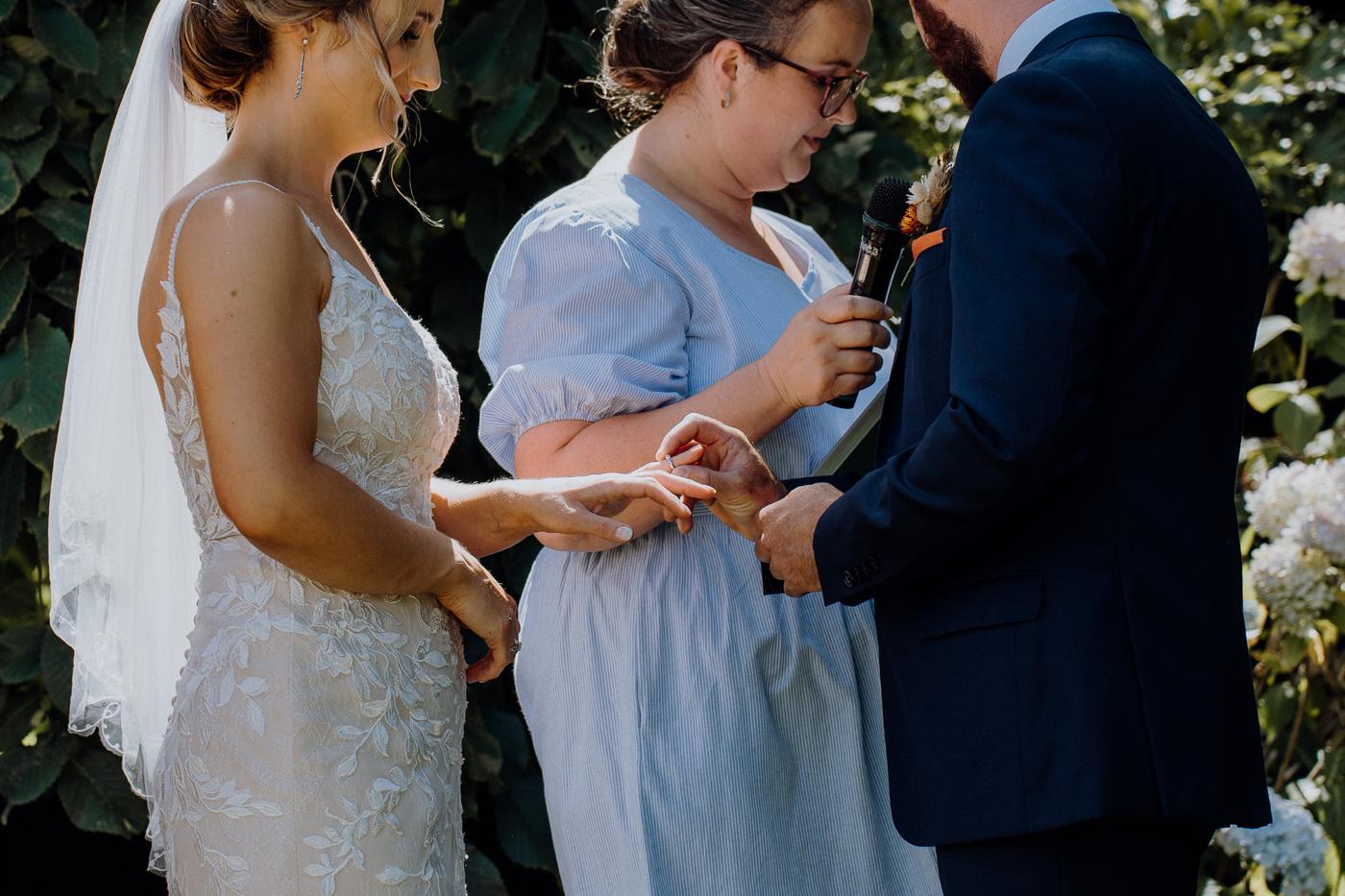
Some things are worth deciding before the day:
- Where you stand. Ask your celebrant how they like to set up, and tell your photographer. With a small ceremony, a few steps one way or the other can put the light on your faces instead of behind your heads.
- Your own words. Vows written down are easier to read in a breeze than vows remembered. Print them or keep them on a card.
- Signing. The signing takes a little time and is easy to overlook. Ask your photographer to be near the table, and ask your celebrant whether they are comfortable with that.
- The walk in and the wait. With no aisle and no guests, you may simply walk up together. Decide whether you want a moment of privacy beforehand.
If a ceremony is outdoors, tell the celebrant about wind and noise. Some use a small microphone, some do not. It is a question for them, not for the photographer.
Who is actually there
The cast is you, your celebrant, two witnesses and your photographer. Witnesses can be close family or friends who have travelled for the day. If you are keeping it private, ask your celebrant whether they can help arrange witnesses. Two people you have never met will serve the legal purpose, and the ceremony only takes a short part of their time.
Some couples add one or two more people, a parent or a sibling, without wanting a small wedding in the fuller sense. That is a real middle ground. It changes very little about how the day runs, because it is still built around the two of you and not around hosting. If the guest list starts to grow past a handful, small weddings with around 20 guests is a different format with different planning, and worth reading before you decide.
If someone cannot be there, some couples set up a video call for the ceremony: a phone propped up or held steady by a witness during the vows. Ask your celebrant first, since they run the ceremony and may have views on a screen in the middle of it. Tell your photographer too, so nobody is surprised.
Portraits
Portraits are where an elopement earns its photographs. With no reception schedule and no queue of relatives, you can be photographed in the light you choose rather than the light you are given.
Light does most of the work. The stretch before sunset is warm and flattering because the sun is low and passes through more atmosphere. Golden hour in Sydney lasts 33 to 38 minutes depending on the date, and usable light ends at civil dusk a little after sunset. A ceremony 90 minutes before sunset gives you some softer pre-golden light first, then the golden stretch, which is why the worked example above starts portraits before golden hour does.
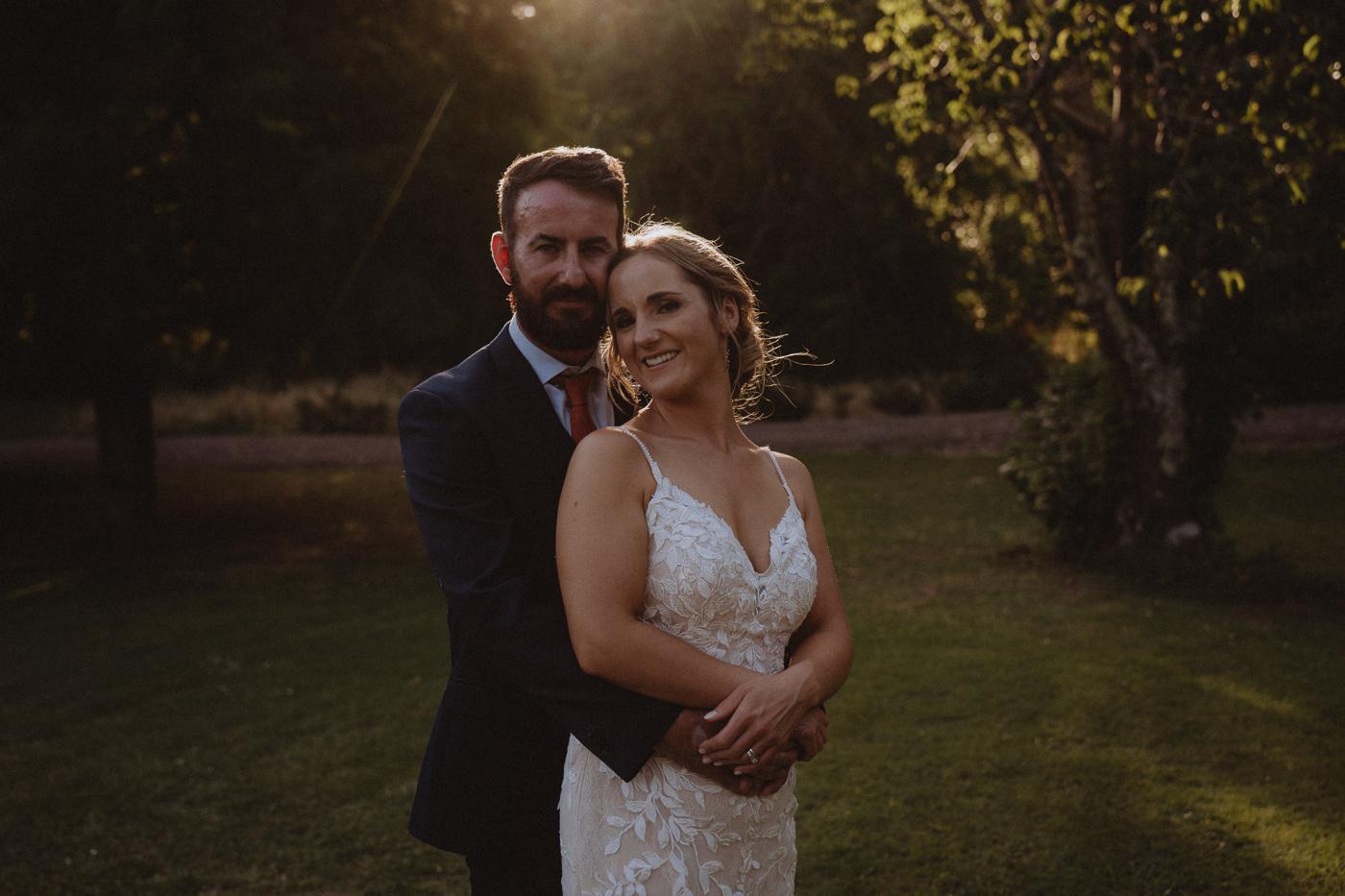
A few things help portraits go well on a small day:
- Pick two or three places, not ten. Each move costs time. A photographer who knows the two or three spots you love can let the rest happen as you both feel it and as the light changes.
- Face the light, or turn your back on it on purpose. A couple with the sun behind them gets a glowing edge and a softer look. A couple facing the sun gets squints. Ask your photographer which they are planning at each spot.
- Let the quiet stretches stay quiet. The walk between locations, the wait while your celebrant finishes a signature and the minutes after the ceremony are often the best photographs of the day, because nobody is performing for a crowd.
- Say what you are nervous about. Camera-shy couples are normal. Simple prompts, such as walk together, say something to each other, hold on to each other, work better than being arranged into poses. Gentle guidance is plenty. If this is a worry, looking natural when you hate being photographed covers it.
Portrait time will feel longer than a normal wedding’s portrait slot, and being the only subjects for that long can feel strange at first. The awkwardness fades once you realise nothing else is competing for your attention.
Choosing a place and planning for weather
Where you marry decides the light, the privacy and the logistics. In Sydney the options include harbour foreshore parks, headlands above the beaches, botanic garden paths and your own back garden. Each behaves differently. A harbour foreshore can put the water behind you, with other people nearby. A beach headland has big sky and wind. A garden is sheltered and quiet but may have no horizon. A back garden removes the travel entirely, and nobody has to drive anywhere afterwards. Check whether any public location needs a permit or has rules for ceremonies, and ask the council or the venue rather than assuming. How your part of Sydney changes the light is covered in harbour vs beach vs west.
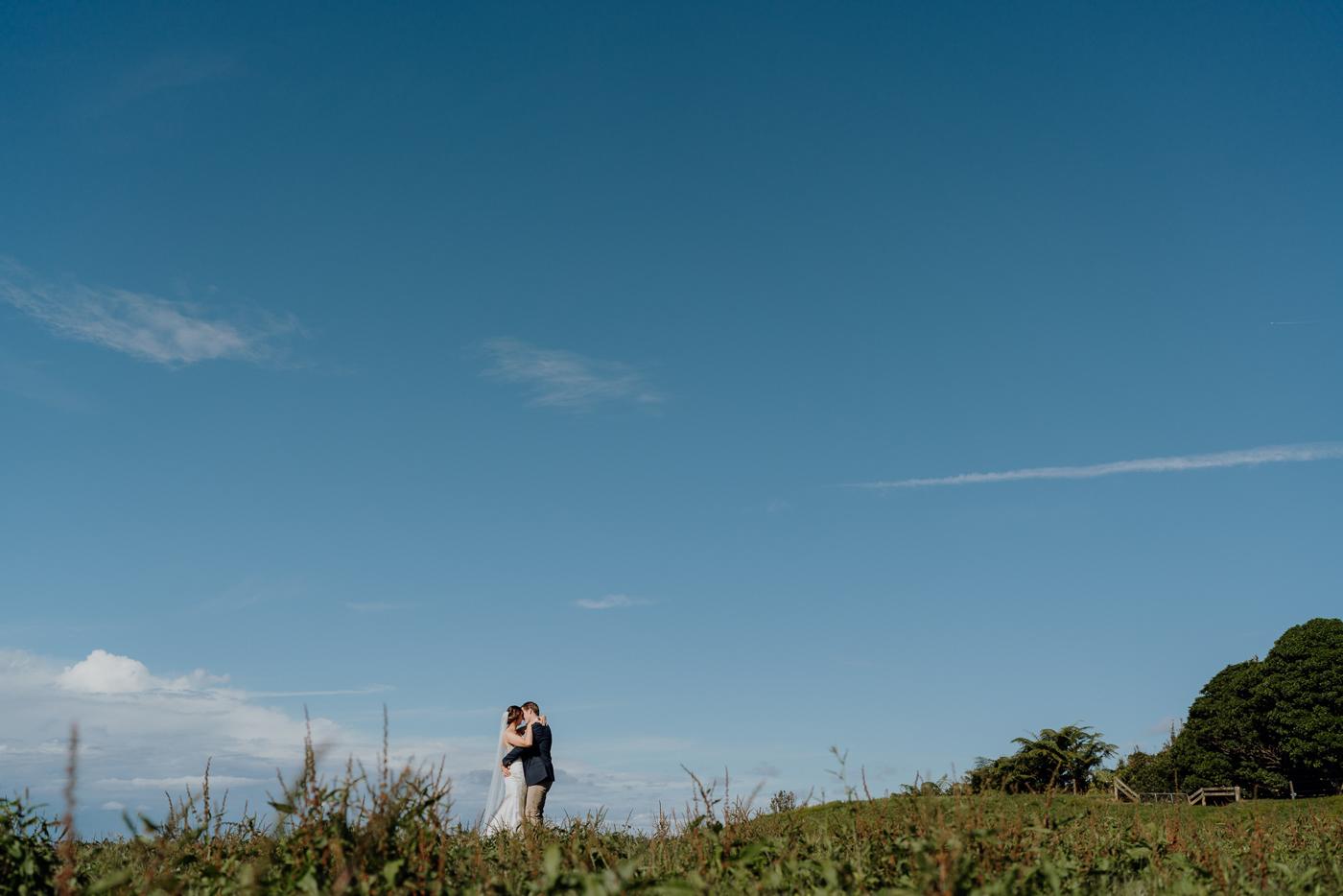
Weather is the other thing to plan around. With two people instead of 150, rain is easier to deal with. You move: under a tree, into a covered walkway or a sheltered spot nearby, or the ceremony shifts a few metres. Agree a plan B with your celebrant before the day, and check the forecast the day before. What actually happens when it rains is covered in rain on a wedding day.
Heat, wind and glare matter too. Pack shoes you can walk in, a layer for after sunset and water.
The quiet, and the ending
Elopements are quieter than you might expect, and some find that unsettling in the moment even when it is exactly what they wanted. There is no crowd cheering and no reception energy to ride. What replaces it is concentrated attention on each other and on the celebrant’s words, in a way that gets lost at a big wedding where everyone is half-watching the photographer, the weather and each other. For some couples that is the best part of the day. If you feed off a crowd, be honest with yourselves about it before you commit. If you do not, the quiet is the point.
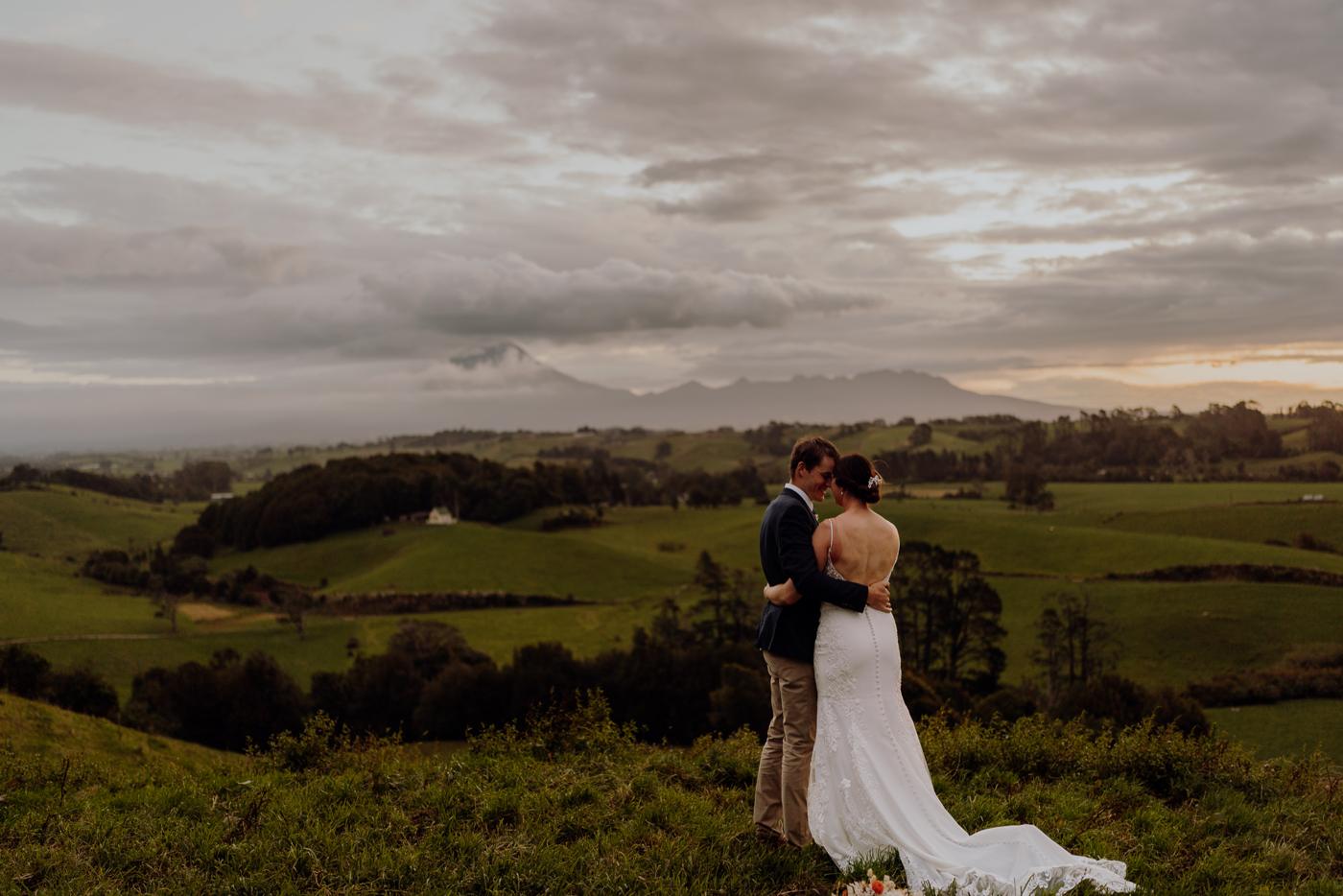
The ending needs thought. A reception gives a day its finish. An elopement just stops when the portraits are done, and couples sometimes find that anticlimactic if nothing is planned. A dinner booking, a picnic you packed earlier, a bottle opened on the hill or a hotel room with the good dessert gives the day a shape to close on. Decide what happens after the last photograph, and tell your photographer, because it affects when coverage should end.
Decide, too, who you are telling. Some couples announce straight away, some wait a few days, some hold a party months later. If you want photographs to share the same night, say so before the day, since it changes how soon you might want a few images. If you want privacy first, that is a fair choice too.
Hours, film and what it costs
There is no single right amount of coverage for an elopement. Six hours of photography usually ends before the speeches at a big wedding, eight is the common choice and ten is what nobody regrets, but those numbers describe full wedding days. For an elopement, ask what is available and what it costs, because the answer differs from studio to studio. Because there is no queue of relatives to arrange, the hours you do book go to the two of you instead of to logistics.
Photography at TZ Wedding Studios starts from $4,000. Hours, film and where you marry move the price from there. Film can be added to photography or booked alone, and photography and film are planned together, so the two do not trip over each other on a small day. If you are weighing both, photography, film or both works through the budget maths. For the wider picture of how elopements and destination weddings are planned, see the elopements and destination weddings guide.
What to do next
- Pick your ceremony time from the light. Look up sunset for your date, count back 90 minutes and check it with your celebrant. The light planner on Your Day helps.
- Book the celebrant and confirm the legal steps with them or an official source. Ask who can act as witnesses.
- Choose two or three locations and a wet-weather option, and check any permit rules.
- Decide how the day ends, and whether you want other people there, then write it down.
- Ask a photographer what they can offer for a small day, how long they suggest and what it costs. What it costs and how booking works explains how TZ Wedding Studios sets its prices.
If you are planning an elopement and want to know whether your date is free, get in touch. If it is free, you will hear what the day could look like. If it is booked, you will hear that straight away.