
A small wedding of 20 guests sits in an odd middle spot. Every person in the room can matter individually, because there is less room for filler invitations and “we have to ask them”. Yet the day still needs a shape: a ceremony people watch, a shared meal, probably some speeches, maybe a dance.
It is neither an elopement nor a scaled-down 150-guest wedding, and it photographs differently from both. This guide covers what stays the same, what shrinks, what gets harder, and how to plan the hours so a small wedding is photographed as the day it is.
Quick answer: A 20-guest wedding keeps the full arc of a bigger day, ceremony, portraits and reception, so the hours of coverage often stay similar. What shrinks is the family formals block and the guest-management overhead. What changes most is the reception, which feels like a dinner party, so the photographs are about conversation and reaction rather than crowd moments.
On this page
- What stays the same as a bigger wedding
- What actually shrinks
- Choosing a venue that suits 20
- What gets harder, not easier
- How a small reception is photographed differently
- Speeches in a small room
- How many hours to book
- Questions to ask before you book
- Common mistakes with small weddings
- What to do next
What stays the same as a bigger wedding
Unlike an elopement, a 20-guest wedding usually keeps most of a traditional day’s shape. There is some getting ready, often with a small bridal party. There is a ceremony that guests watch, a reception with a meal, and often speeches. The emotional beats are all still there, just witnessed by fewer people: the walk down the aisle, the rings, the first kiss, the congratulations afterwards.
That matters for how you plan coverage. A 20-guest wedding is not automatically a two-hour job the way an elopement often is. The length of a wedding day comes from how many things happen in it, and the number of guests has only a modest effect on that. A couple who want to see the morning preparations, the ceremony, a proper dinner and some evening light need the hours for those things whether 20 people or 200 are watching.
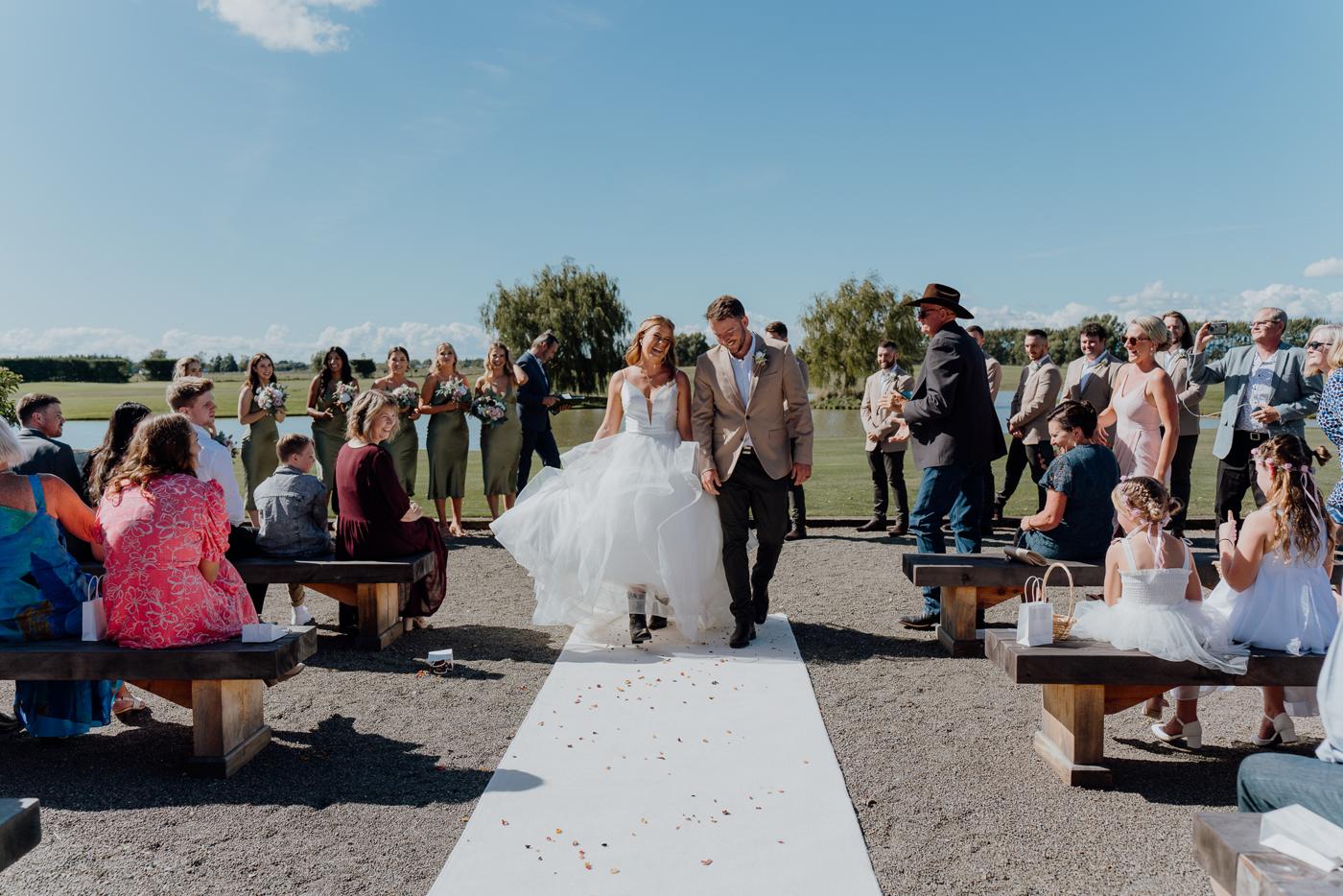
The same is true of the people. In a small wedding the guest list is, almost by definition, the people closest to you. That makes the photographs of those people more valuable per head. A shot of a grandparent in a big crowd is one of hundreds. At 20 guests, it is one of a handful.
What actually shrinks
Family formals
Formals are the grouped, posed family photographs, and this is where a small wedding saves the most time. A large wedding builds a list of combinations (bride with her parents, bride with both sets of parents, groom with his side, the whole extended family, and on it goes), and each combination means finding the right people and arranging them. If most of your 20 guests are immediate family anyway, the list is short.
Here is a worked example, using made-up numbers. Say your 20 guests are 8 relatives on one side, 7 on the other and 5 friends. Your formals list might be each side as a group, each set of parents, siblings with you, and one whole-group shot with everyone. That is a handful of arrangements, not a long queue. How long they take depends on how quickly your family responds to being called, so ask your photographer how much time they would set aside.
The time you save does not vanish. It goes into portraits, the reception, or simply into an unhurried afternoon. If you have to cut something from a small wedding, cut the formals list before you cut coverage hours. The hours buy you the reception and the evening light, which is where a small wedding is different from a big one. The formals list buys photographs you could take at any family gathering.
If you want a fuller look at how group photographs work, what wedding photographers wish you knew about group shots is a good companion read.
Vendor and logistics overhead
Small weddings usually have fewer moving parts. Often one venue hosts both the ceremony and the reception, so there is no transport between locations and no gap to fill while guests travel. Fewer suppliers means fewer handovers, and fewer handovers means fewer places for the schedule to slip.
The formal structure of the reception, sometimes
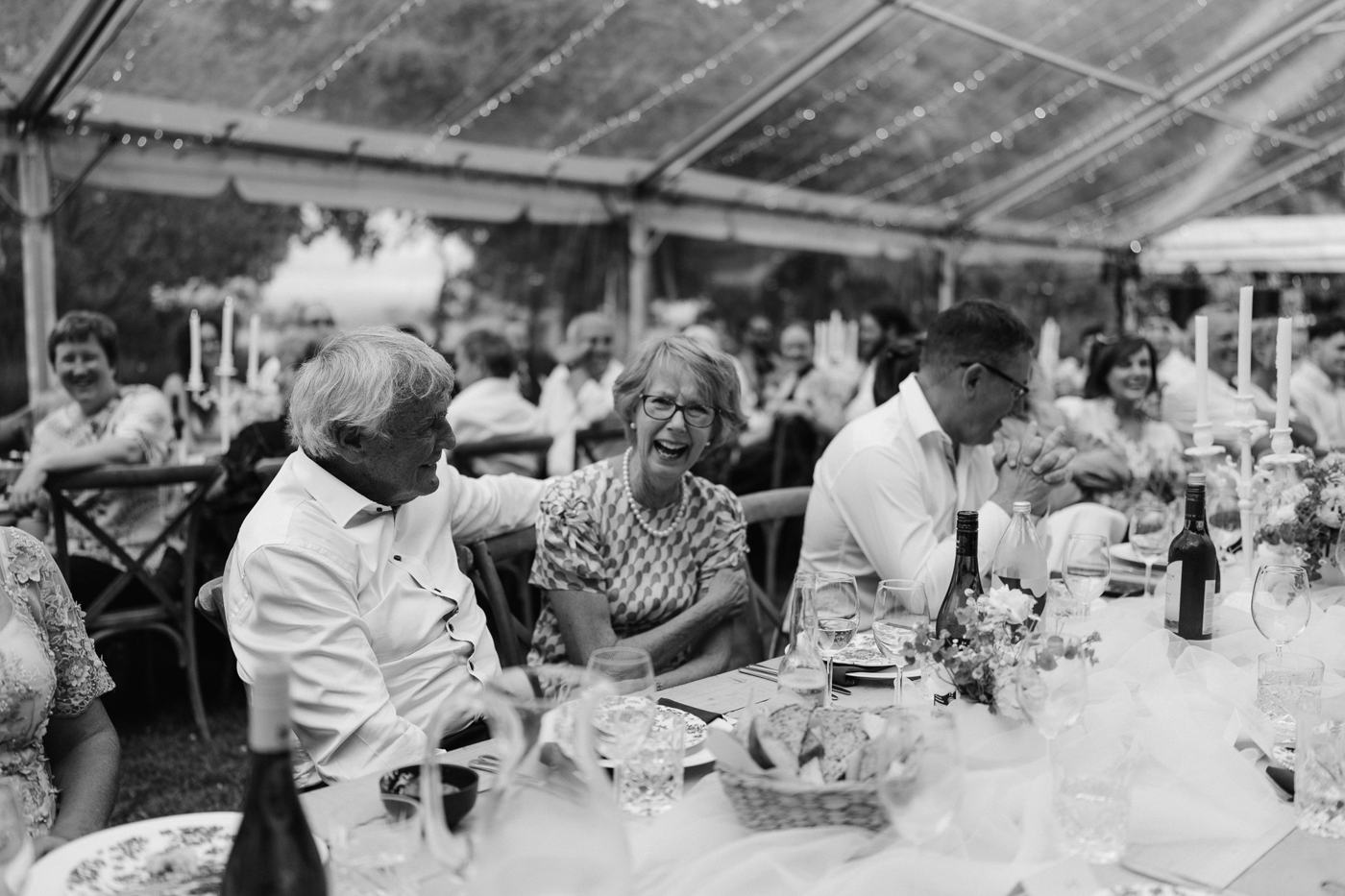
Some 20-guest weddings drop a bridal table, a formal seating chart or a DJ in favour of one long shared table and background music. This is not universal, and plenty of small weddings keep every tradition. When it does happen, the reception shifts from an event with scheduled moments to a dinner everyone is sitting through together, and that changes what a photographer is watching for.
Choosing a venue that suits 20
Venue choice does more work at a small wedding than at a big one. A room built for 20 is a restaurant back room, a surf club function space, or the garden of a family home. A ballroom rated for 200 can make a 20-guest wedding look under-attended, and no photograph fixes that afterwards. What looks empty is a big room shot for a crowd that never arrives. A well-composed room with 20 people in it looks intimate, not sparse.
Here is a quick way to judge a venue for a small guest list:
- Can all 20 people sit at one table, or two tables close together? A long table gives you the whole room in a single frame.
- Is there natural light near where people will sit? Windows and open doors make a dinner far easier to photograph than a windowless room lit by a few spots.
- Is there somewhere private for portraits within a short walk? Short walks protect the time you saved on formals.
- Can the room be rearranged? A venue that insists on a fixed layout built for a larger group works against you.
Rules about where and how you can legally marry, and what you need to arrange before the day, vary and change. Confirm current requirements with an authorised celebrant or the official government source rather than relying on any article, including this one.
What gets harder, not easier
It is tempting to assume a small wedding is simply easier to photograph. Some parts are. A few are genuinely harder.
There is nowhere to hide. At a 150-guest wedding, a photographer can move around a room without most people noticing. At 20 guests, a seated dinner means the photographer is one of a small number of people in the room. Staying unobtrusive while still capturing real moments takes more deliberate positioning, not less. A good photographer chooses where to stand carefully and moves little.
Candid moments are scarcer, so each one counts for more. A big wedding produces candid photographs through sheer volume. With 150 people, someone is always doing something interesting. Twenty people produce fewer of those moments, which means missing one is a bigger loss proportionally. The photographer needs to pay closer attention, not less.
Guests notice the camera. In a small, close group, people are more aware of being photographed, and some tighten up in a way a large crowd does not trigger. Natural reactions take longer to earn. Ask your photographer how they approach this. A good answer involves being present and quiet for a while before shooting heavily, so guests settle into forgetting the camera is there.
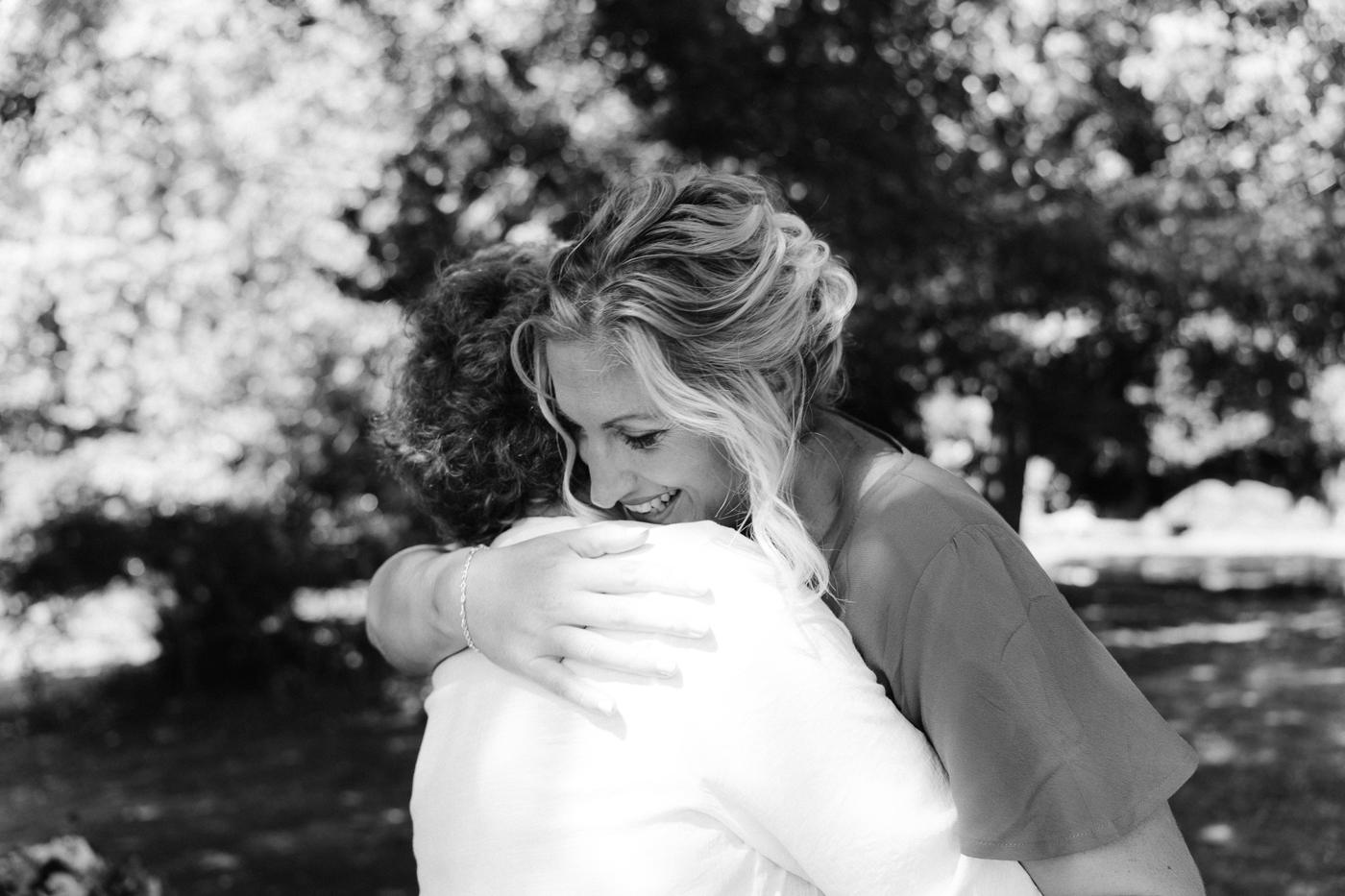
If you or your partner are camera-shy, a small wedding can be easier or harder depending on temperament. Camera-shy couples are normal, and a photographer who works with simple prompts instead of over-posing makes a big difference to how the day feels. How to look like yourself in photos when you hate being photographed goes into this in more detail.
How a small reception is photographed differently
At a big reception, a large part of the photographer’s job is anticipating structured moments: the entrance, the first dance, the cake cutting, the bouquet toss. They are scheduled and repeatable. A 20-guest reception often drops several of them in favour of a dinner.
What a photographer looks for at a small reception is different:
- The in-jokes only a small group shares.
- The moment a parent realises they are not going to cry, and then does.
- The long table shot that shows every face, rather than a sea of unidentifiable heads.
- Reactions during the toasts, which are often more telling than the person speaking.
- Small gestures between the two of you that nobody else is watching.
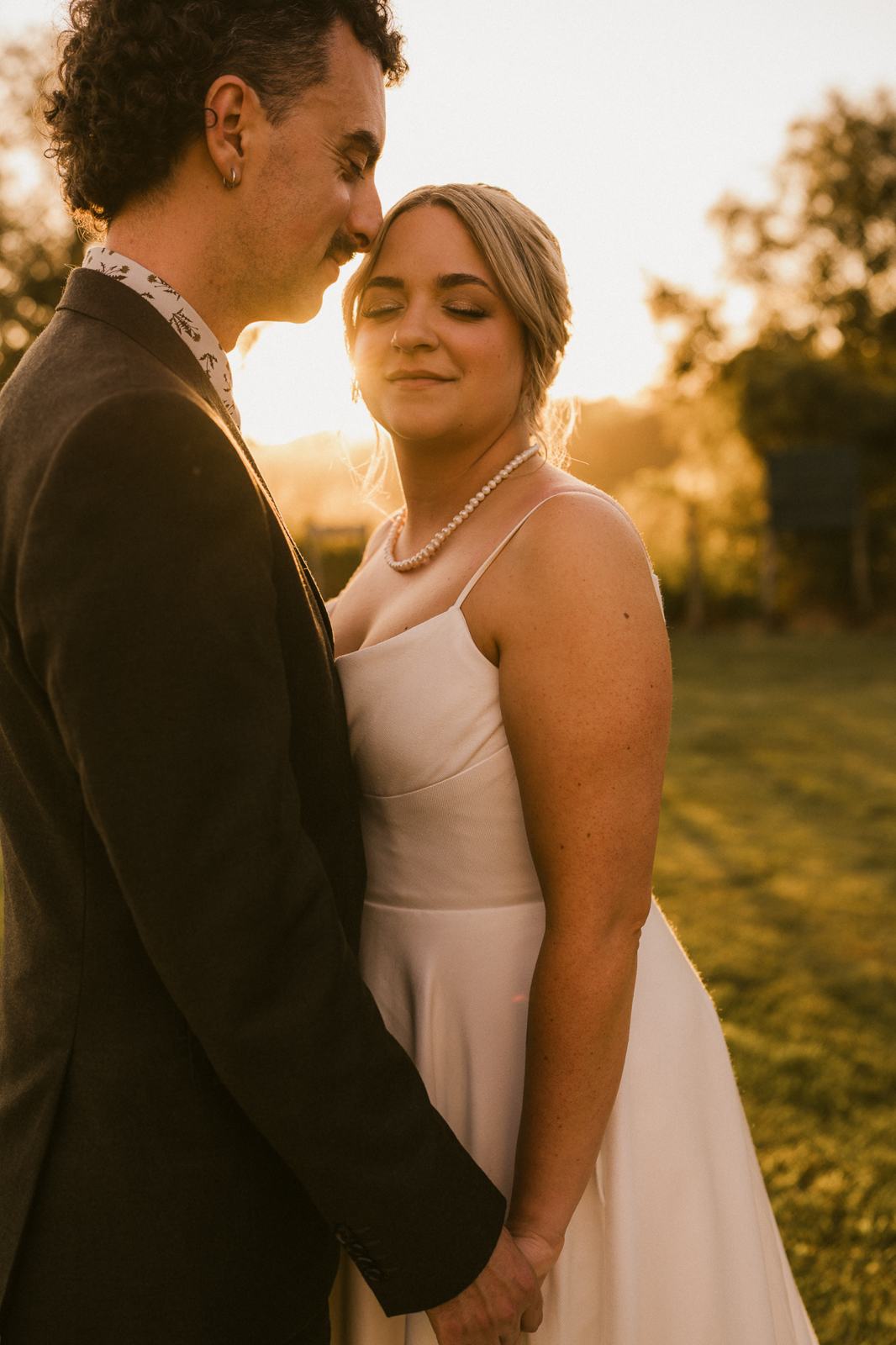
A 20-person reception photographed well should feel unmistakably like your wedding, not an interchangeable event. That is easier to achieve with fewer people, if the photographer is watching for the right things.
My own approach is fine art for the quiet moments and quick hands for the loud ones, with real moments as they happen for most of the day and gentle guidance for portraits.
Speeches in a small room
Speeches are the part of a small wedding that can get better. At a big wedding, a speaker may be performing for a room of people they barely know. At 20 guests, the speaker probably knows everyone by name, so the tone can be warmer, the jokes more specific and the reactions more honest.
For photography, that means a few practical things to plan:
- Tell the photographer who is speaking and in what order. With a small group it is easy to assume everyone knows. The photographer does not.
- Keep the microphone question simple. In a room of 20, a speaker can often be heard without one. If a microphone is used, it changes where the photographer can stand, so mention it.
- Think about where the speaker stands. If they speak from their seat, the photographer needs a clear line to both the speaker and the people reacting. A speaker standing in front of a window with their back to the light is harder to photograph than one standing side-on to it.
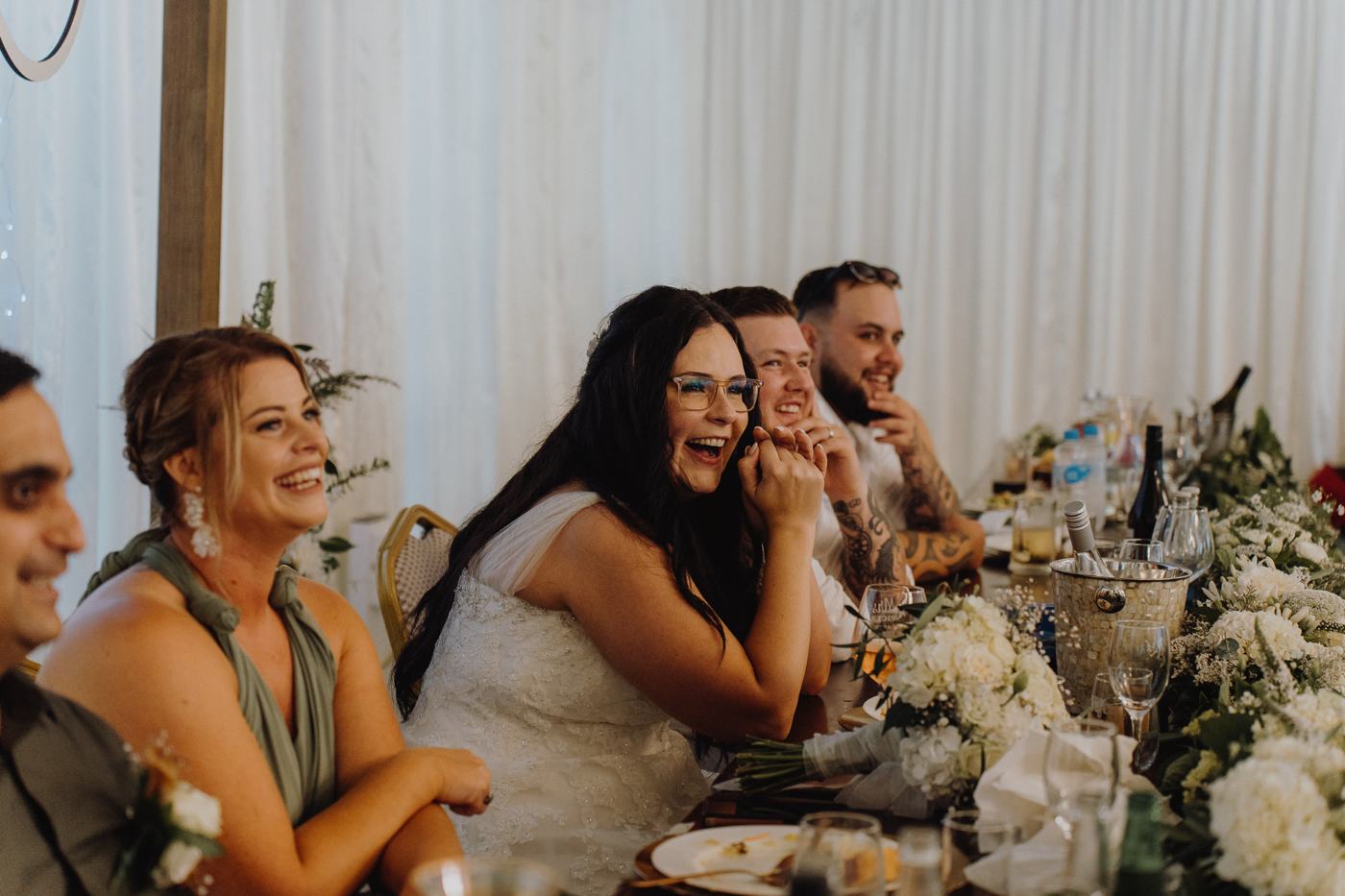
Speeches also decide how many hours you need. Six hours of coverage usually ends before the speeches, so if they matter to you, that is worth knowing before you book.
How many hours to book
Guest count does not decide the hours. The shape of your day does. Six hours usually ends before the speeches, eight is what most couples choose, and ten is what nobody regrets. For a small wedding, work backwards from what you want to see.
Here is a worked example, with assumed details. Say your ceremony is at 3pm, you have a small getting-ready with a few close people, a dinner at a long table, and you want some evening light with your partner before it ends. Even with 20 guests, that is a long window of the day, and it is the same window a 100-guest wedding would need. If you cut the coverage to cover only the ceremony and an hour of portraits, you lose the dinner, which is the part where a small wedding is at its best.
If your day is simpler, say a late-morning ceremony and a lunch with no evening events, then a shorter booking may suit you. The point is to book for the day you are having.
On cost, photography starts from $4,000, and the hours, film and where you marry move the price from there. A 20-guest wedding is not automatically cheaper, because the package depends largely on the hours of coverage rather than the headcount. Where it can save money is in needing less in the way of extras, such as a bigger team, but that depends on the day. Ask directly rather than assuming. What drives a Sydney quote, itemised lays out the factors in detail.
Do you need a second photographer?
Ask any studio whether it offers one, and what it would cover. At 20 guests, one photographer can usually cover the day comfortably. A second person becomes more relevant if the ceremony and getting ready happen in two separate places at the same time, such as two partners readying in different houses. Do you need a second shooter? breaks the decision down.
What about film?
Film can be added to photography or booked alone, and photography and film are planned together. A small wedding suits film well, because speeches and reactions carry so much of the day.
Questions to ask before you book
These work for any photographer, and they are especially useful for a small wedding:
- How would you plan the hours for a day with 20 guests? A good answer asks about your day first.
- How do you stay unobtrusive at a seated dinner with a small group?
- What do you do if guests are camera-shy?
- How do you handle family formals when the list is short?
- Do you offer a second photographer, and when would you recommend one?
- How many edited photographs will I receive, and how long until I have them?
- Are you free on my date? Binh answers this one honestly. If he is free, you hear what the day could look like. If he is booked, he says so straight away.
More questions of this kind are in the questions worth asking a wedding photographer before you book.
On what you receive: you get at least 300 edited high-resolution photographs, depending on hours, with delivery in four to ten working weeks. Most couples book 12 to 18 months ahead, and the deposit is not refundable, because the date is held and other couples are turned away. Dates can go at any size of wedding, so ask early.
Common mistakes with small weddings
These come from how small weddings work, rather than from any one wedding.
Booking too few hours because the guest list is short. A short guest list shortens the formals, not the day. Book for the shape of the day.
Choosing a venue built for a crowd. An oversized room undercuts the intimacy that makes a small wedding worth having. Check the room against your guest count first.
Skipping the conversation about speeches. If speeches matter to you, the photographer needs to know when they happen and who gives them.
Assuming candid means unplanned. Candid photographs come from a photographer who is watching closely, and a short brief from you helps. Tell them which relatives matter most and which moments you care about, such as a grandparent who is travelling in for the day.
What to do next
- Write down the shape of your day, from first preparation to the last thing you want photographed, and count the hours it covers. That number matters more than your guest count.
- Choose a venue that suits 20. Check the table layout, the light and the walk to a portrait spot.
- Confirm the legal requirements for your ceremony with an authorised celebrant or the official government source.
- Read what a 6, 8 and 10-hour wedding day actually yields and decide on hours.
- Look at the investment page for how booking works, then use your day to plan the order of events.
If you are planning a small wedding and want it photographed as the day it is, you can get in touch through the contact page with your date and a rough idea of the day, and you will get an honest answer about whether it is free.