
Sometime in the last fortnight before a wedding, the forecast icon changes and the worry starts. A rainy wedding day in Sydney is a real thing to plan for, and it looks a lot more manageable once you stop watching the weather app from the couch at 11pm.
Rain changes where the photographs happen and how the light behaves. It does not cancel the wedding, and it does not make the pictures worse by default. What decides how the day goes is whether anyone has stood in the backup room beforehand.
Quick answer: Rain moves or shortens outdoor portrait time and swaps harsh light for soft, even light, which flatters faces and groups. The real risk is arriving at the day with no agreed indoor or covered space. Walk that space with your venue and talk it through with your photographer, and a wet forecast becomes a scheduling question.
On this page
- What rain changes, and what it leaves alone
- Why grey sky is kind to faces
- The backup plan that matters
- Questions to ask your venue, and your photographer
- A wet Saturday, worked through
- Umbrellas, shoes and the small stuff
- When rain genuinely is a problem
- Forecasts, decisions and the last week
- What to do next
What rain changes, and what it leaves alone
Start with the parts that genuinely move.
- Outdoor portrait time shrinks or relocates. If your plan leaned on a lawn, a headland or a beach, you need a second place for couple portraits. A covered walkway, a staircase, a big window, a verandah. Sometimes the answer is a short walk outside under umbrellas between showers.
- The schedule bends. An outdoor ceremony that moves indoors needs a decision point earlier than a dry day would, because chairs, sound and guest flow all change. Venues set their own cutoff for that call, so ask for it in writing.
- Group photos get slower to organise. People look for cover, nobody wants to stand in the wet holding a bouquet, and an indoor room can be a worse shape for a big group than a lawn. Our guide on how much time family formals really need is worth reading with rain in mind.
- Guests need looking after. Wet shoes, wet coats and a queue at the door change the mood of arrival. Ask the venue where umbrellas and coats go.
Other parts stay put. The ceremony still happens and the vows still count, the reception, speeches and dancing do not depend on the sky, and your family is still in one room.

Why grey sky is kind to faces
Cloud works like a huge softbox. Instead of one hard source (the sun) throwing sharp shadows, the whole sky becomes the light. That has three practical effects.
First, shadows soften. On a bright day, a hat brim, a tree or a squint puts a dark patch across a face. Under cloud those patches mostly disappear. Second, skin tones even out across a group, so the person standing at the edge looks like the person in the middle. Third, you can face any direction. On a clear day you spend half your portrait time hunting for open shade, and under an overcast sky almost any spot works.
There is a trade. Flat light has less drama. You will not get long warm rays across a paddock, and a grey sky can make a plain background look a bit dull. Colours do look richer when wet, though, and a good photographer uses the reflections, the dark pavement and the umbrellas as part of the picture.
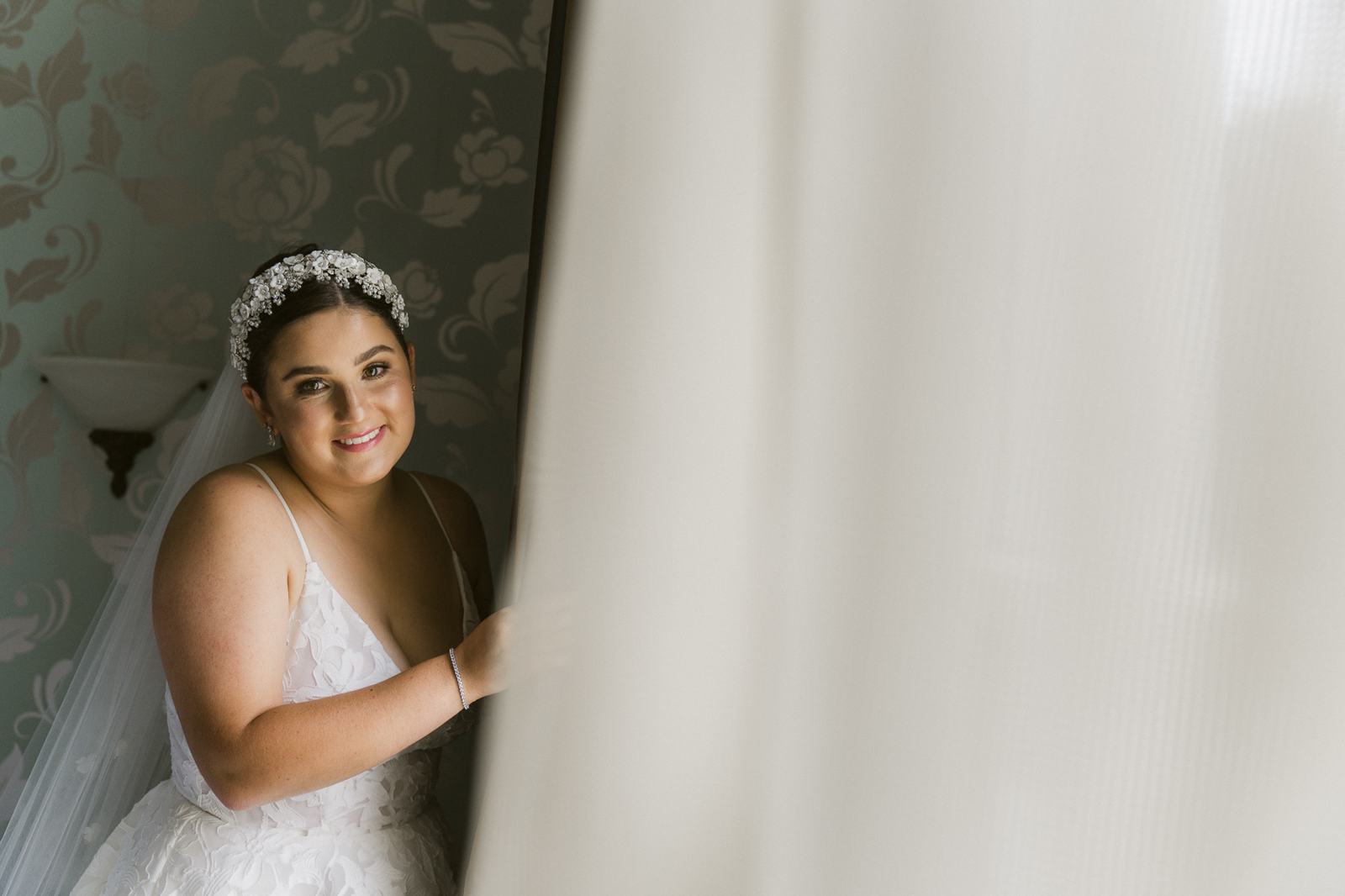
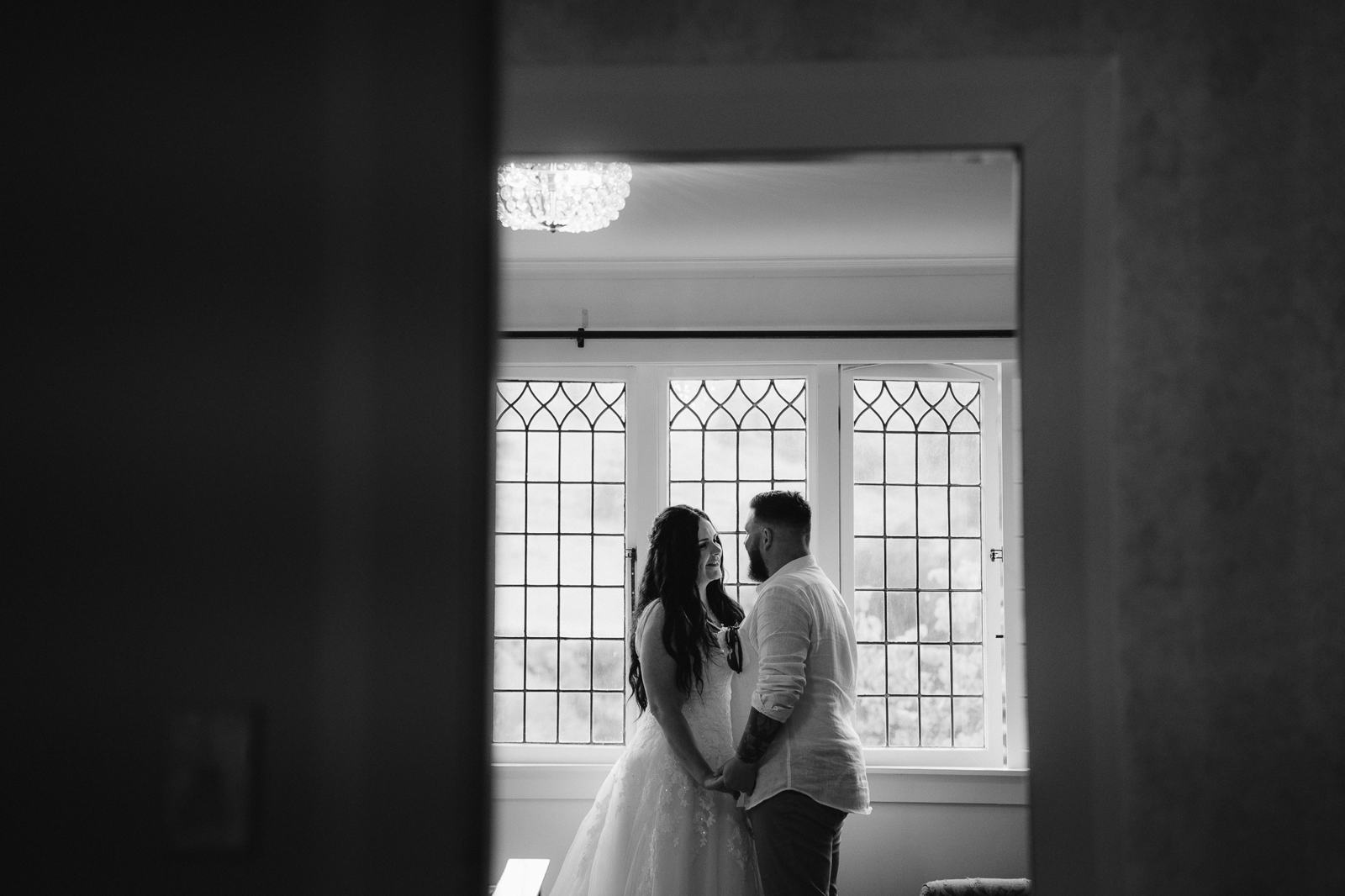
Indoors, the same idea applies to windows. A big window gives soft light with a direction, which models a face nicely. A ceiling full of overhead downlights does not. When you inspect a backup room, check where the windows are as well as how many chairs fit.
The backup plan that matters
You cannot control the weather, but you can control the backup plan, and that decides whether a rainy day feels like a minor adjustment or a crisis.
A workable backup has four parts:
- A named space for the ceremony, if the ceremony is outdoors.
- A named space for group photos.
- A named space for couple portraits.
- A decision point, meaning a clock time and a person who makes the call.
Each of these can be the same room or four different ones. What matters is that it was agreed before the day and written down.
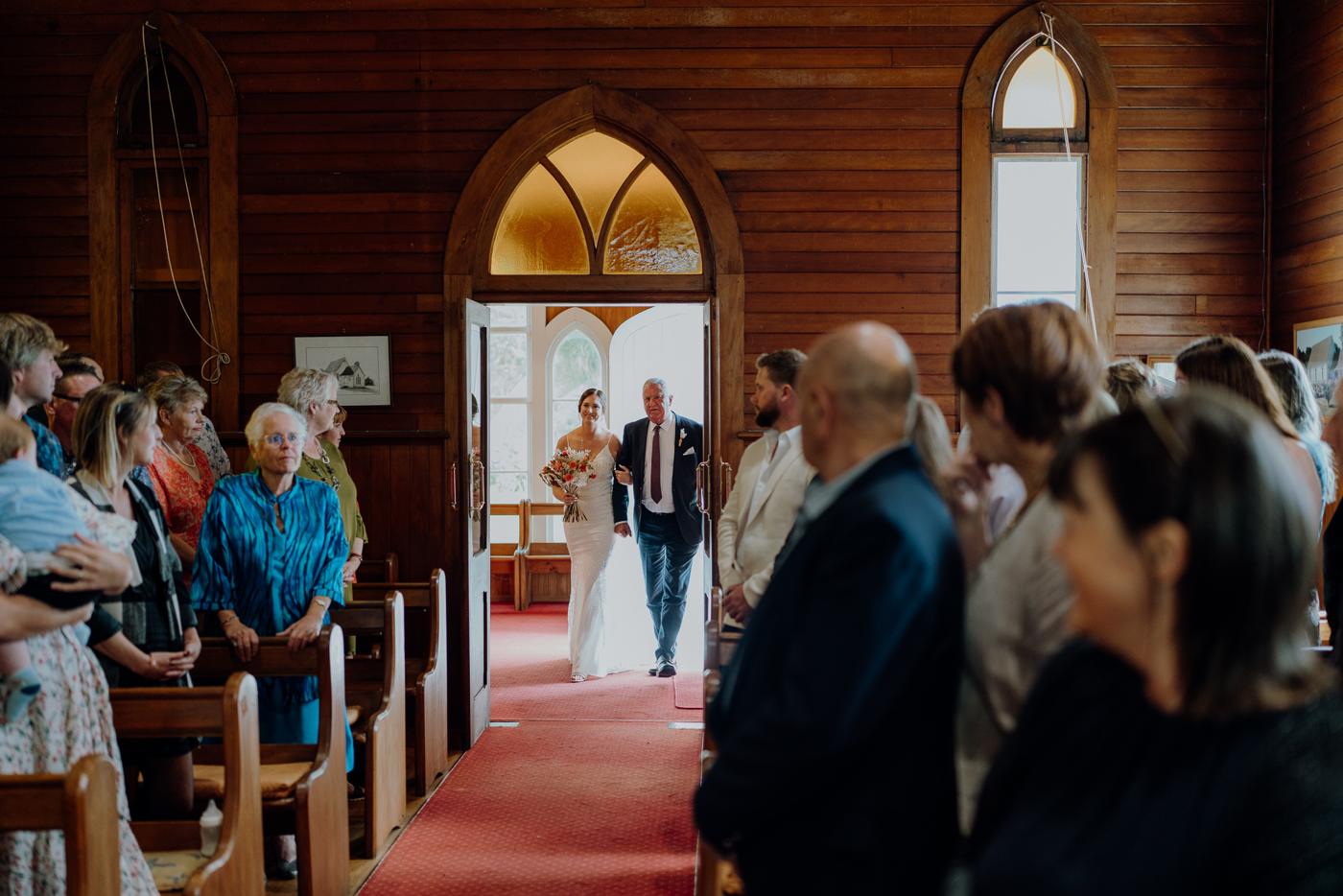
The most useful single step is to walk the backup space in person. A conversation about a room nobody has stood in is worth very little. “We have an indoor option” can mean a function room with tall windows, or it can mean a corridor that fits a small group. You will only know which by looking.
Geography matters here too, in a general way. A venue near the water may have a covered spot close to where outdoor portraits were planned. An older building, a converted warehouse or a property out west may have a beautiful indoor space that sits a long way from where you imagined formals. Distance is part of the plan, because a long wet walk costs time and mood. Our piece on how your suburb changes the light covers the outdoor side of the same question.
Questions to ask your venue, and your photographer
Vague questions get vague answers. Specific ones get a tour.
For the venue:
- Where would group photos and couple portraits happen if it is raining? Can you show me?
- Where does the ceremony move to, and how many guests does that room hold seated?
- What is the latest time you will let us decide, and who decides?
- Is there a covered path between the ceremony space and the reception space?
- Where do guests leave wet umbrellas and coats?
- Are there any rooms or spots that are off limits for photography?
- Are the lights in the indoor room adjustable, and who controls them?
For your photographer:
- How do you protect your gear in rain?
- Which parts of the wet-day plan do you want to see in person beforehand?
- Do you want to take a wet-weather set of portraits early, while everyone is fresh, or wait for a gap?
- How does your coverage change if the ceremony moves indoors and the day runs late?
A good photographer will want to know the backup room too. Photography and film are planned together here, so if you have booked both, put the same room in front of both. Our list of questions worth asking a wedding photographer covers the wider conversation.
A wet Saturday, worked through
Here is a worked example. It is a made-up scenario to show the sequence of decisions, with the size of each block set as an assumption. It does not describe a real wedding, and your day will have different numbers.
Say your ceremony is at 3pm on 15 May, and the forecast is steady rain from morning through afternoon. For that date in Sydney, golden hour starts at 4:27pm, the sun sets at 5:03pm and civil dusk, where usable outdoor light ends, is at 5:30pm. That is a 36 minute golden window, and under heavy cloud you will not see it as colour. It still tells you how much daylight is left.
| Time (assumed) | What happens | Why |
|---|---|---|
| 1:00pm | Venue coordinator confirms the ceremony is indoors | The cutoff was agreed weeks earlier, so this is a switch being flicked |
| 3:00pm | Ceremony in the room with windows down one side | Soft directional light on faces |
| About 3:30pm | Group photos in the function room | Window light, a high ceiling, no one standing in the wet |
| About 4:00pm | Hold for a gap in the rain | Nothing is forced; guests start drinks |
| From 4:27pm | Sun is low, so any break in the cloud is worth using | Short outside window with umbrellas, near the venue door |
| 5:30pm | Outdoor light has gone | Anything outside is finished |
| Later | Speeches, dinner, dancing | None of this depends on the sky |
The times in that table are assumptions for the example. The shape is the point: the indoor group photos are scheduled first, the couple portraits wait for a gap, and there is a hard stop where the outdoor light ends. If no gap arrives, the couple portraits happen at the window and the covered doorway, and the day still has them.
Now picture the same wedding with no agreed backup. The coordinator is asked at 2:15pm, the room has not been set, the guests are standing in the rain, and the first hour of the afternoon goes on logistics rather than photographs. Same weather, different planning.
If your date is different, the golden hour table by month shows when the daylight window sits for the date you are looking at.
Umbrellas, shoes and the small stuff
None of these things will rescue a day, and all of them make a wet one calmer.
Umbrellas. A few big clear umbrellas photograph well because faces stay visible and the light comes through. Plain light colours are better than black, which turns into a dark hole above a face. Buy enough for the couple and the bridal party, with a couple spare.
Shoes. Pack a dry pair for the aisle and a pair you can get muddy for portraits. A towel in the car sorts out a lot.
The dress. Ask the person who made or fitted it what the hem does when wet, and whether a bustle or wrist loop makes sense.
Hair and makeup. Humidity and wet air work on both. Ask your makeup artist what they use for rain and keep touch-up supplies handy near where portraits will happen.
A holding space. A room where the couple can be dry and out of the crowd for a short stretch is worth asking the venue for, as long as it is available.
Phones. Guests at an indoor ceremony still hold phones up. Our piece on unplugged ceremonies explains why asking for none is a decision to make before the day.
When rain genuinely is a problem
Rain is not a disaster, but it has costs, and it is more honest to say so.
Heavy rain with wind is a real constraint, and the issue is comfort more than pictures. A bridal party standing outside in driving rain to get the outdoor shot anyway ends up cold, with makeup running and everyone wanting to be inside. Stiff, hurried faces tend to follow, and the day gets worse for people who have been looking forward to it.
If the forecast is severe rather than wet, the honest plan is to commit to the indoor backup. Treat any outside time as a bonus if the weather opens up, not something to force. Ask your photographer how they handle that call, and who has the final say if the couple wants to push on and the photographer thinks it is a bad idea.
Some real limits are worth knowing:
- An indoor room can be too small for the family group you were planning.
- Covered outdoor spaces can still be wet underfoot.
- Power, wind and storm warnings at a venue are the venue’s call, and a safety decision can override a photo plan.
- Roads and travel can slow down, so allow extra time between locations.
None of this means the day cannot go well. The plan just needs a realistic answer to each.
Forecasts, decisions and the last week
Watching the forecast is not the problem. Watching it without a plan is. Check it, and check it early enough that you can still act on what you see, with enough time to walk the backup room and make changes.
A sensible order for the last stretch:
A fortnight out. Confirm the backup spaces with the venue in writing and ask who holds the decision. Tell your photographer which spaces you have agreed.
A week out. Check the forecast daily without letting it run the week. Buy the umbrellas. Confirm transport times with extra margin.
Two or three days out. Forecast confidence is better now. Check again with your coordinator and ask whether the decision point can sit as late as possible, so a clear window is not wasted by committing too early.
The morning of. Look at the sky and the radar, and then follow the plan you already made. The plan was written when everyone was calm, which is why it is better than anything improvised at 1pm.
The day after. If it did rain, the wet-weather pictures are worth looking at properly. Umbrellas, reflections and a couple laughing at the sky look different from sunny-day portraits, and that difference is the point.
Sydney weather can change within one day, so a morning that looks grim and an evening that clears are both possible. A plan with both options ready and a decision made as late as the venue allows will serve you better than locking in one option days early.
If you are still choosing a date, remember that weather cannot be scheduled around. What you can schedule around is daylight. The Sydney wedding day timeline is a good place to see where the hours sit.
What to do next
- Ask your venue where rain-day photos would happen, and go and stand in that space. Use the question list above.
- Agree the decision point in writing: a clock time and a named person.
- Check the date’s daylight in the golden hour table by month so you know when the outdoor light ends.
- Put the backup room in front of your photographer and, if you have booked film as well, tell them the same plan. The investment page explains how booking works.
- Use the planning timeline to place the wet-weather blocks.
If you would like to talk it through, check your date and get in touch. If the date is free you will hear what the day could look like, and if it is booked you will be told straight away.