
A standard wedding timeline has a small block for “family photos”: parents, siblings, perhaps grandparents, a handful of combinations and done. A large Chinese extended family can mean forty or more relatives across three generations, and each combination matters to somebody. Run it like the small version and one of two things happens. The day runs late, or someone gets left out.
Leaving someone out can sting for a long time, while a delay is easier to live with. This guide is about large Chinese wedding family formals in Sydney: how to build the list, how to order it, how to set up the space, and how to stop it eating the light you wanted for your own portraits. Traditions differ between families and regions, so treat the cultural points as common patterns that your own family may follow, adjust or skip.
Quick answer: A large extended family needs its own block of time, a written list built before the day, and an order that starts with the biggest and most senior group and works down to the small pairings. Ask your photographer how long they would allow for your list, and tell your venue to block that time out in writing. Do the formals in whatever light is available and keep the best light of the day for your couple portraits.
On this page
- Why a big family needs its own plan
- Why generational order matters
- Building the list before the day
- A worked example: 22 combinations
- Where to hold it and how to set it up
- Running the queue on the day
- Protecting the light while this happens
- Before or after the ceremony
- When a family does not want the full list
- What to do next
Why a big family needs its own plan
The time a group photo takes is not mostly the camera. It is people. Someone has to be found, walked to the spot, placed, told where to look, and then moved again for the next combination. With eight people that handling is quick. With forty it becomes the main cost, and each extra person is one more person who can be missing, talking, or holding a baby.
Each combination is also a small statement about who belongs to whom. A cousin left out of the cousins’ photo may say nothing on the day, and may still mention it at the next family dinner.
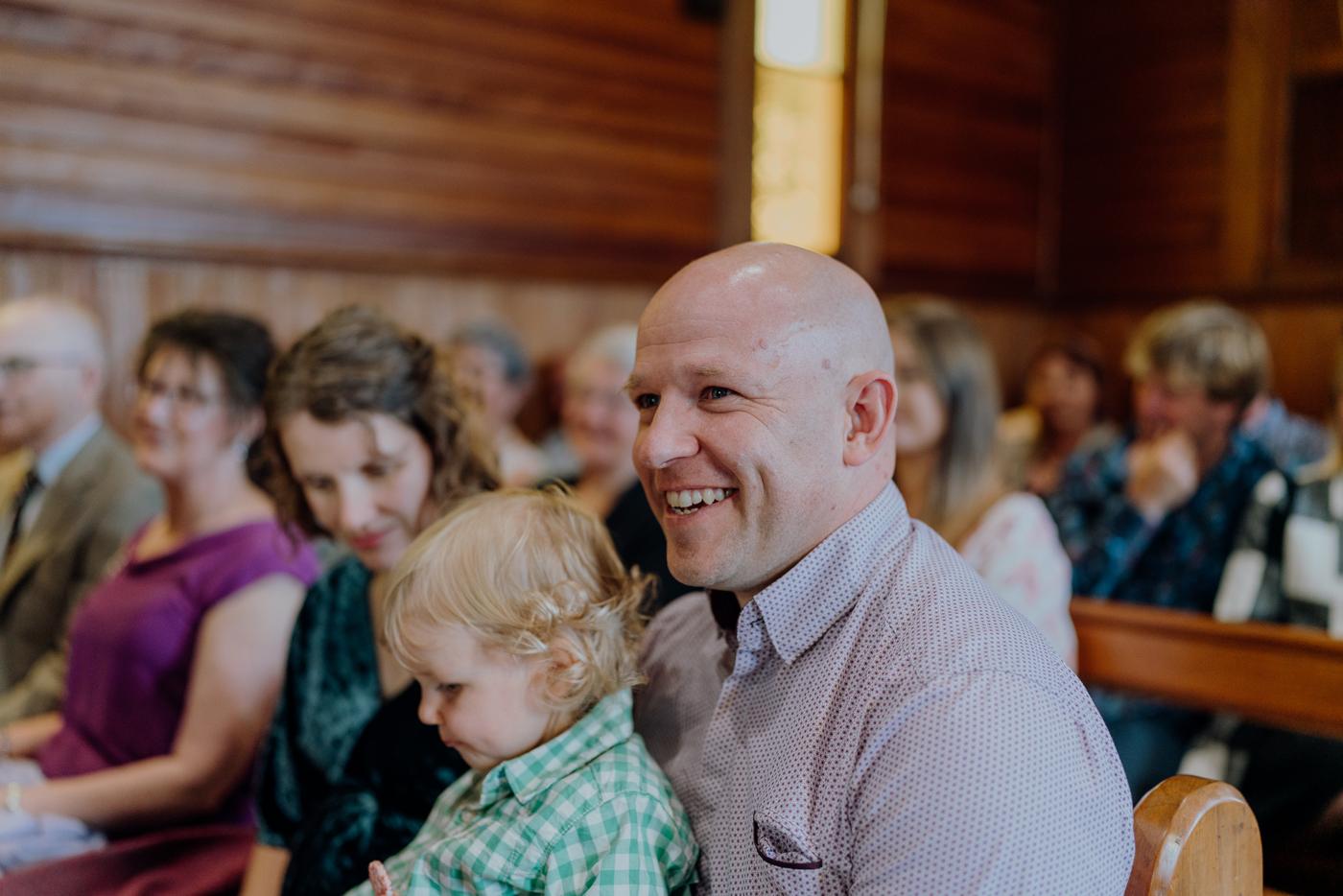
Why generational order matters
In some Chinese families, the formal photograph is more than “everyone stand together”. It follows seniority: grandparents first, with the couple alone, then with each side’s parents added, then siblings, then aunts and uncles, then cousins. Families vary, and some are far more relaxed about it. Where it does matter, the order of the sequence says who is being honoured first, and getting it wrong can sting.
Whose side goes first is also a family decision. Some families expect the groom’s side first, some the bride’s, some do not mind, and some want the sides mixed. Do not guess. Ask the two sets of parents, or whoever speaks for each side, and write the answer on the list.
There is a practical reason for the same order, and it is a different one. Start with the largest group and work down. If you begin with two people and keep adding, everyone already in place has to be re-posed every time someone joins. If you begin with everyone present and release people group by group, each following photograph takes seconds, because most of the group is already standing where it should be.
Largest-first also helps older relatives, who may tire on their feet. Photographing them in the first few minutes is kinder than leaving them to the end of a long queue.
Building the list before the day
A written list, combination by combination, with names, is the single most useful thing a family can hand a photographer. It stops anyone being forgotten (nobody’s memory is reliable at a wedding with a hundred other things going on), and it lets the photographer plan the physical order so the big groups come first.
Choose one person to own the list, not a committee. They should be able to say yes or no when a relative asks for an extra combination on the day.
A typical structure to build from looks like this. Your family may add to it or cut it down.
- Couple, both sets of parents and all grandparents (the largest and most senior group)
- Couple and immediate family only (parents and siblings)
- Couple and the bride’s extended side, by generation
- Couple and the groom’s extended side, by the same structure
- Small pairings, such as a particular grandparent with a grandchild, or an aunt who has travelled from overseas
For every person on the list, write down their name as the family uses it, their relationship to the couple, and which side they are on. If the family uses Chinese names day to day, write those too, in characters and in English letters. The photographer will be calling names across a lawn, and a name read aloud from a phonetic note is easier to get right than one guessed from a spelling.
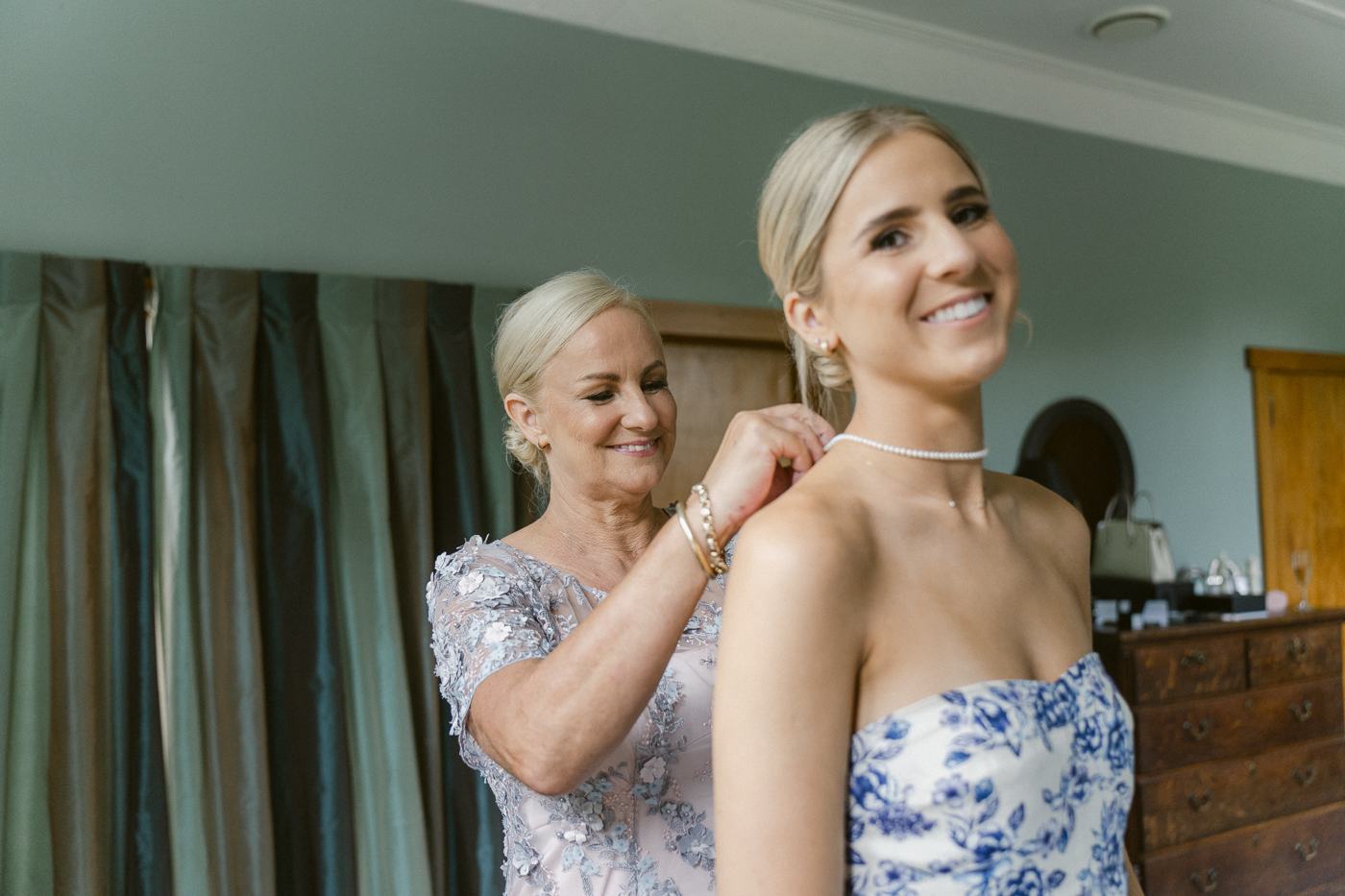
Also note anyone who needs help: an elderly relative who must sit, someone with a walking frame, a toddler who will not stay still, a relative who is arriving late from the airport. These details decide where people stand and when. They cost nothing to write down and a lot to discover mid-queue.
A worked example: 22 combinations
Here is one scenario, with every size an assumption. Say a family of 45 relatives across three generations has a list of 22 combinations. Say the photographer and family agree on the time per combination shown below. Your numbers will differ. The shape is what matters.
| Group | Combinations | Time each (assumed) | Subtotal |
|---|---|---|---|
| Whole family (couple, all grandparents, both sets of parents) | 1 | 3 min | 3 min |
| Immediate family only | 2 | 2 min | 4 min |
| Bride’s extended side, by generation | 6 | 1.5 min | 9 min |
| Groom’s extended side, by generation | 6 | 1.5 min | 9 min |
| Named pairings (a specific grandparent, a travelling relative) | 7 | 2 min | 14 min |
| Transitions and regrouping between blocks | n/a | n/a | 10 min |
| Total | 22 | 49 min |
The transition line is easy to leave out. It is the physical time of forty-five people moving, being called forward and being repositioned, and it does not appear if you only count minutes per photograph. Build it in as a real cost.
To use this for your own family, count your combinations, agree a time per combination with your photographer, add transition time, then add a margin for the relative who has wandered off or the elder who needs a chair. If the total looks too big, shorten the list or give the block more time.
Where to hold it and how to set it up
Hold the formals where the ceremony was, or very close to it. If the reception is across town, doing the formals there spends part of the block on the drive. At the ceremony, everyone is already dressed, already there and already gathered.
The space itself needs a few things, and your photographer (or your venue coordinator) should check them before any relative arrives.
- Depth. Forty people in three or four rows need room both sideways and front to back. A shallow strip along a wall will not do.
- A clean background. Cars, bins and other guests walking through spoil a group photograph, and cannot be fixed easily afterwards.
- Shade or soft light. A big group facing direct sun squints. Open shade gives faces that look relaxed.
- Somewhere to sit. Elders should have chairs close to hand, out of the frame until needed.
- Height for the back row. With several rows, back-row faces vanish behind shoulders unless they are higher than the people in front. Ask the venue about a riser, a set of sturdy steps or a raised bank. A slope or a step does the same job without any equipment.
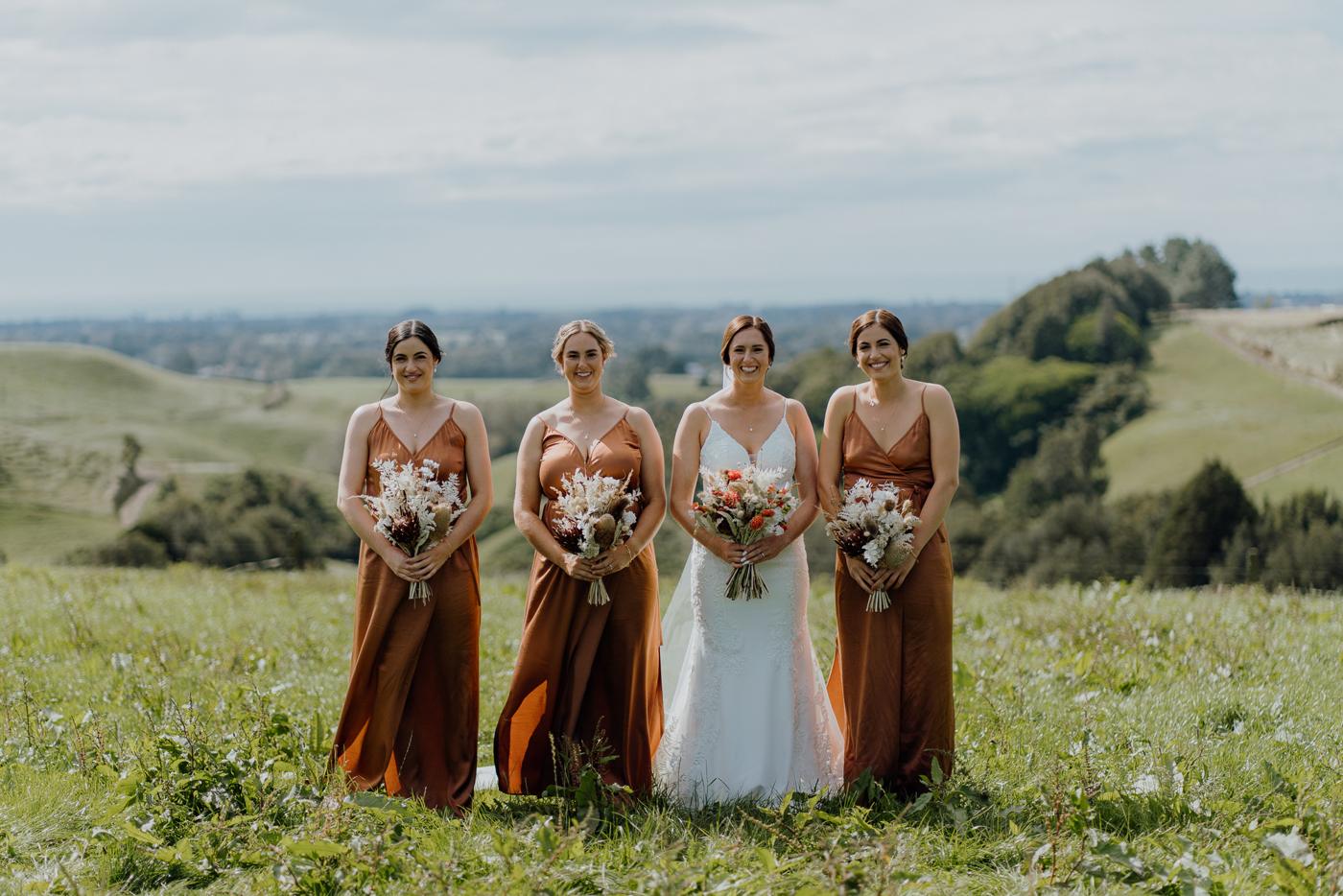
Mark the standing position before the queue begins. A visible line on the ground, even a strip of tape or a bag placed on the grass, shows where the front row should land. Without it, the group drifts forward and back with every change and the photographer has to re-square everyone each time.
Running the queue on the day
For a group this size, a good photographer will ask for a family helper to call names, someone who knows every relative by face and name and has the voice for it. A photographer who met everyone an hour ago cannot reliably find forty people by name.
If some relatives are more comfortable in another language, the helper should be able to call them in it. The helper is also the person who walks around the garden collecting the two uncles who wandered off. Ask someone to take this job before the day.
A few habits keep the queue moving:
- The helper holds a printed copy of the list. A list on a phone gets a message notification at the worst moment.
- The next combination is called before the previous one is released, so the line never goes slack.
- People are asked to look at the camera, not at each other, and the photographer takes a few frames of each combination so a blink or a turned head does not ruin the only version.
- Phones go away during the block, and children are placed early, before they run out of patience.
If a relative arrives late and misses their combination, tell the photographer as soon as you know. It is usually simpler to slot them into the nearest matching combination than to open a new grouping. A cousin added to the cousins’ photograph costs a minute. A whole new photograph for one person, with everyone called back, costs the transition time again.
On second photographers: the bottleneck here is people moving and being called, not camera speed, so a second photographer may not shorten the block much. If you are weighing the cost, ask any studio whether it offers one and what they would do during the formals. The article on whether you need a second shooter covers where one earns their place.
Protecting the light while this happens
Large formals can run over, and if they run into the light you were saving for your couple portraits, you lose the thing you were trying to protect. The cure is to decide in advance which job gets which light.
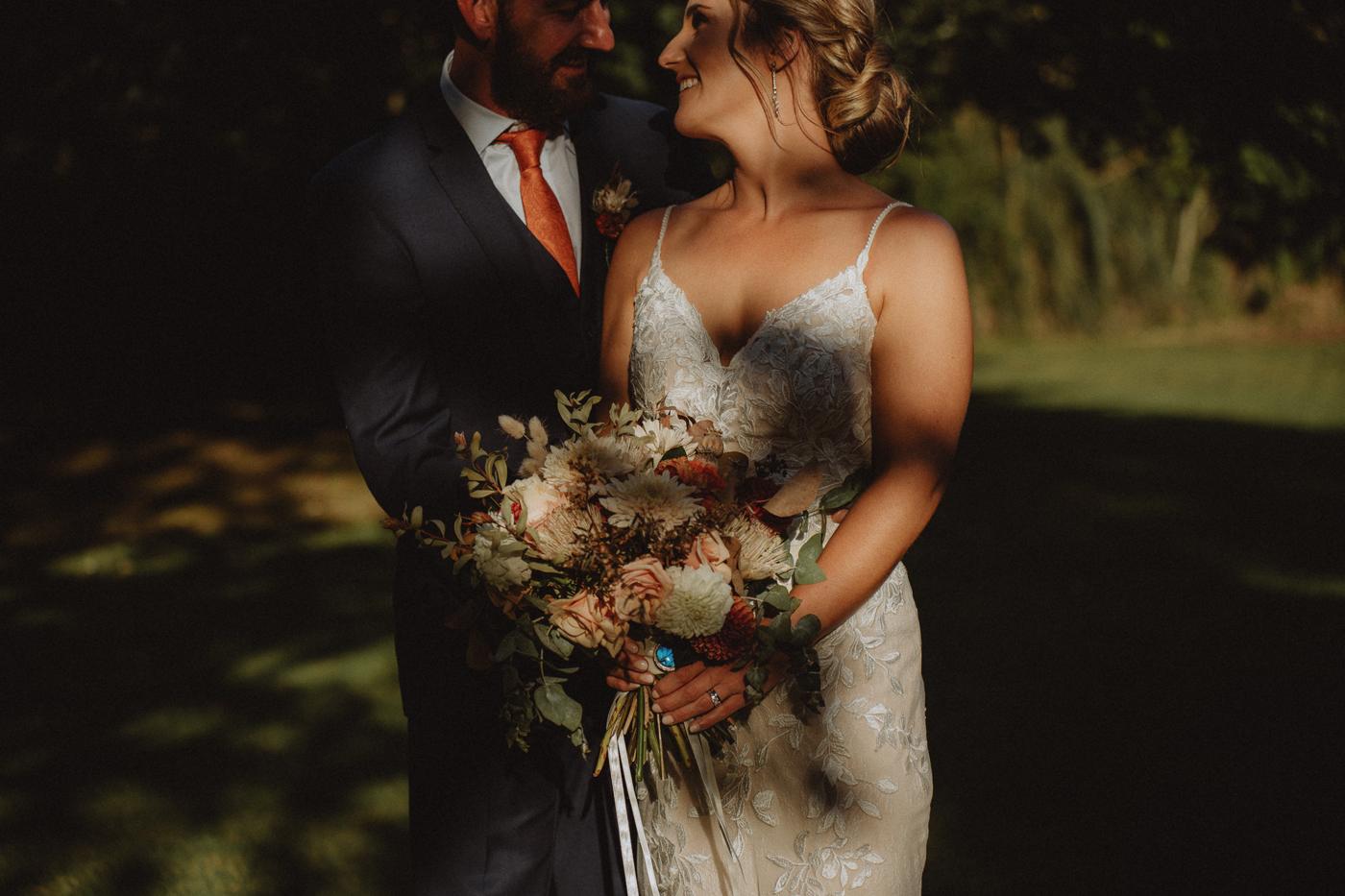
A group photograph of forty people is forgiving. It works in flat midday light, in open shade, even under cloud. A couple’s portrait is the opposite. It is the photograph that most rewards soft, low, directional light. So run the formals in whatever light is on offer when they happen, and keep the golden hour for the two of you.
Golden hour in Sydney is short. In the computed table in the Sydney golden hour guide, it lasts between 33 and 38 minutes depending on the date. That is the whole window, so a formals block that wanders into it takes a large part of it.
Here is a worked example, with the timing assumed. Say formals start at 4pm and take 50 minutes, so they finish at 4:50pm.
| Date (2027) | Golden hour starts | Sunset | Where a 4pm start with a 50 minute block lands |
|---|---|---|---|
| Mid-November | 7:01pm | 7:36pm | Finished more than two hours before golden hour starts |
| Mid-June | 4:15pm | 4:53pm | Runs through almost the whole golden hour and ends minutes before sunset |
The same block in the same time slot is comfortable in one month and takes the evening light in the other. That is what a shorter winter day does. The dates in the table are Sydney CBD figures, and a west-facing spot loses usable light earlier. If your wedding is in winter, the questions to settle are whether formals can move earlier, whether your couple portraits can happen before the ceremony, and whether the ceremony itself should start earlier. The daylight saving guide explains why a ceremony time booked a year ahead needs checking.
Before or after the ceremony
Both orders work, and each trades one problem for another.
Before the ceremony, everyone is fresh, dressed and in one place, and guests have not scattered to the bar. The cost is that some relatives may not have arrived yet.
After the ceremony, the whole family is certainly there. The cost is that people drift to drinks and conversations, and forty people must be rounded up again. If your day includes a tea ceremony, your family may have a view about whether the formals come before or after it. Some families treat the tea ceremony as the moment relationships are formally acknowledged and prefer the formals to follow it. Others photograph the family groups first. Families vary, so ask the elders who care about the order, and read the tea ceremony guide for how that part of the day is covered.
Whichever you choose, tell the venue coordinator and write the time on the run sheet. A coordinator who sees “family photos” as a single generic line will block out a small slot. A line that says “extended family formals, forty-five people, 22 combinations” reads very differently.
When a family does not want the full list
Not every family wants every combination, and not every family can have them. A shorter list is a legitimate choice, not a lesser version of doing it properly.
Some reasons are practical. A relative may be too frail to stand through a long queue. A child may be unwell. A long block may simply be more than the couple wants to spend. Some reasons are about people. Parents may be divorced or remarried, and the family may not want every parent together in a single frame. Two relatives may not be speaking. A relative may have died, and the family may want a framed photograph included in a group. Handle these privately and in advance, with the couple and the person who owns the list, not out loud on the day with forty people listening.
A good photographer will not ask the reason. They will ask what you want the photograph to show, and build the list from that. If a particular pairing is tender, say so, and the order can be arranged so those people are not placed awkwardly.
One way to shorten the list without losing the people who matter most: photograph the core generational groups formally, then cover everyone else as candid groups during the reception. That keeps the key photographs and drops the long queue. It is also a good fit for a family that finds formal groups stiff.
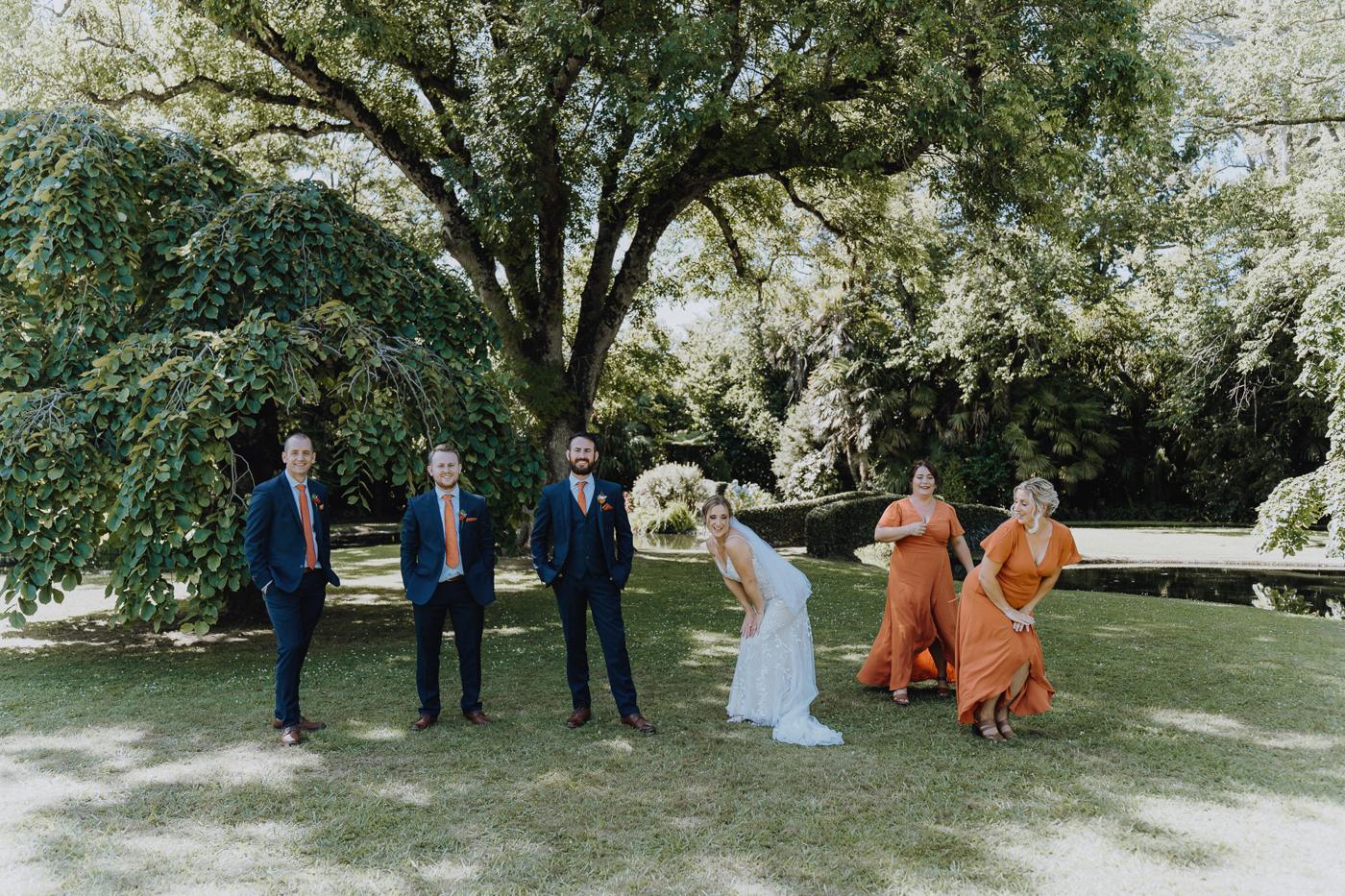
If you dread the idea of a long formals block, say so at the planning stage and ask your photographer what a shorter version would look like.
What to do next
- Count your family. Write every person who must appear in a photograph, their relationship and their side, and decide who owns the list.
- Ask the elders on both sides about the order, and which side goes first, before the list is final. Write the answer down.
- Work through the arithmetic from the worked example with your own numbers: combinations, time each, transitions and a margin. Ask your photographer whether the total matches what they would allow, and read how much time family formals really need.
- Check the sunset and golden hour for your month, using the Sydney golden hour table, and decide where the formals sit so they do not eat your portrait light. The your-day planner helps lay the day out.
- Put the block on the venue’s run sheet as a named item, with the headcount and the number of combinations, and nominate the person who will call names.
For the wider picture of how a Chinese wedding is covered, start with Chinese wedding photography in Sydney.
Have a big family and a list taking shape? Send it through on the contact page, with your date, and you will hear honestly whether the day is free and what it could look like.