
Strip away the seating chart, the run sheet and the seventh cousin who needs a formal photo, and what is left of a wedding is two people making a decision in front of witnesses. That is what an elopement keeps, and it is why the photography for one works differently from a big day.
If you are searching for an elopement and destination wedding photographer in Sydney, this page is the starting point. It covers how the small versions of a wedding differ from the big one, which format suits which couple, the legal step in plain terms, how to plan the light and the weather, and what to ask before you book anyone.
Quick answer: An elopement is you, a celebrant and two witnesses, with no reception. A small wedding is the same idea with 10 to 30 people, and a destination wedding is held away from home, usually with guests who have travelled too. All three trade guest numbers for time, light and privacy, so they often need fewer photography hours than a full reception day.
On this page
- What actually changes when the guest list shrinks
- Three words, three different days
- The legal step, plainly
- Choosing the place and the hour
- How many hours you actually need
- What a good small-day photographer does and what to ask for
- Weather and the plan B
- Planning a destination wedding: the checklist
- Questions to ask any photographer before you book
- What to do next
What actually changes when the guest list shrinks
Three things change, and they compound.
Time stops being fought over. On a 150-guest day the timeline is a negotiation between the ceremony, family formals, the reception schedule and the light, and photography usually loses a chunk of it. On an elopement there is no reception to protect. If the light is best at 4pm, the ceremony can be at 4pm. You are building the day around the sun instead of around the caterer.
The photographer becomes part of the guest list. With two people and a celebrant, the photographer is one of the few other people there besides the witnesses. That changes how the day is shot. There is less catching a decisive moment across a crowded room and more being present in a quiet one, which is a different skill and no lighter a job.
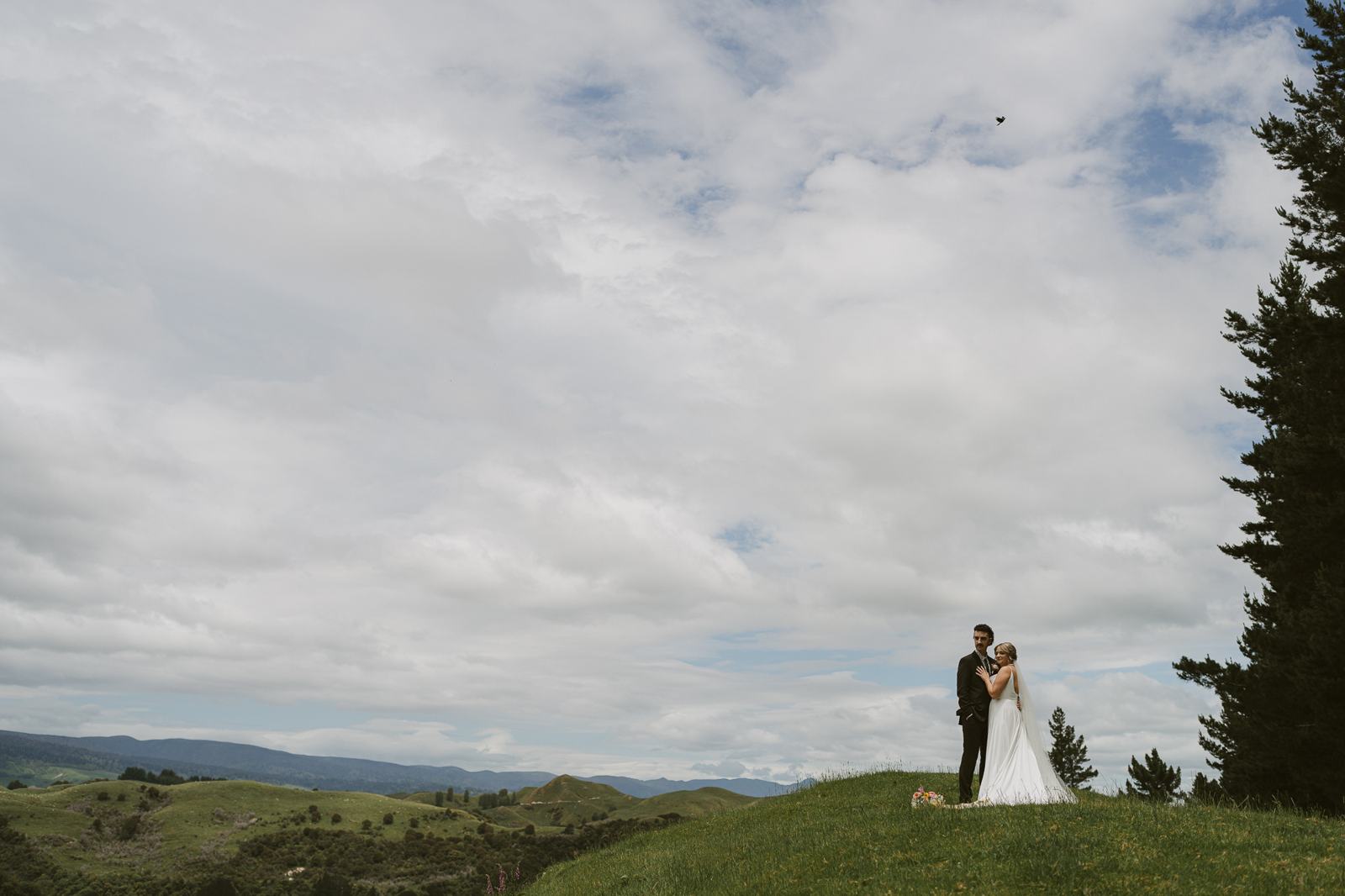
Location gets to matter more. A big wedding is built around a venue that can seat and feed a crowd. A small one can be built around a place: a headland, a lawn, a lookout, somewhere that would never fit a marquee. Because nobody has to be fed, the only question is where the two of you want to stand.
Three words, three different days
People use these terms loosely, and they are not the same thing. Here is how they are used on this page.
| Term | Guests | Where | Legal step |
|---|---|---|---|
| Elopement | Usually just the couple, a celebrant and two witnesses | Anywhere, often local | Same as any Australian wedding |
| Small or intimate wedding | Roughly 10 to 30 | Anywhere | Same as any wedding |
| Destination wedding | Usually 10 to 50, mostly travelled guests | Away from home: interstate, New Zealand, overseas | Depends on the country |
A destination wedding held overseas is often not the legally binding ceremony. Some couples sign the paperwork quietly at home and hold the symbolic wedding at the destination. That is a sensible arrangement, not a compromise. Marrying legally in another country can mean residency and documentation rules that take weeks, and a short trip does not have weeks to spare. Check the rules for your chosen country directly before you decide which day is the “real” one.
If you want a recommendation rather than a table: for Sydney couples who are doing this because the big wedding does not appeal, a small wedding of 10 to 30 is the format that tends to suit most. A true elopement can feel thin afterwards if you did want somebody there. A destination wedding carries most of the logistics of a big one, plus flights. The small wedding keeps the people who matter and drops the production.
Some quick decision rules:
- If being watched makes your stomach drop, choose the elopement and hold a party later.
- If one set of parents would be heartbroken to miss it, choose the small wedding.
- If you both love travel and your people can afford it, go destination, and be fine with some guests declining.
The legal step, plainly
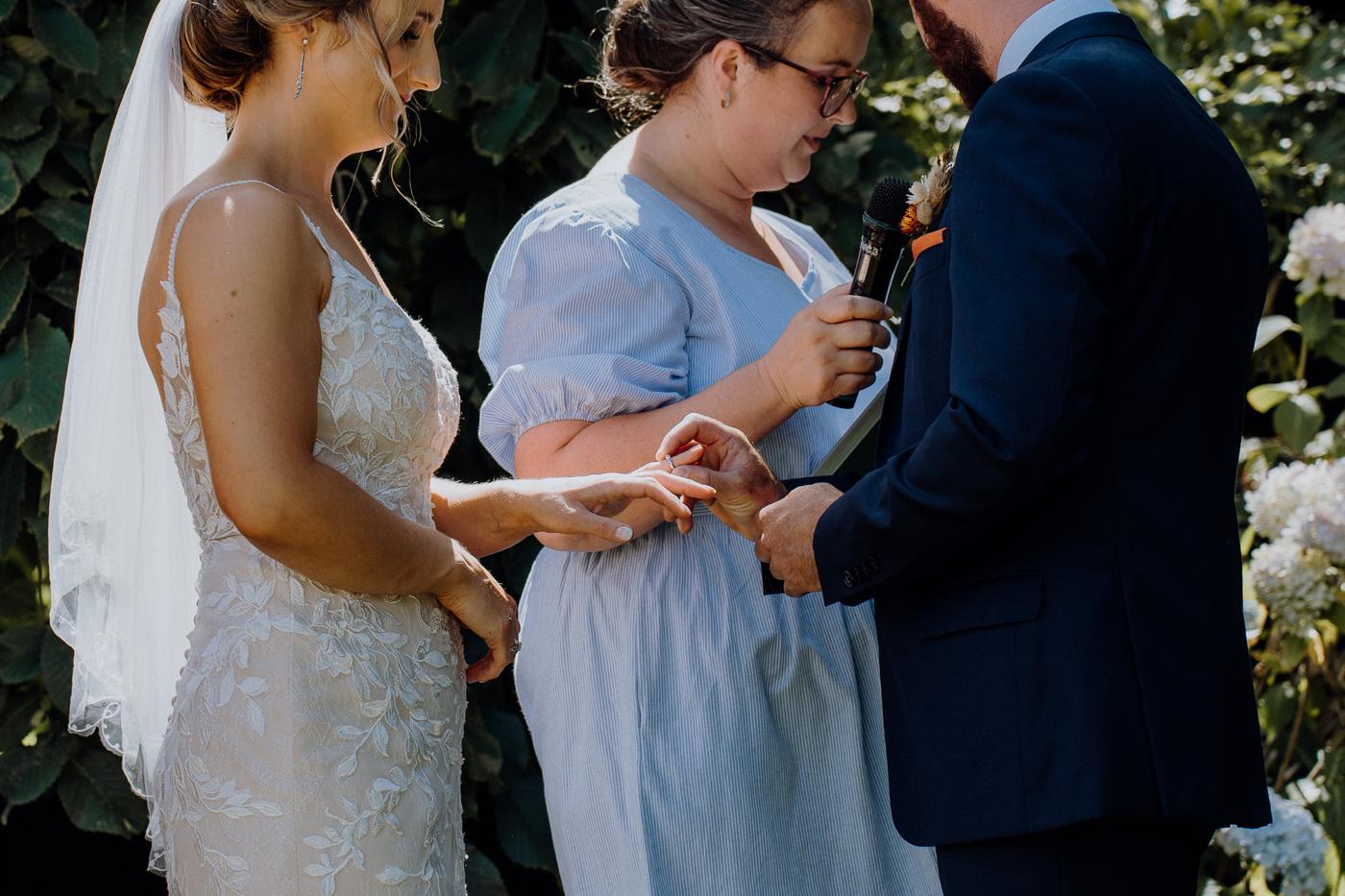
In Australia, an elopement is legally identical to a large wedding. The paperwork is the same whether two people are watching or two hundred. You lodge a Notice of Intended Marriage (NOIM) with an authorised celebrant, and you need two witnesses on the day. The celebrant guides you through the rest. The detail, including the timing rules, is set out in Eloping in NSW: The Legal Steps, Plainly.
Two points are worth knowing before you book a photographer:
- The celebrant sets the ceremony time and place options. Some celebrants are happy to marry you on a clifftop at sunset. Others work from set locations. Ask before you fall for a spot.
- A photographer working the ceremony cannot also be a witness. Plan witnesses separately, even if they are two friends you bring along for the afternoon.
Rules change, so confirm current requirements with an authorised celebrant or the official government site rather than relying on any article, including this one.
Choosing the place and the hour
Because you are not tied to a venue’s schedule, you have a rare luxury: you can choose when to marry based on how the light behaves. The harbour, the beaches and the west all catch the sun differently, and the sun sets earlier in winter and later in summer. The full table of sunset and golden hour times by month is in Sydney Golden Hour by Month.
A few mechanisms to keep in mind:
- Low sun is kind to faces. Golden hour in Sydney runs for 33 to 38 minutes before sunset, depending on the time of year. In that window light comes in sideways and warm. Midday light drops straight down and creates shadows under the eyes. If your ceremony is short, put it in the kind light, or put your portraits there.
- Low sun can also be behind you. At an east-facing beach in late afternoon the sun sits over the land, behind a couple who face the sea. That gives a glowing outline and a bright sky, but faces fall into shade unless the photographer adds light or turns you around. Ask which way the place faces at your hour.
- Open shade is the backup. If you want a midday ceremony for family reasons, a spot shaded by a building or tree gives soft even light on faces while the sky behind stays bright.
- Daylight saving shifts the clock but not the sun. If you are booking a year ahead, work out the actual sunset time for your date, then check whether the clocks will have changed. Daylight Saving and Your Ceremony Time covers the trap.
- Public places belong to the public. A lookout that is quiet on a Tuesday can be busy on a Saturday, so choose a weekday if privacy matters.
Worked example. Say you marry on 15 May. Sunset that day is 5:03pm and golden hour starts at 4:27pm, about 36 minutes of low, warm light. Suppose the ceremony is at 3pm, and you plan a short break and then portraits from about 4pm. Those sizes are assumptions for the example, but they show the idea: you arrive at golden hour fresh, with a few minutes to settle in before the best light starts. Compare that with a midday ceremony, where portraits would be forced into the harshest light of the day. Same two people, same place, a different result.
How many hours you actually need
Photography at TZ Wedding Studios starts from $4,000, and the hours you choose, any film, and where you marry move the price from there. What a Destination Wedding Photographer Costs, All In breaks down the extras, and Investment explains how booking works.
Coverage for an elopement is usually shorter than a full day. Ask what is available and what it costs, because the answer differs from studio to studio. Because there is no queue of relatives to arrange, the hours you do book go on the two of you instead of on logistics.
For a small wedding with a lunch or dinner, more hours help. As a general guide, six hours usually ends before the speeches, eight is what most couples choose, and ten is what nobody regrets.
To decide, list the parts of the day you would regret not having photographed, in the order they happen. If they are spread across a long afternoon and evening, a short block will cut one off.
When you compare quotes, work out:
- What is a travel cost and what is a photography cost. Flights and accommodation should appear as their own lines, not buried.
- Whether the quote is for a fixed block of hours or open-ended. A small day often finishes early, and you do not want to pay for hours you never use.
- What happens if the date moves. The deposit is not refundable, because the date is held and other couples are turned away, so know how the date can change before you pay it.
- Whether film is wanted. Film can be added to photography or booked alone, and the two are planned together, which is easier to do before the date is set than after.
What a good small-day photographer does and what to ask for
A small day asks for different habits from a big one, because the day itself has changed. Here is what to look for, and how to check for it before you book.
Conversation in the build-up. On a big wedding a photographer can stay in the background during the ceremony. On a day with two people and a celebrant, staying silent and distant reads as absence, and the couple feels watched instead of accompanied. A good small-day photographer chats in the build-up, keeps their voice low during the ceremony, and makes it clear they are there with you. Ask how they handle the first ten minutes with a nervous couple.
A plan for nerves. A couple eloping can be more nervous than a couple with 150 guests to carry them through, because there is nobody else to look at. A few minutes of ordinary conversation before the camera comes up does more for the photos than any posing instruction.
Real moments, gentle guidance. For most of the day I work the way I always do: real moments as they happen, with simple prompts for portraits and nothing over-posed. Camera-shy couples are normal, and How to Look Like Yourself in Photos When You Hate Being Photographed is worth a read if that is you.
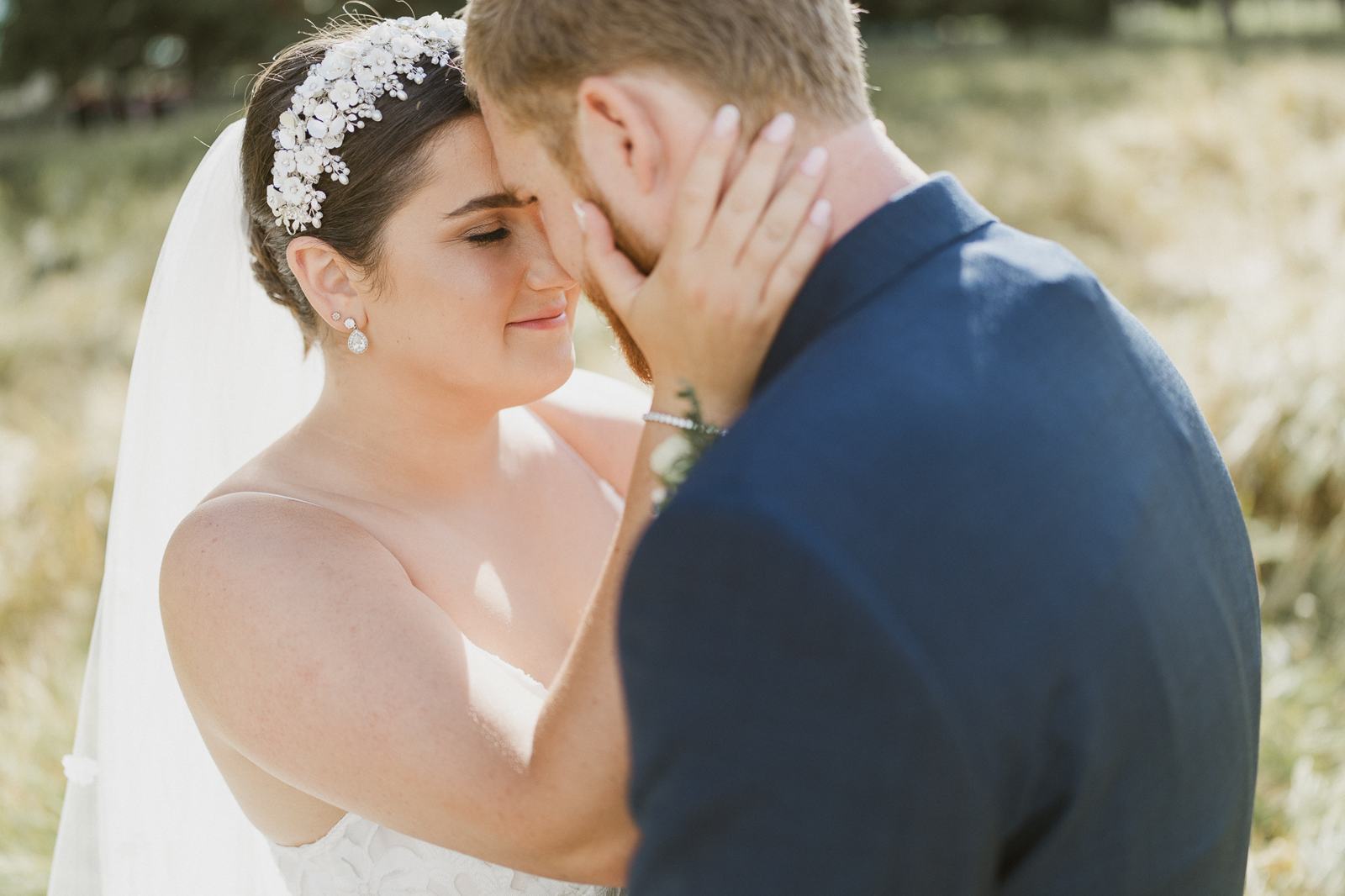
Time with the quiet stretches. At a big wedding, quiet moments are rare. On an elopement there may be a long stretch of walking somewhere together, or waiting for the celebrant to finish a signature. A good photographer keeps the camera up through them, because nobody is performing for a crowd.
Weather and the plan B
A small day is more exposed to weather in one way and more forgiving in another.
It is more exposed because there is no marquee waiting in the wings. If the plan is a headland and the forecast is wild wind, you do not have a ballroom booked as a backup unless you booked one.
It is more forgiving because two people can simply move. You can wait out a shower under a tree, walk to the sheltered side of a headland, or push the ceremony back an hour. A wedding party with a schedule and a caterer cannot do that.
Build a weather plan the week before the day:
- Choose a trigger. Decide in advance what counts as “too much”: heavy rain, strong wind, or a total fire ban or heat warning. Make the call together, early, so you are not arguing at the car park.
- Have one sheltered backup. A covered spot near the first location is enough. It does not need to be fancy.
- Tell your celebrant and photographer the plan. Agree who calls it, and by what time on the morning.
Wet weather is not a disaster for photographs. Rain: What Actually Happens, and What We Do goes through it in detail.
Planning a destination wedding: the checklist
A destination wedding carries most of the work of a big one, with the extra layer of distance. These are the things that go wrong because of distance, and the fixes.
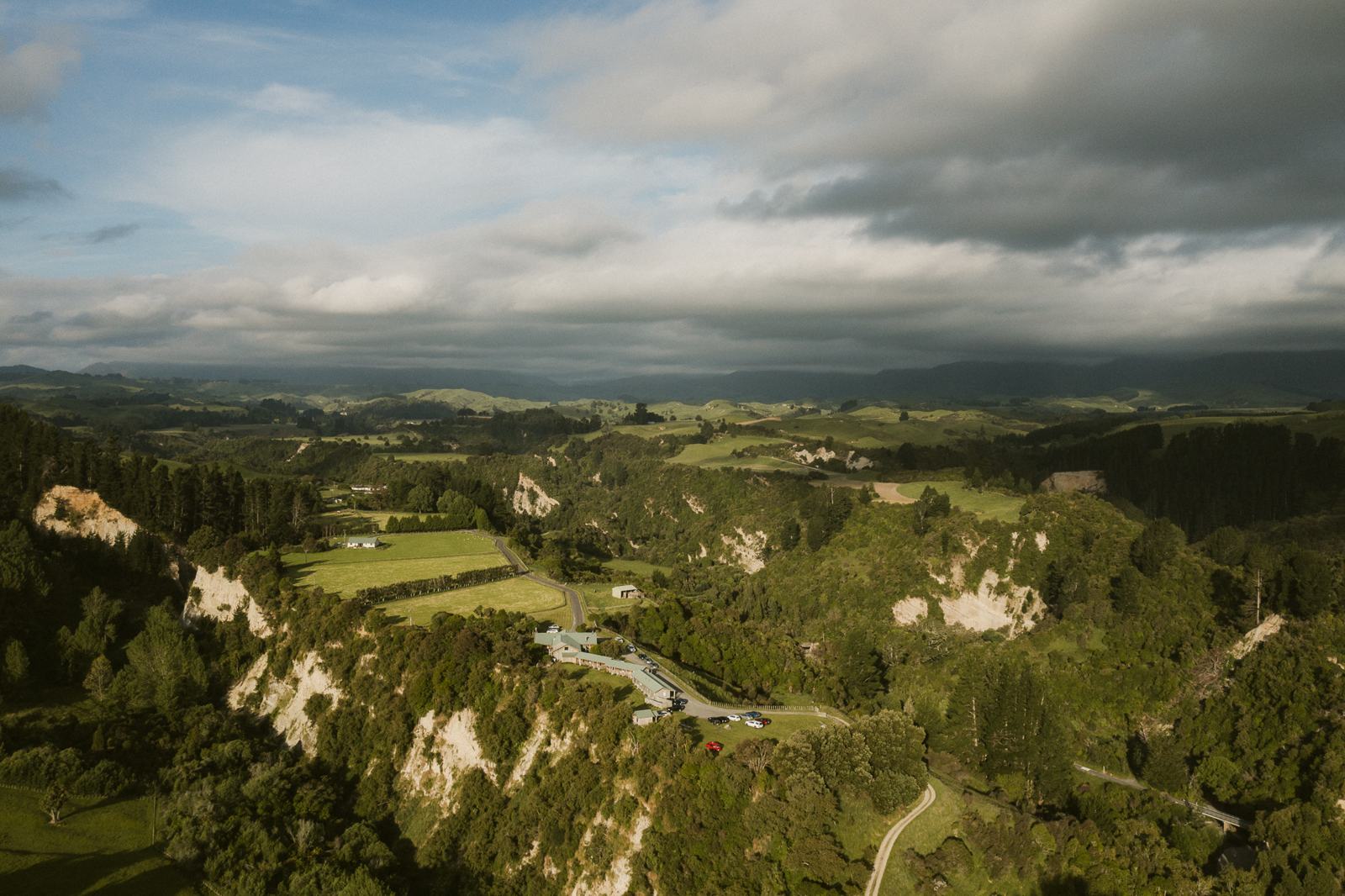
Scout, or hire someone who can. A place that looks wonderful online can have a car park next to the ceremony spot or a road you cannot hear past. If you cannot visit, ask the celebrant, venue or a local coordinator what the place is like at your chosen hour, and ask your photographer what they have found out about it.
Arrive early. Flights get delayed, so land a day or two ahead, and send guests travel details early.
Check the rules for the country. Marriage law, permits for photography in public parks, and drone rules vary by place. Confirm them with the local celebrant or official body, not with a blog.
Have a legal plan and a symbolic plan. Decide which day is the signature day and which is the ceremony everyone watches. Doing the signing at home and the celebration away is a common and sensible split.
Consider a pre-wedding session. If you are marrying overseas, a session at home beforehand lets you get used to the camera on familiar ground. Pre-Wedding Shoots for Couples Marrying Overseas explains how that works.
Two People and a Celebrant: What an Elopement Day Looks Like walks through a running order step by step.
Questions to ask any photographer before you book
Whoever you hire, ask these. They separate someone who has worked small days from someone who will treat yours as a short big wedding.
- How do you work when there are only two of us? Listen for talking and presence, not “we stay out of the way”.
- What exactly does travel cost, and who books it? Insist on it being itemised.
- What happens if the weather turns? A good answer is a plan, not a shrug.
- How many photographs do we get, and when? At TZ Wedding Studios you receive at least 300 edited high-resolution photographs depending on hours, with delivery in four to ten working weeks. Ask others for their numbers too.
- Are you free on our date? I answer this straight: if the date is free, you hear what the day could look like, and if it is booked, I say so straight away.
What to do next
- Decide the format. Elopement, small wedding or destination wedding. Use the decision rules above and settle it between the two of you first.
- Speak to a celebrant about the legal step, the timing rules and what locations they will marry you in, and confirm current requirements with them or the official government site.
- Pick two or three possible dates and check sunset times and daylight saving for each, using Your Day, which has the order of the day and a light planner.
- Work out your hours and budget, with travel as its own line. Investment shows how pricing and booking work.
- Browse more planning help in the tips library, and look through four whole weddings to see what a full day looks like in photographs.
If you are thinking of eloping or marrying away from Sydney, get in touch with where and when and you will hear honestly whether the date is free and what the day could look like.