
A photographer’s website shows you their best work, chosen from years of weddings and arranged in the kindest order. That is what a portfolio is for, and it is not dishonest. It just can’t answer the question you are really asking, which is what your own gallery will look like from the first frame to the last.
Knowing how to read a wedding photography gallery gives you a way to answer it. A full gallery from one real wedding shows the floor of a photographer’s work, not the ceiling. This article covers what to ask for, which parts to read first, and how to tell a bad patch from a pattern.
Quick answer: Ask any photographer you are seriously considering for one complete gallery from a single real wedding, not a selection. Read the parts nobody puts on a website: the middle of the reception, the guests, the quiet in-between frames. You are checking how good the weakest stretch is, because that is what you are really buying.
On this page
- Why a portfolio can’t tell you what you need to know
- How to ask for a full gallery
- Read the middle of the day first
- Guest candids and the people who are not the couple
- Flip through it fast: exposure and colour
- The in-between frames
- Frame count and hit rate
- A checklist for reading a full gallery
- A worked example: reading one gallery in one sitting
- Questions to carry into the conversation
- What to do next
Why a portfolio can’t tell you what you need to know
A portfolio answers one question: can this photographer make an excellent image at least some of the time? The answer is nearly always yes, or they would not be in business.
What it cannot show is consistency. A set of portfolio images could come from as many different weddings, one frame per day, each the best of its hour. They could also come from a single wedding that went unusually well. Nothing on the page tells you which. There is also no way to see how many frames sat between the good ones, or what the rest of that day looked like.
A full gallery closes that gap because nobody hand-picks a whole day to impress a stranger. It is closer to the working output of a day. Some frames are brilliant, some are fine, and a few are weak, and the proportions are the information you came for.
There is a second reason it matters. A portfolio is edited by the photographer for a buyer. A full gallery is edited for the couple who were there, so it includes the people they love, the awkward minutes and the late hours. Those are the frames you will actually live with.
How to ask for a full gallery
Ask for one complete delivered gallery from a single wedding, the same set that couple received. A few details make the request easy to grant and hard to dodge.
- One wedding, start to finish. Not a “best of” from several. A set from a single day lets you see how the photographer handled changing light and energy from morning to night.
- A wedding similar to yours, if possible. A comparable guest count, venue type (indoor, outdoor, mixed) and time of year gives you the closest preview of your own result.
- Delivered, not preview. A small preview set of teaser images is a portfolio by another name. You want what the couple actually got.
- Permission is the photographer’s to give. Galleries belong to the couple they were made for, so a photographer may need to ask them first. A short wait for that is reasonable. A flat refusal with no alternative is worth noting, and the red flags article covers how to weigh it.
If a studio has no complete gallery it can share, ask what it can show instead. The gallery page on this site shows four whole weddings, which is the kind of thing worth asking every photographer for. A studio that can only offer highlights is telling you something, even if it is only that they have not put one together yet.
One more practical point: look at the gallery on a laptop or desktop screen rather than your phone. Small screens hide soft focus and uneven exposure, and those are two of the things you are checking for.
Read the middle of the day first
Most people open a gallery at the start and scroll down, which means they spend the most attention on the easiest part of the day. Getting-ready details and the first look are quiet and controlled. The light is usually good, the subjects are cooperative, and the photographer has time to set up. Almost anyone competent produces strong frames there.
Jump to the middle of the reception instead. This is the stretch where the photographer works hardest for the least reward. The room is busier, the light has dropped, the guests are moving, and nothing is staged for the camera.
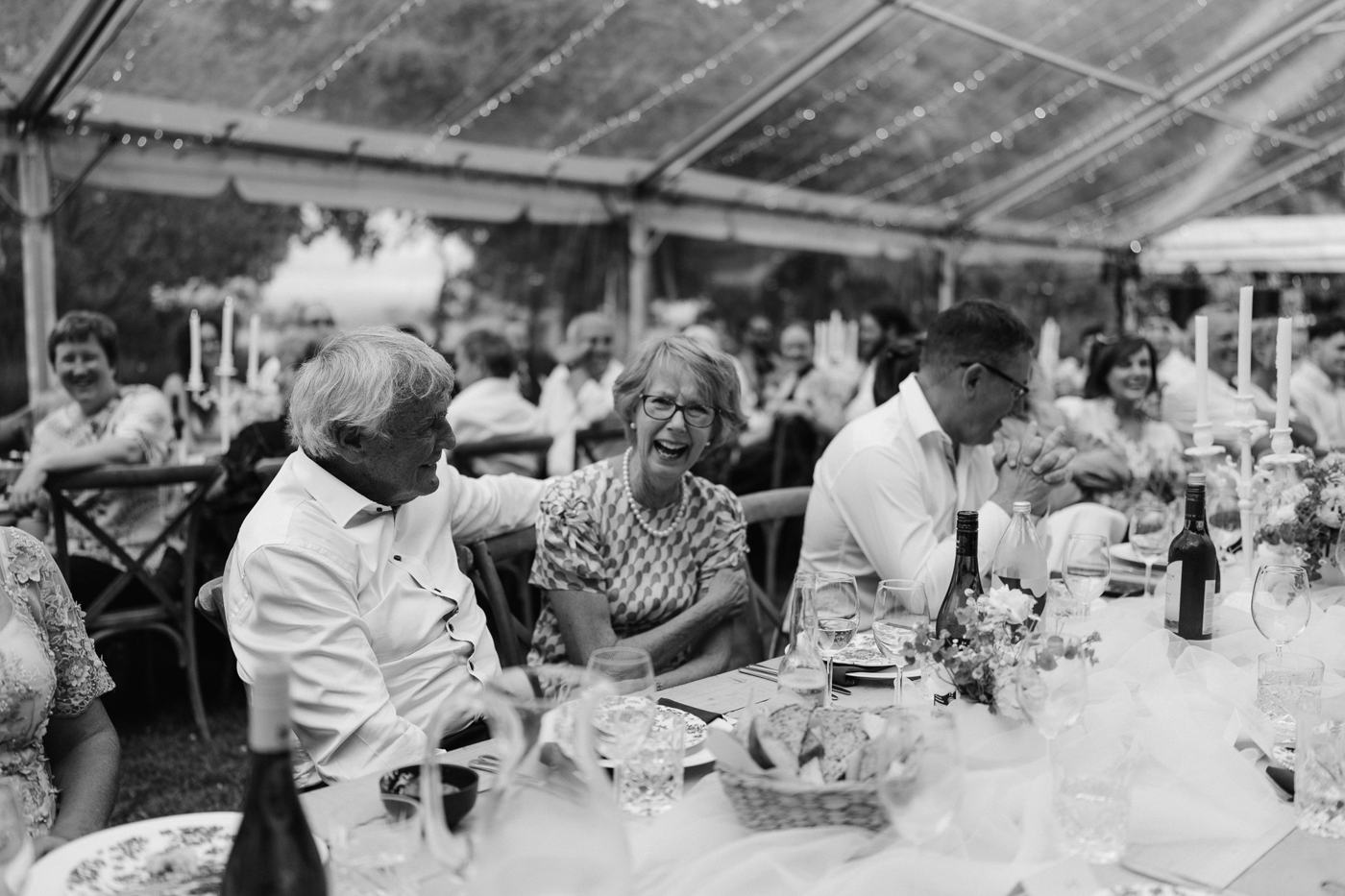
Look at three things in that stretch:
- Focus. Are faces sharp, or is the focus landing on the background or a hand? Soft faces in a fast-moving room are a common weakness.
- Skin tones. Do faces look like people, or are they orange, green or grey? Mixed indoor light is hard, and the colour result tells you whether the photographer corrected for it.
- Timing. Are the frames mid-expression, with a mid-sentence mouth or a half-blink, or do they catch the laugh at its peak?
If the mid-reception frames hold up, the easier hours almost certainly will. The reverse is not true. A gallery can be superb in the morning and fall apart at night, and the morning is what gets shown.
Guest candids and the people who are not the couple
Couple portraits are directed work. A photographer can take time, ask for a different angle and try again. Guest candids are the opposite: a reaction lasts a moment, and if the photographer is in the wrong place it is gone.
So look at the guests. Are there frames of parents, grandparents, friends and children, or do the people vanish once the portraits end? A gallery that is all couple and no crowd suggests the photographer’s attention narrowed to the one thing they planned for.
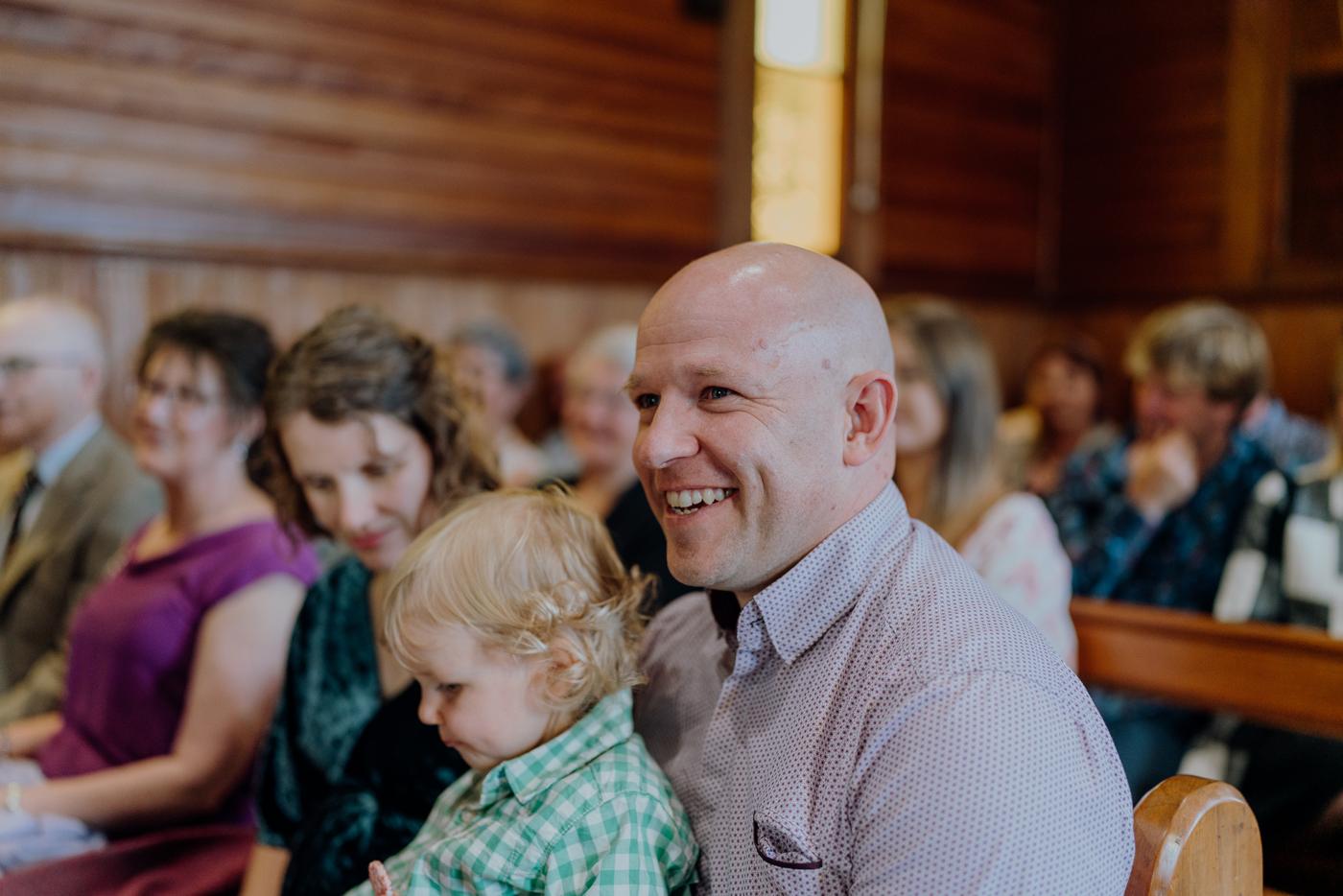
Look also at how the guests appear. If people look relaxed and mid-conversation, the photographer is blending in. If every guest is staring at the lens, they are posing for a stranger, which is a different style of coverage. Neither is wrong, but one should match what you want. The documentary coverage article explains what that approach produces over a full day.
Check that your own people would be there. If your grandmother is the person you most want a good photograph of, look for a frame in this gallery that does for someone else’s grandmother what you hope for yours.
Flip through it fast: exposure and colour
After reading the frames one at a time, do the opposite. Scroll quickly through the whole gallery, almost like flicking a flipbook, and stop looking at individual pictures. You are watching for a sudden jump in brightness or colour.
A well-handled day shifts gradually as the light does. A poorly handled one lurches. A frame is warm and golden, the next is cold and blue, and the one after is bright and washed out, all taken within a few minutes of each other. That points to a photographer who did not hold their settings steady, or an edit that was not applied consistently across the set.
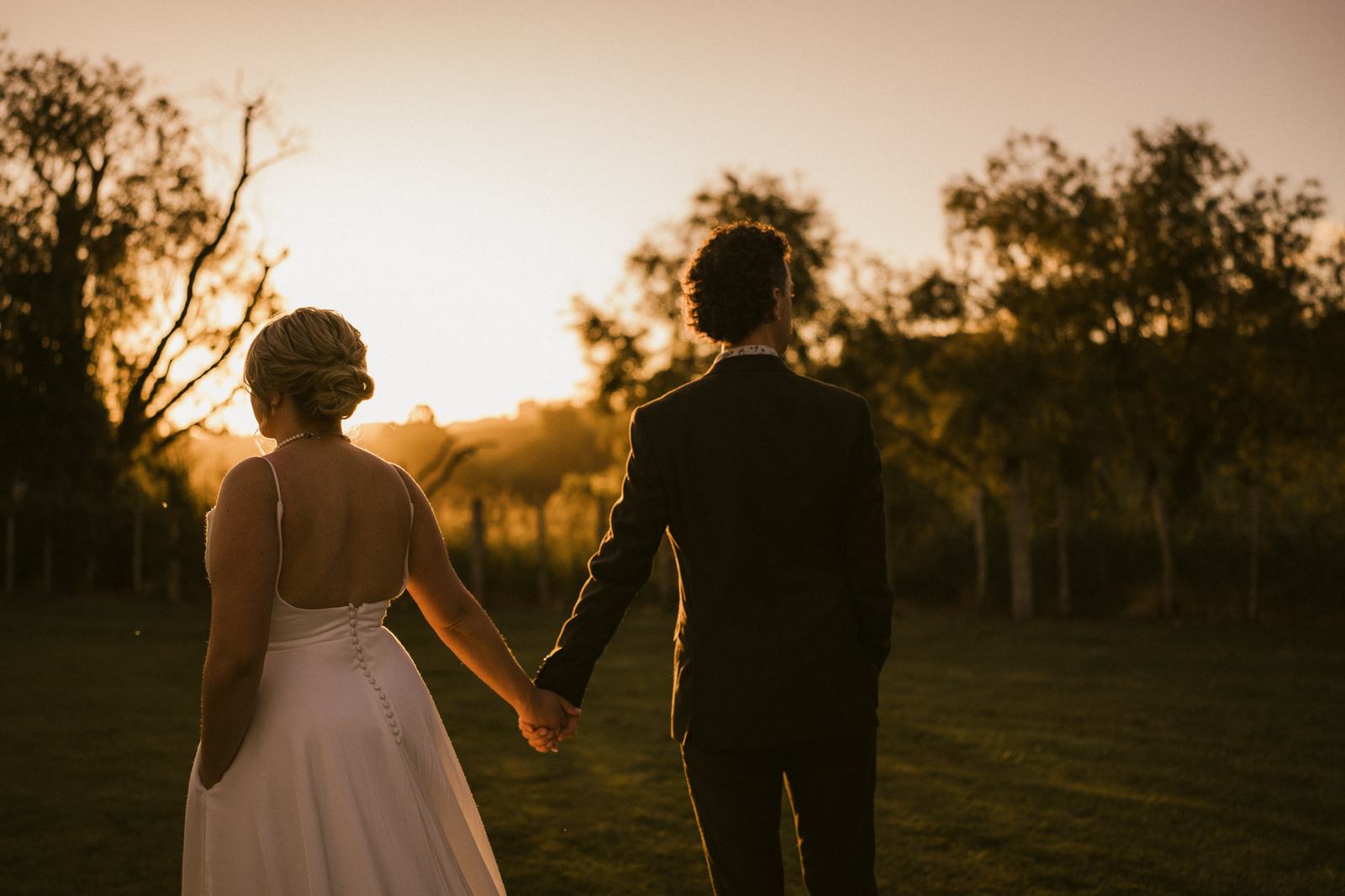
Some changes are honest. Moving from a shaded room to open sky changes everything, and a good edit will not flatten that difference away. What you want is a look that is recognisably the same photographer throughout, with the colour moving the way the light moved.
Two traps are worth knowing:
- Black and white can hide colour problems. Converting a frame to monochrome removes any colour cast, so a run of black and white images tells you nothing about colour handling. Judge colour on the colour frames. The black and white article covers when mono is the right call in its own right.
- Heavy filters can hide exposure problems. Strong, trendy edits can paper over uneven shooting, and they date quickly. Ask yourself whether you would still like the look in fifteen years.
The in-between frames
The frames between events are the quiet test. Getting-ready details and ring shots are a genre of their own and easy to shoot well. The transitions are different: walking from one place to the next, a car pulling away, a minute at the edge of a party while someone catches their breath.
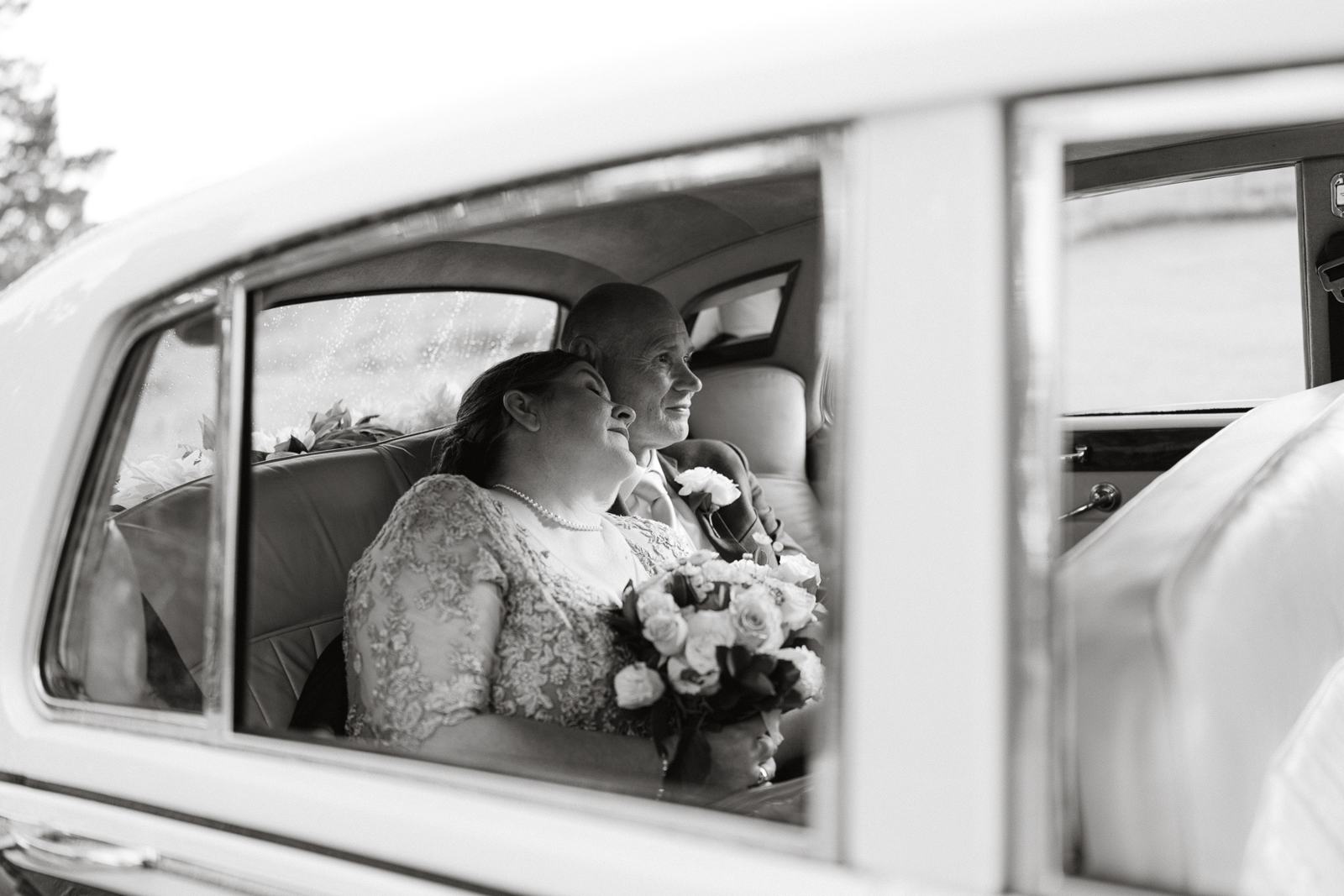
These frames take attention, because nothing obvious is happening. A photographer who is only shooting listed moments will skip them. One who is watching the whole day will have a few, and they are often the frames that feel like the day itself rather than a version of it.
Count how many of them there are, but do not turn it into a score. A gallery with some good transitional frames in each phase of the day is showing you real attention. A gallery made almost entirely of recognisable set-pieces, such as the kiss, the cake and the dance, is a gallery of a checklist.
Frame count and hit rate
Frame count is a useful number as long as you read it as a question and not a verdict. A very short gallery from a full day can mean a quiet day or thin coverage. Ask which. The piece on how many photos you receive and why the rest do not make it goes into the selection side.
Hit rate matters more than total. Pick a short run of consecutive frames, say a portrait session or a stretch of the reception, and count how many are genuinely good. If only a few frames in a run are keepers, the photographer is relying on volume to find a result. If most of the run is strong, they are working with control.
| What you notice | What it might mean | What to ask |
|---|---|---|
| Long runs of near-identical frames | Insurance shooting, no strong sense of the moment | How do they decide when a frame is done? |
| Short, tightly edited gallery for a long day | Heavy culling or thin coverage | How many hours were covered, and what was cut? |
| Strong first hour, weak last hour | Fatigue, or a day that ran hard | What does the end of the day usually look like for them? |
| A few weak frames among many strong ones | Normal | Nothing, this is what a human working all day looks like |
Judge the gallery by where its floor sits, not by its single worst frame. Anyone working across a full day will have an off moment. A pattern of weakness in one setting, such as every low-light frame being soft, is the thing that matters.
A checklist for reading a full gallery
Keep this open while you scroll.
| Look at | It tells you | Warning sign |
|---|---|---|
| Mid-reception frames | Skill in hard, uneven light | Soft faces, odd skin tones |
| Guest candids | Documentary reaction skill | Guests absent, or all staring at the camera |
| Fast scroll of the whole set | Editing and shooting discipline | Sudden swings in colour or brightness |
| In-between moments | Attention when nothing is staged | Only set-pieces, no connective frames |
| A run of consecutive frames | Hit rate under pressure | Few strong frames in a long run |
| Frames from the last stretch of the day | Stamina and energy | Quality falls away late |
If you only do one of these, do the first. The middle of a reception is where the other five problems show up soonest.
A worked example: reading one gallery in one sitting
Say you have been sent a full gallery from a wedding with a ceremony in the afternoon and a reception in a room with low, warm lighting. These are example choices, not a rule.
Start with the middle of the reception, not frame one. You notice the guests at the long table are sharp and warm in tone, but the dance floor frames further on look grey. That could be a mix of lighting types the photographer did not correct, or a deliberate edit choice. Mark it and keep going rather than deciding.
Next, scroll the whole set quickly. The afternoon looks steady. The shift to the reception is abrupt in about two places, but both coincide with moving indoors, so you let those go. You then find that the last stretch of the evening has a run of near-identical frames.
Then look for people. The gallery has grandparents and children and a few pictures of guests in the back of the room, so the coverage is wide, not narrow.
Finally, pick one run of consecutive frames in the reception and count keepers. Say the run is strong, apart from the grey dance floor.
Your summary after one sitting: strong with people, steady in daylight, and an open question about how the photographer handles the dark end of the evening. That is something specific to ask them. Do they flash or use available light? What does a long low-light stretch look like in their other galleries? The answer tells you more than any portfolio could.
Use the same decision rule on every photographer you consider. If two photographers look equal in their portfolios, choose the one whose floor is higher.
Questions to carry into the conversation
Reading a gallery gives you questions, and the answers matter as much as the pictures. Some worth taking with you:
- Is this gallery typical of what you deliver, or one of your strongest?
- How was the lighting at this wedding, and what did you do when it dropped?
- Can I see a gallery from a similar venue or time of year?
- How many frames would I receive for the hours I am considering?
- What does your edit do to colour, and can you show me images before and after?
The fuller list is in the questions to ask a wedding photographer article. A photographer who is happy to be asked about their weak spots is easier to trust than one who has none.
Light changes the picture too, and it varies by venue and time of year. If you want to understand why one gallery has a hard evening stretch and another does not, read how harbour, beach and west change the light.
What to do next
- Shortlist two or three photographers whose portfolio you like.
- Ask each for one complete delivered gallery from a single real wedding, ideally one similar to yours.
- Read each the same way: the middle of the reception first, then guests, then a fast scroll, then the in-between frames, then a run of consecutive frames.
- Write down one specific question per gallery and ask it before you decide.
- Check the date and the numbers on the investment page and see how the day fits together on your day before you book.
If you would like to check a date with Binh, get in touch. If the date is free, you hear what the day could look like. If it is booked, you hear that straight away.