
How long until wedding photos are ready is a question that starts the moment the last dance ends. The honest answer is longer than you want on the night, and shorter than you fear in week four when nothing has landed in your inbox.
The wait is a sequence of jobs, each one needing a person looking at pictures. Once you know the order, you can see where the weeks go, what you can speed up, and what a missed date looks like.
Quick answer: With TZ Wedding Studios, delivery is four to ten working weeks. Busy months, longer coverage and extras such as film or albums, where a studio offers them, can stretch the timeline, so ask for your delivery date in writing when you book.
On this page
- Four to ten working weeks, and what moves you along it
- What happens to your files, in order
- Why it is not faster
- Busy season, quiet season
- Sneak peeks: ask whether you get one
- Rush delivery and same-day edits
- Albums and film add their own time
- When a wait becomes a worry
- What to ask before you book
- What to do next
Four to ten working weeks, and what moves you along it
That range is wide on purpose. Where you land depends on a handful of things you can mostly find out in advance:
- How many hours were photographed. More hours means more frames to sort and edit. Six hours usually ends before the speeches, eight is what most couples choose, and ten is what nobody regrets. The longer days produce more material, and every extra hour has to be looked at.
- How many other weddings are in the queue. If a studio edits galleries in turn, then crowded weeks around your date mean yours waits behind them. Ask how it works.
- How much editing each image needs. A bright, even ceremony is quick. A reception in a dim room with mixed lighting asks for far more correction.
- Whether film is part of the package. Photography and film are planned together, but they are separate pieces of work. Ask for a delivery date for each.
“Working weeks” matters too. Public holidays and the Christmas to New Year break are not working time, so a wedding in early December will not follow the same calendar as one in March. Ask how the studio counts, and ask what date that gives you.
If you are comparing studios, compare the date and not only the range. A studio that quotes “four to ten weeks” and one that says “your gallery will be with you by a named date” are offering very different things. The second is easier to hold to account. There is more on this in what is in a wedding photography package.
What happens to your files, in order
The exact timing differs between studios, but this is a typical order for a studio that edits every image rather than running a preset over the lot.
- Backup. The memory cards are copied to more than one place before anything else happens. This is the dull step that protects everything after it.
- Sneak peek, if the studio offers one. A few of the strongest images are chosen and finished first, so you have something while the rest is underway.
- Culling. Thousands of frames are cut down to the ones that go forward. Blinks, near-duplicates, frames where the focus landed a little behind the face and test shots all go. The rest of the process only works on what survives. The reasoning is laid out in how many photos you’ll receive, and why the rest don’t make it.
- Exposure and colour work. Each kept image is corrected for brightness, white balance and contrast, one at a time, because the light changes from room to room and hour to hour.
- Consistency pass. The whole set is viewed together. An image that looked right on its own can look odd beside the one before it, so tones are matched across the gallery.
- Retouching where needed. A stray bin in the background, a bra strap, a patch of skin that a flash flattened. Not every image needs it, but some do.
- Sequencing and delivery. The gallery is put in an order that follows the day, checked, exported at full resolution and sent to you.
At TZ the gallery is at least 300 edited high-resolution photographs, depending on hours. In a well-edited gallery each of those has been through steps 4 and 5, and often 6. That is the work behind the number.
Why it is not faster
A gallery is not one file. It is hundreds of individual images, each corrected so that it sits comfortably next to the others. That is slow because it is attention, not computing time. A computer can apply a preset in seconds. It cannot tell you that the bride’s skin has gone slightly green under a fluorescent tube.
Here is a worked example, with assumptions you can change. Say a gallery has 500 edited images, and each one gets three minutes of real attention for correction and checking. That is 1,500 minutes, or 25 hours, and it does not count the culling that came first or the consistency pass that comes after. Change either number and the total moves, but it is never small. Those 25 hours also have to fit around other weddings, a booking calendar and the rest of a working week.
This is why a studio that promises a full gallery within a few days as standard is worth a question. The editing may be lighter than you would hope, or the studio may simply have nothing else on. Either is fine to ask about.
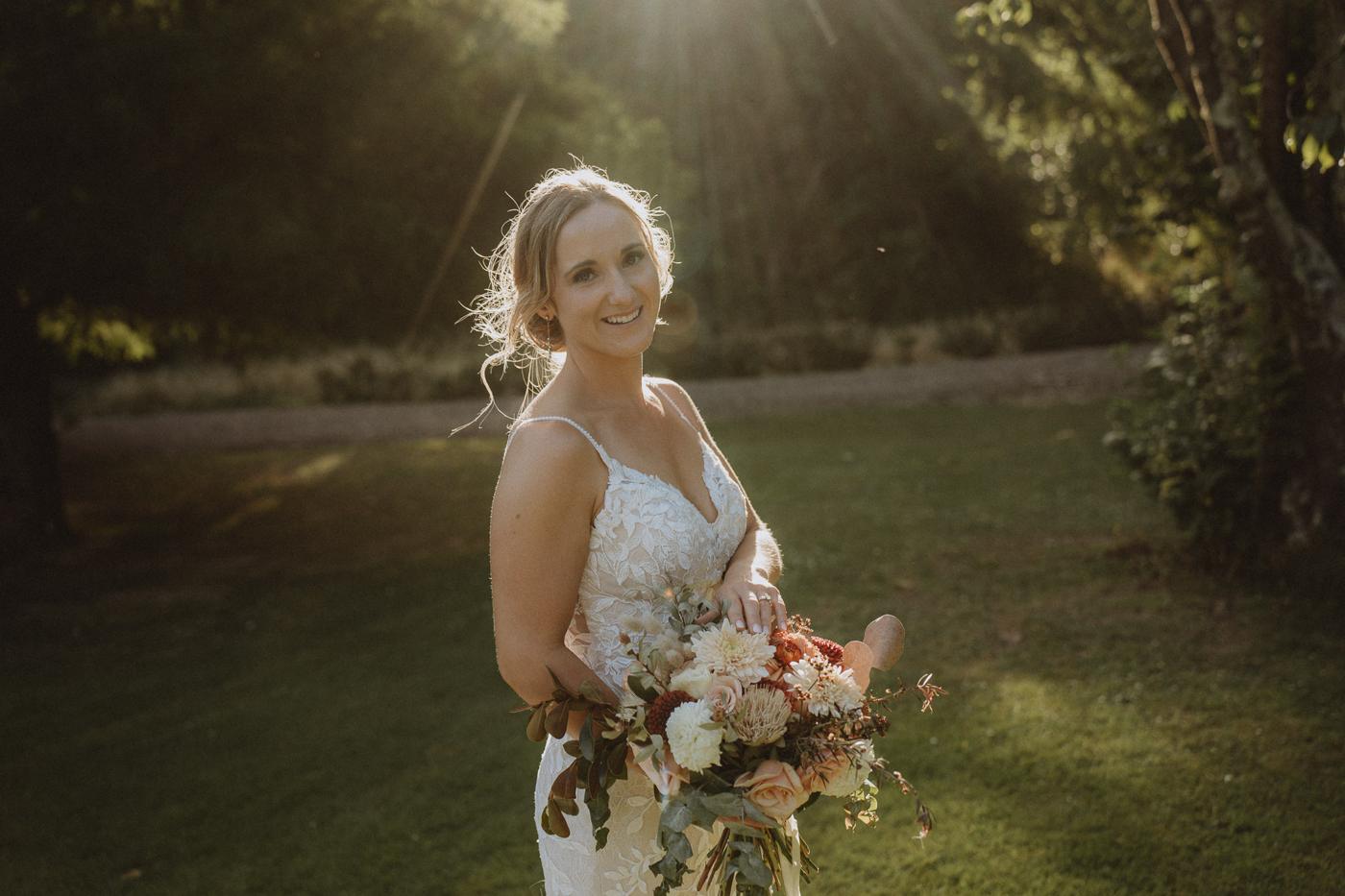
A long wait is not a sign that your wedding was hard to photograph. A calm, well-lit day with a small guest list still goes through every stage above.
Busy season, quiet season
Weddings cluster. They bunch on Saturdays and in the months with comfortable weather, so a photographer may shoot several weddings in a row and then spend the following weeks editing them. How a studio orders its editing is worth asking about.
Your position in that line matters more than the suburb, the venue or the size of your wedding. A wedding on the harbour and one in the west wait the same way.
| Busy stretch of the calendar | Quiet stretch of the calendar | |
|---|---|---|
| Weddings ahead of yours in the queue | More | Fewer |
| Where in the 4 to 10 working weeks you are likely to land | Towards the longer end | Towards the shorter end |
| Chance of fitting in a faster option | Lower | Higher |
If your date is flexible and speed matters, a quieter month is a real lever. That might be because family overseas are waiting, or because you want prints for an event. If your date is fixed, ask how many weddings are booked in the weeks either side. A studio that will answer plainly is one you can plan around.
Sneak peeks: ask whether you get one
Some studios send a sneak peek, a short run of finished images picked fast, so you have something to look at, share and show your parents while the rest is done properly. Whether yours does, how soon, and how many images it includes are all questions for the studio, because there is no standard answer.
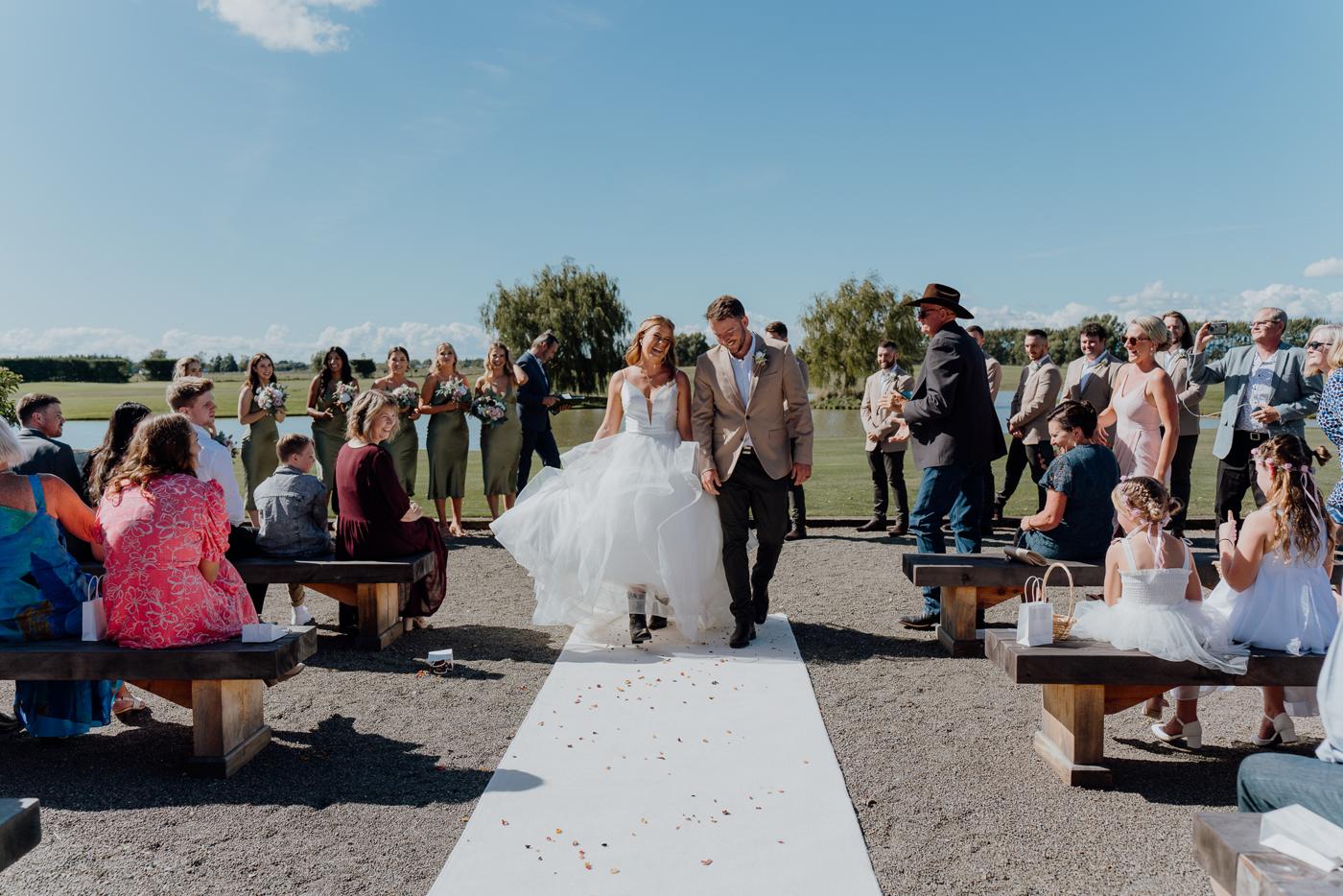
A sneak peek is a small, separate job, so it can run on a different clock from the full gallery. Treat it as a taste, not a preview of the whole gallery. The moments you care about most may not be in it, because the choice is made quickly.
If there is one image you are desperate to see, ask before the day whether it can be considered for a peek. The answer may be yes or no, and either is better than finding out afterwards. Ask too when you may share a peek on social media and how to credit the photographer, so the full gallery is not the second time your guests have seen your best frames.
Rush delivery and same-day edits
Some studios offer a faster delivery option for a fee. It costs more because it means your gallery moves ahead of other couples already waiting, and that has a real effect on someone else’s date. If you want it, ask at booking, not three weeks afterwards, when the queue has already formed. It may not be offered at all in a busy month.
A same-day edit is a different thing. It is a handful of images edited during the wedding and shown at the reception, the same night, usually as a slideshow. It needs somebody working while the day is still going. It is a separate deliverable, and it is not the same as a sneak peek. The trade-offs are covered in is a same-day edit worth it.
Before you pay for speed, work out why you want it. A fast gallery leaves less time for everyone to look properly. If the reason is simply that waiting is hard, ask whether the studio can send a few images early, and what the full-gallery date is, instead.
Albums and film add their own time
Your gallery date is the date for your gallery. If a studio offers albums, an album is a second project that starts after it.
Album design follows a sensible order. You receive the gallery and look through it. You choose which images belong in the album. The studio lays them out, you review the layout, there may be rounds of changes, and then the album is printed and bound, which takes time of its own. Each stage involves you as well as the studio, so how quickly you reply also affects the finish date. If you want your album by an anniversary or a family visit, work backwards from that date and tell the studio at the start. The question of whether to get one at all is in wedding albums: worth it, or is a gallery enough.
Film can be added to photography or booked alone, and photography and film are planned together. If you add film, ask whether it has a delivery date of its own, and get both dates in writing.
When a wait becomes a worry
The wait itself is rarely the problem. Silence past the date you were given is.
Say you were told ten weeks. If the studio writes to you at week six to say it will be eleven, and gives you a new date and a reason, that is communication doing its job. If week ten comes and goes with no message and no reply to your email, that is the real warning sign.
A sensible way to handle it:
- Check your contract or booking email first. Find the delivery date you were given. If it is a range, work out the last day of it.
- Wait until that date has passed. An email at week five asking whether it is ready yet does not help either of you.
- Ask once, in writing, and be specific. “Could you confirm when the gallery will be delivered?” gets a better answer than “any news?”
- Allow a reasonable gap for a reply. Photographers are often on a shoot or away.
- Escalate only if there is still nothing. At that point, a second written message with a deadline is fair.
A good reason comes with a new date. Illness, a hard drive failure that needed recovery, or a very heavy edit are all real reasons. A vague promise with no date is the one to push on.
This is also the reason to get the turnaround in writing at booking. “Four to ten working weeks” is a range. If the date matters to you, ask for a date, and ask what the studio does if it slips. A studio with a clear answer to that second question has thought about it. Payment plans, deposits and what happens if you cancel is worth reading at the same time, so the booking terms and the delivery terms sit side by side in your head.
What to ask before you book
These are worth putting in an email, because the answers give you something in writing:
- What is the delivery date for the full gallery, and how is it counted (working weeks or calendar weeks)?
- Is there a sneak peek, and if so how soon and how many images?
- How many weddings are booked in the weeks either side of my date?
- Is a faster option available, and what does it cost?
- If albums are offered, how long does one take once I approve the gallery?
- If film is included, when is that delivered?
- What happens if the delivery date is going to be missed?
You do not need a long conversation about any of these. A studio that has clear answers will give them in a couple of lines. A studio that dodges the question is telling you something too.
If you are also working out how many hours to book, the connection to the wait is simple. More hours means more images, and more images means more editing. That is not a reason to book fewer hours. It is a reason to ask for the delivery date at the number of hours you actually want. What a 6, 8 and 10-hour wedding day actually yields shows how the totals change.
What to do next
- Decide how much the date matters. If you need photos by a particular day, say so before booking. It changes which months and which studios suit you.
- Ask the seven questions above and keep the written answers with your booking confirmation.
- Pick your hours with the wait in mind. Read what a 6, 8 and 10-hour day yields so you know how the hours change the total.
- Tell your photographer about the images you cannot wait to see, and about any family overseas who would love an early look.
- Set a calendar reminder for the first day after the quoted delivery date. If the gallery has not arrived, you already know what to do.
You can also see how booking and pricing work or browse the planning library.
If you have a date in mind, send it through the contact page. I will tell you straight whether it is free, and if it is, what the day could look like.